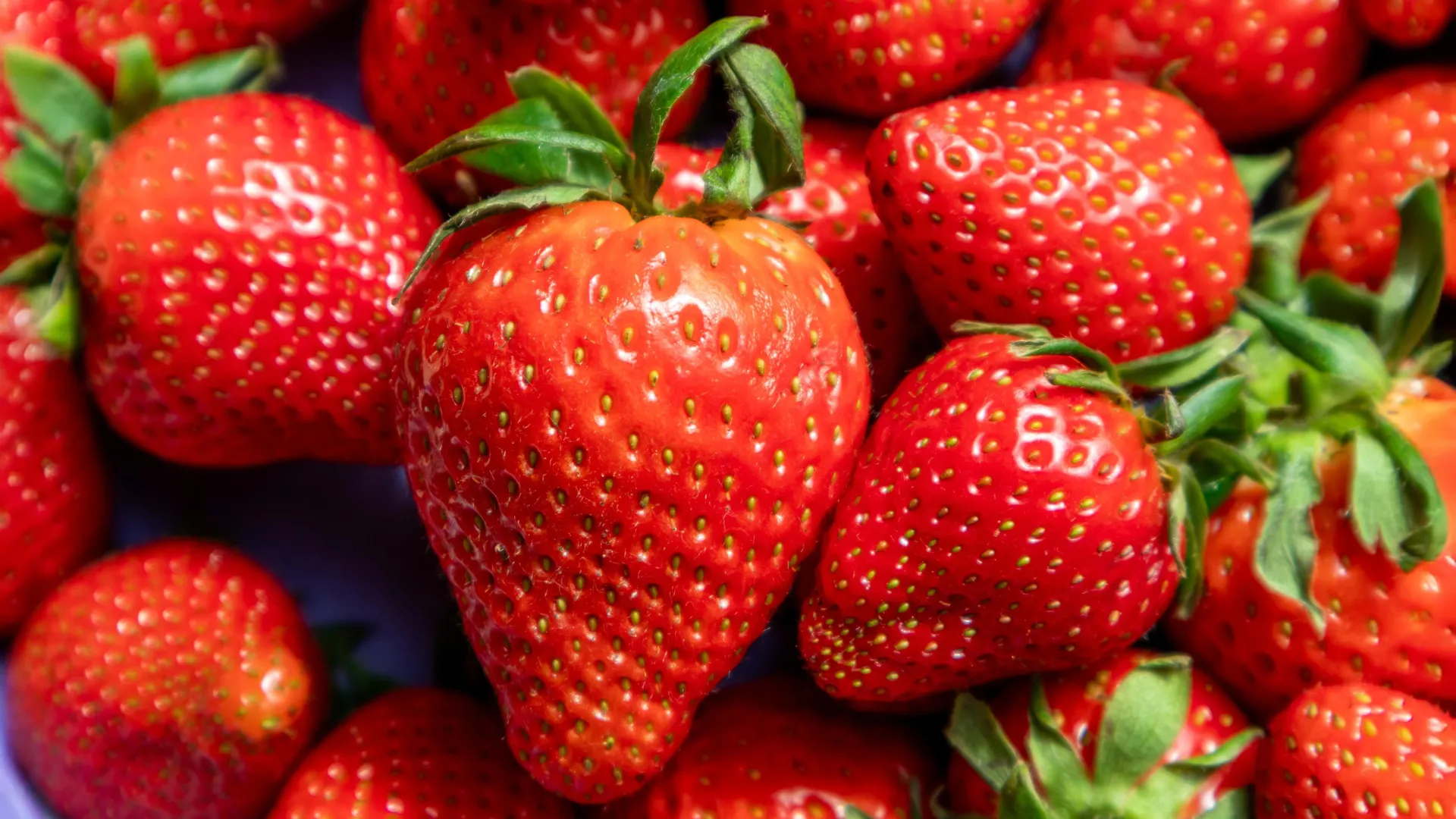
Researchers have cracked how modern strawberries assembled their genomes by tracking ancient "molecular clocks" embedded in transposable elements. These DNA sequences, which can copy themselves throughout a genome, leave temporal fingerprints that scientists used to date past evolutionary events.
The team analyzed these genetic timestamps to reconstruct when different strawberry species merged their genomes over millions of years. The work reveals that today's cultivated strawberries arose through multiple rounds of hybridization and genome merging, rather than evolving through simple linear descent.
Transposable elements act like archaeological records within DNA. When they insert into a genome, they accumulate mutations at predictable rates, allowing researchers to estimate when insertion events occurred. By mapping these elements across strawberry genomes, scientists pinpointed the timing of ancient polyploidy events, where organisms gained extra chromosome sets from other species.
This approach offers a blueprint for understanding how other crop plants evolved. Many commercially important species, including wheat, cotton, and peanuts, share complex polyploid origins. The technique sidesteps limitations of traditional fossil records, which rarely preserve plant evolutionary details.
The research combines advances in genome sequencing with evolutionary dating methods. Rather than relying solely on comparing DNA sequences between species, the team exploited the activity patterns of mobile genetic elements themselves. This allowed reconstruction of events spanning tens of millions of years with greater precision than previous approaches.
The strawberry findings underscore how modern agriculture depends on ancient genetic complexity. Current varieties combine traits from multiple wild ancestors, shaped by hybridization events that occurred long before humans began selective breeding. Understanding this history could help plant breeders identify valuable genetic combinations hidden within crop relatives.
The work demonstrates how evolutionary biologists extract temporal information from genomes without requiring external reference points. This method applies broadly across plant species with complex histories, offering pathways to improve food security through smarter crop development.