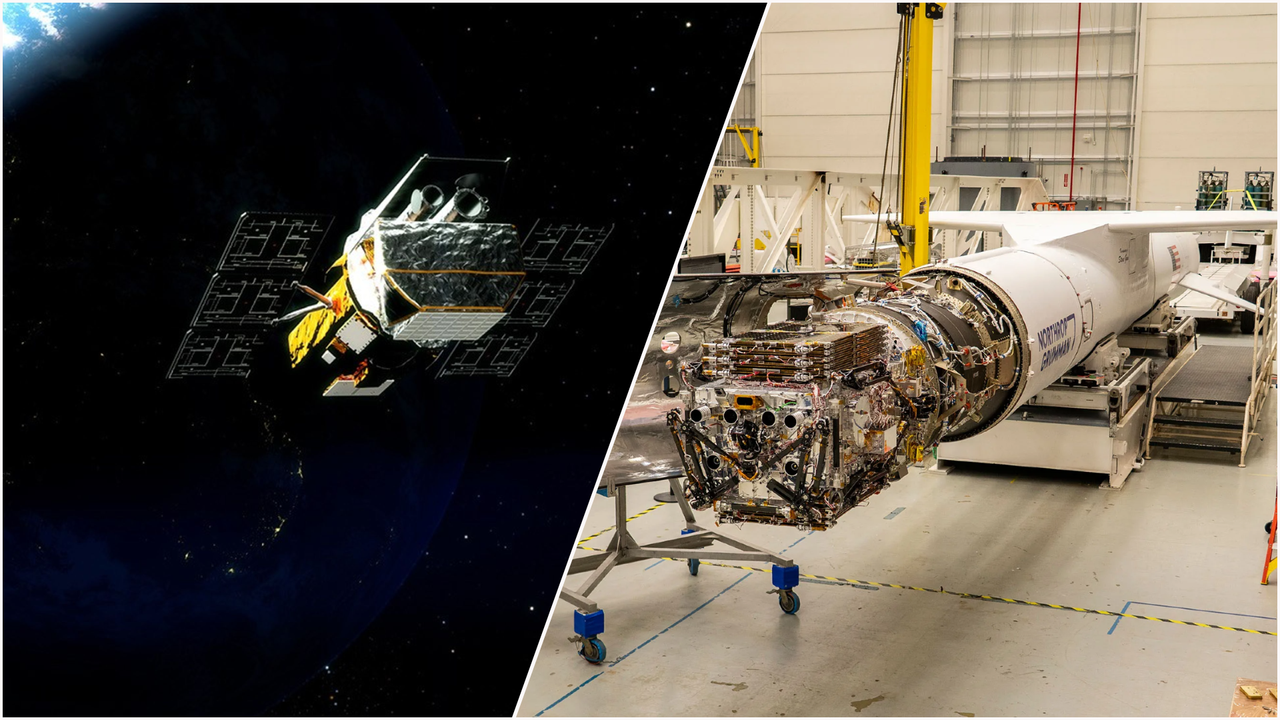
NASA's Swift space observatory faces deorbiting within the next few years as its orbit decays. The agency is pursuing an unconventional solution: contracting a commercial spaceflight company to build and launch a spacecraft capable of rendezvousing with Swift and boosting it back to a stable orbit.
Swift has operated since 2004, observing gamma-ray bursts and other high-energy phenomena across the universe. The 1,400-kilogram observatory remains scientifically productive but lacks onboard propellant to maintain altitude against atmospheric drag at its operational height of roughly 600 kilometers. Without intervention, Swift will reenter Earth's atmosphere within approximately five to ten years, ending two decades of continuous observations.
Rather than accepting the telescope's natural end, NASA is leveraging emerging commercial capabilities. The agency seeks a contractor able to design, build, and launch a servicing spacecraft within nine months, an aggressive timeline rarely attempted for space missions. This spacecraft would perform an autonomous rendezvous with Swift and execute a series of thruster burns to raise its orbit to a sustainable altitude.
The approach builds on precedent. In 2023, Axiom Space's commercial module launched to the International Space Station, demonstrating private sector capability for complex orbital operations. Commercial spaceflight companies including SpaceX, Northrop Grumman, and others have expressed interest in space servicing contracts.
The Swift rescue mission carries technical risks. Rendezvous operations demand precise navigation and timing. The servicing spacecraft must be compact enough for rapid development yet robust enough for orbital mechanics involving a vintage observatory. Integration and testing phases typically consume months, constraining an already tight schedule.
Success would extend Swift's scientific life and establish precedent for commercial rescue missions. The effort reflects NASA's evolving strategy of partnering with private companies for specialized tasks rather than developing solutions internally. If a contractor accepts the challenge and succeeds