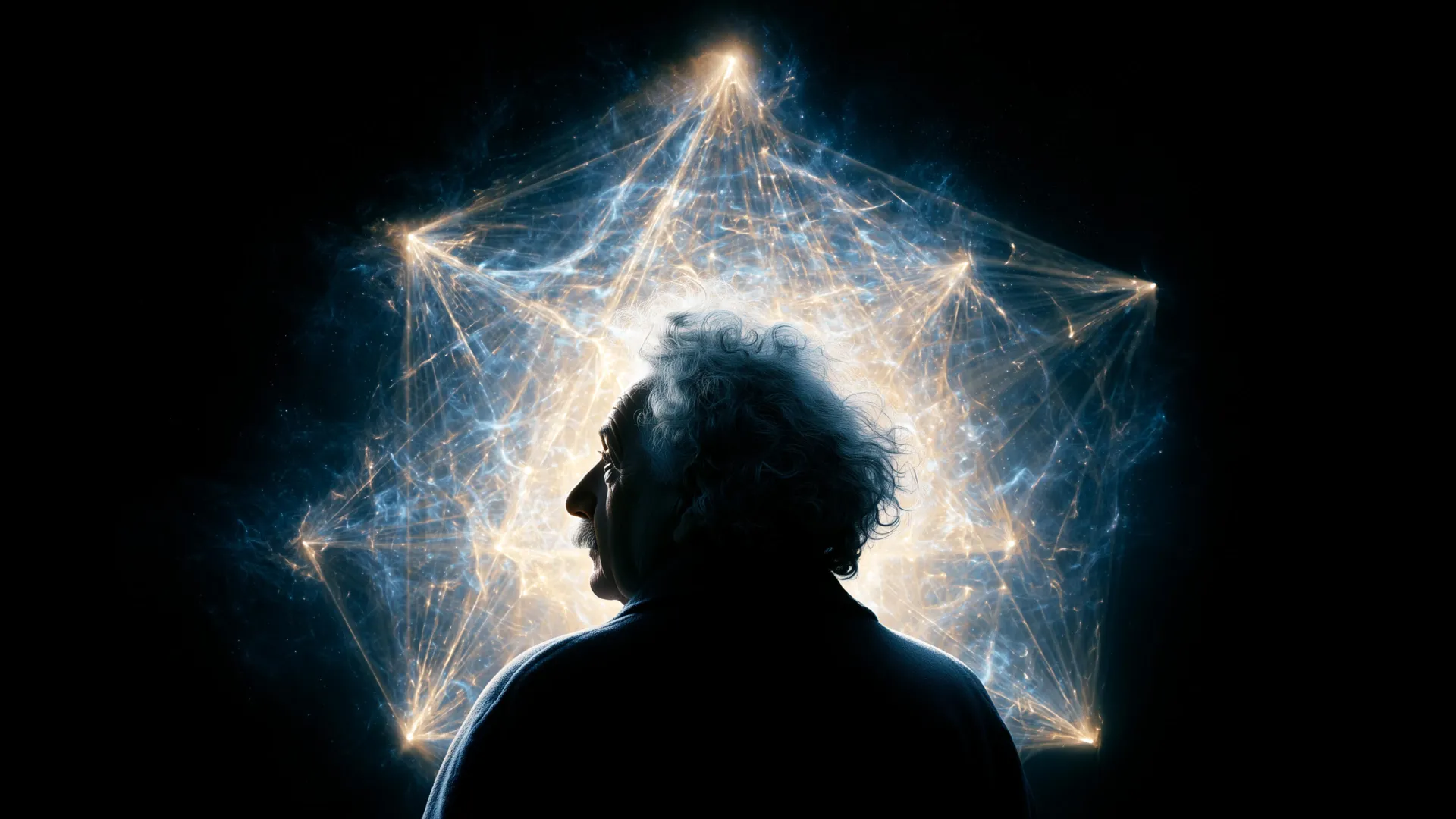
Physicists may have resolved one of Albert Einstein's most famous regrets. A new study reveals how quantum gravity could stabilize the cosmological constant, the energy density that drives cosmic expansion, preventing it from reaching the catastrophically high values that theoretical calculations predict.
Einstein introduced the cosmological constant in 1917 to keep the universe static. He later called it his "biggest blunder" after Edwin Hubble discovered the universe was expanding. The constant experienced a resurrection in 1998 when astronomers found that cosmic expansion was accelerating, suggesting a repulsive dark energy fills space.
The problem haunting physicists for decades involves the "cosmological constant problem." Quantum field theory calculations suggest vacuum energy should be 120 orders of magnitude larger than observations allow. This discrepancy remains one of physics' deepest puzzles.
The new research proposes that the geometry of space-time itself suppresses these quantum fluctuations through an exotic quantum state of matter. Rather than quantum effects overwhelming the cosmological constant, the researchers suggest space-time topology naturally cancels out most disruptive contributions.
The work connects quantum gravity, which typically operates at impossibly small scales near black holes, to cosmology at universal scales. This bridge between the very small and very large represents an uncommon theoretical advance.
The study remains highly speculative. No experimental tests currently verify these quantum gravity predictions, and the mechanism depends on unproven frameworks. The findings also assume specific conditions about space-time's fundamental nature that many physicists dispute.
Nevertheless, the research offers a fresh angle on why the universe's expansion rate remains finite and measurable rather than infinite and destructive. If validated, it would explain not just why Einstein's constant exists, but why it takes the particular value observed today. Such understanding could reshape how physicists think about space-time itself and the relationship between quantum mechanics and gravity.