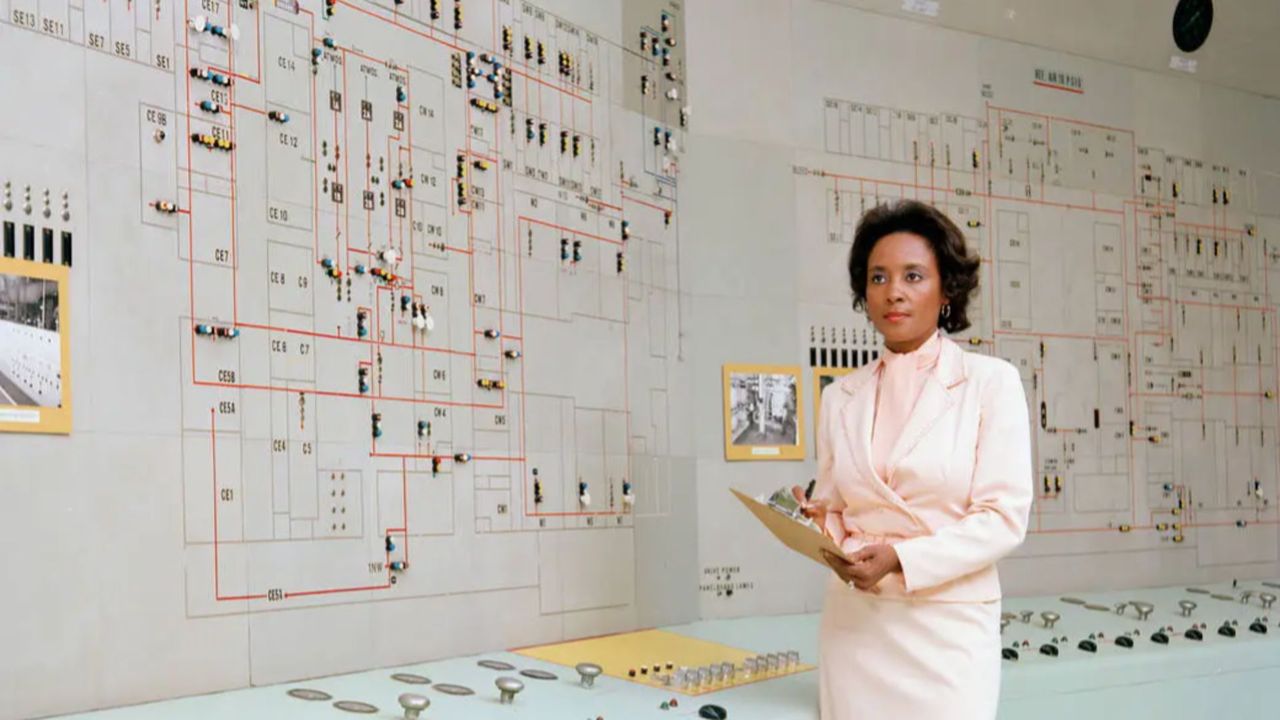
Annie Easley served as a human computer at NASA, performing complex mathematical calculations that proved essential to developing the Centaur upper-stage rocket, one of the agency's most consequential launch vehicles.
Easley joined NASA's predecessor, the National Aeronautics and Space Administration's Lewis Research Center, in the 1950s. As a human computer, she executed intricate computational work by hand and with early mechanical calculators before electronic computers became standard tools in aerospace engineering. Her calculations supported the design and testing phases of the Centaur, a reusable upper stage that would become instrumental in launching payloads to orbit and beyond.
The Centaur rocket stage remains in use today, having launched numerous satellites, probes, and deep-space missions throughout its decades-long operational history. The vehicle's development during the Space Race era required precision engineering and exhaustive calculations to ensure reliability and performance specifications.
Easley's work exemplified the contributions of human computers, a largely overlooked workforce of mathematicians and engineers who powered the early space program. Many of these individuals were women, whose computational talent proved indispensable to NASA's successes. These professionals performed calculations that verified spacecraft trajectories, engine performance, structural integrity, and countless other parameters critical to mission success.
Beyond her technical contributions, Easley's career at NASA spanned decades, reflecting her dedication to advancing American spaceflight capabilities. Recognition of her work highlights a historical reality often absent from popular space narratives: breakthrough achievements depended on teams of skilled professionals working in concert, not solely on the astronauts and mission controllers who received public attention.
The Centaur remains a testament to Easley's legacy and that of her colleagues. Today's rockets still employ upper stages derived from Centaur principles developed during Easley's tenure at NASA.