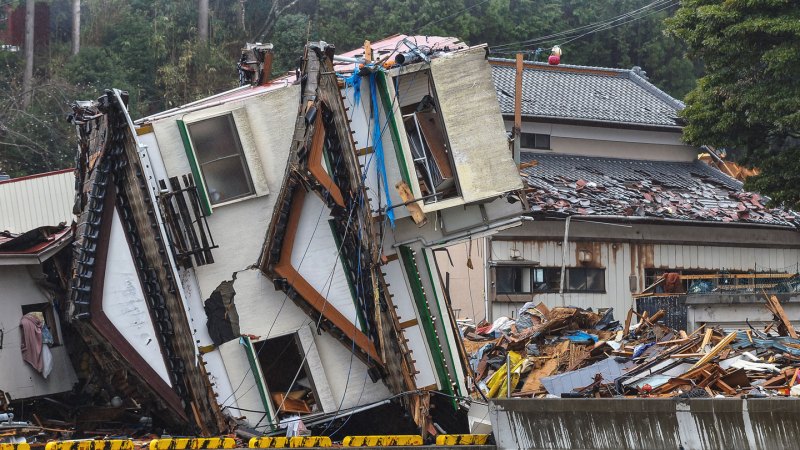
A seismic wave from Japan's 2011 Tohoku earthquake traveled all the way to Earth's core and bounced back, triggering unexpected fault movement along Japan's plate boundaries, according to new research.
Scientists discovered that the wave's round-trip journey through the planet's interior caused a delayed slip along a previously unrecognized seismic hazard zone. The finding reshapes understanding of how major earthquakes can trigger secondary movements far from the epicenter.
The 2011 Tohoku earthquake, which measured magnitude 9.0, generated powerful seismic waves that radiated outward in all directions. Some waves penetrated deep into Earth's interior, reaching the core-mantle boundary roughly 2,900 kilometers below the surface. These waves reflected upward and returned to the surface near Japan hours after the initial rupture.
When the reflected waves arrived, they imparted enough energy to nudge existing faults near Japan's plate boundaries. This triggered slip along faults that normally remain locked. The phenomenon represents what researchers call "dynamic triggering," where seismic waves from distant earthquakes initiate failure on stress-sensitive faults.
The research reveals a previously underappreciated pathway for earthquake triggering. Scientists typically focus on stress changes directly adjacent to a rupture, but this study shows that waves bouncing off Earth's core can travel thousands of kilometers and still pack enough punch to break faults.
The findings have practical implications for seismic hazard assessment in Japan and other tectonically active regions. Understanding that deep-traveling waves can trigger faults extends the zone where secondary earthquakes might occur after a major event. This knowledge helps refine earthquake early warning systems and building code standards.
The study examined seismic station data recorded across Japan in the hours following the Tohoku earthquake, tracking the wave arrivals and comparing them with GPS measurements that showed ground displacement