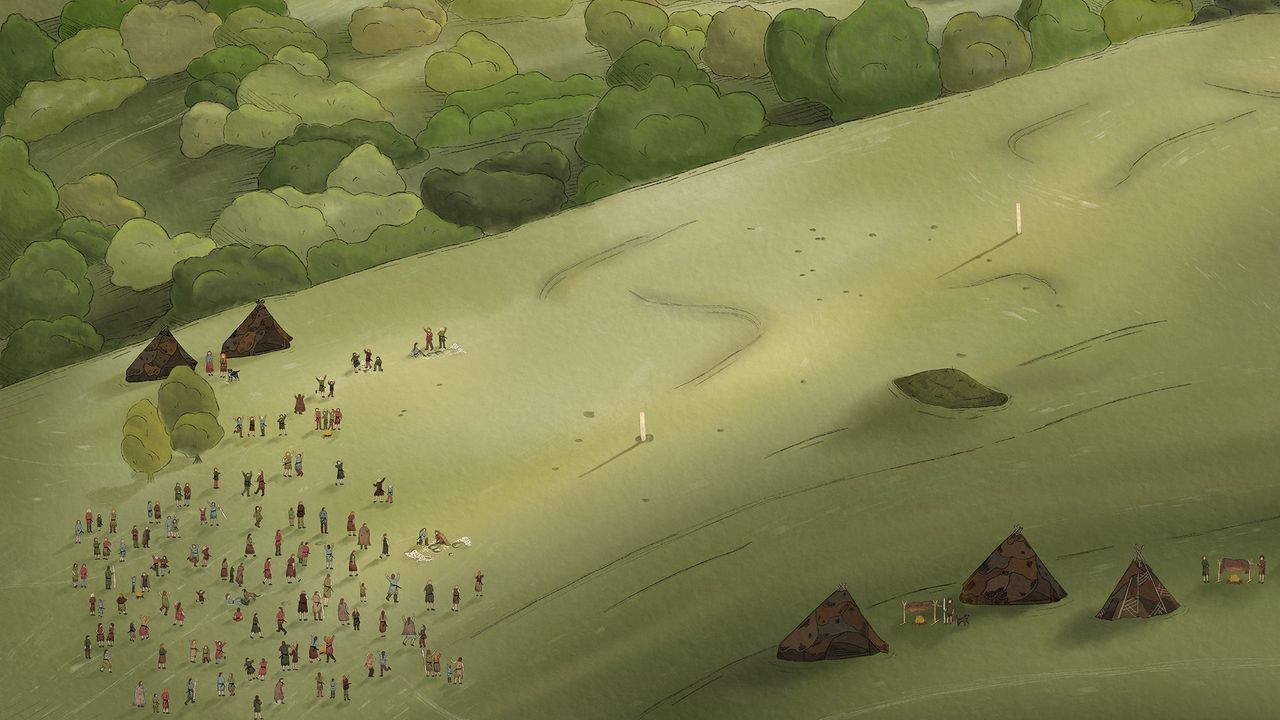
Archaeologists have discovered evidence that Stone Age people erected wooden posts at Stonehenge roughly 5,000 years ago to track the summer and winter solstices, predating the famous stone monument by over a millennium.
The research team identified two ancient post holes at the Wiltshire site. Analysis of soil and archaeological deposits in these holes indicates wooden posts once stood there, aligned to mark critical points in the solar calendar. The posts would have allowed observers to note when the sun reached its highest and lowest points in the sky, events central to agricultural societies dependent on seasonal cycles.
This discovery extends Stonehenge's history as a ceremonial and observational center far earlier than previously documented. The stone circle itself was constructed around 3000 to 1520 BCE, making these wooden predecessors roughly 1,000 to 2,000 years older. The finding suggests the location held special significance for multiple cultures across millennia.
The solstice observations likely served practical purposes for communities planning planting and harvest schedules. Summer solstice markers would indicate optimal planting times, while winter solstice posts warned of the year's darkest period and approaching spring renewal. These posts may have also held ritual importance in early religious or spiritual ceremonies.
Archaeologists conducted careful stratigraphic analysis and radiometric dating to establish the post holes' age. The wooden structures themselves had long since decayed, leaving only soil staining and artifact distribution patterns to reveal their former presence.
The finding adds complexity to Stonehenge's narrative. Rather than a singular monumental achievement, the site represents continuous occupation and ceremonial use spanning thousands of years. Different societies adapted the landscape to their technological capabilities and spiritual needs. Wooden posts required less labor and engineering than moving massive stones, yet served comparable astronomical functions.
This research underscores how ancient peoples across cultures developed sophisticated knowledge of celestial mechanics without modern instruments