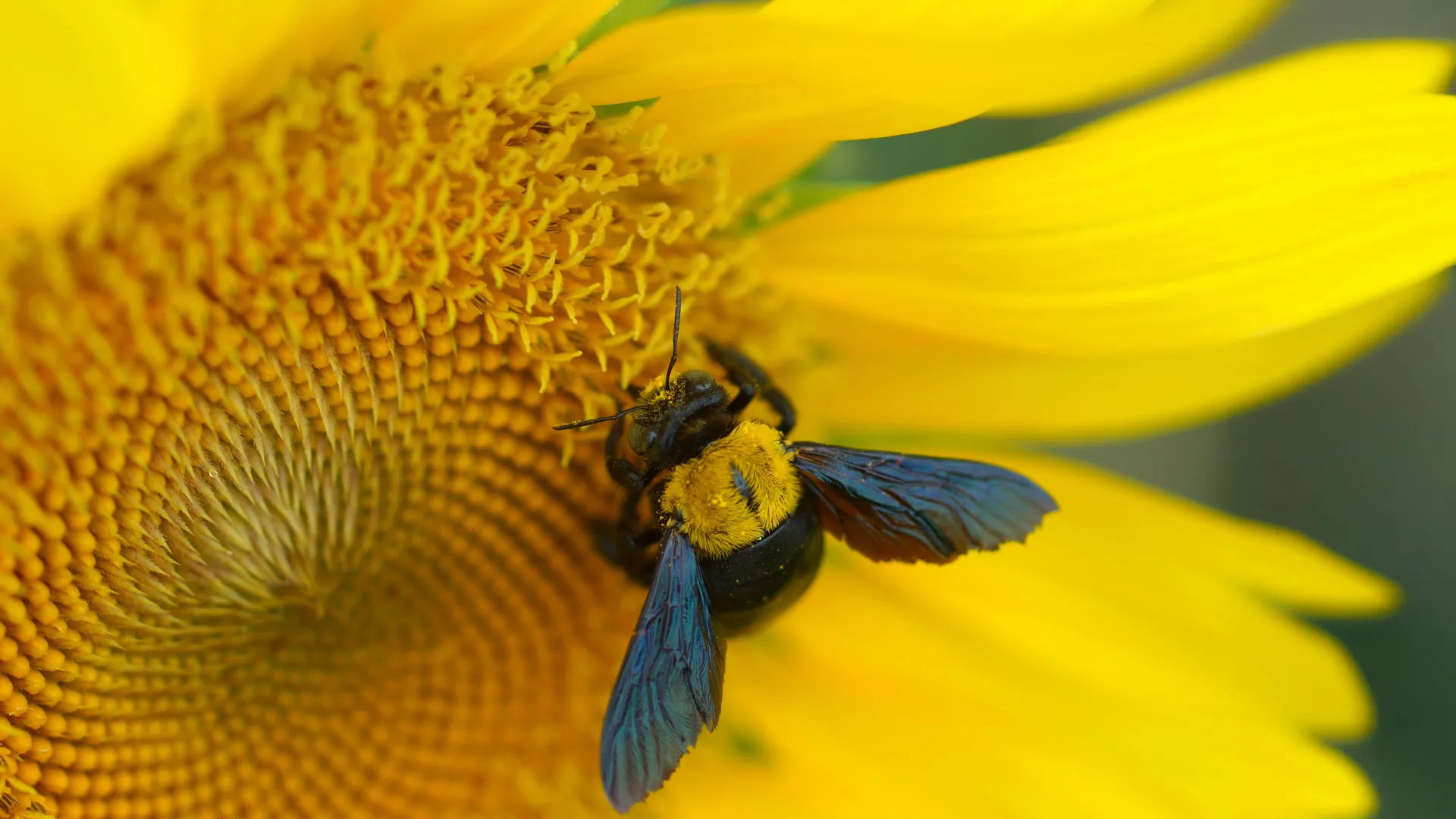
Australian native bees that nest in plant stems face extinction risk from climate change faster than their underground-dwelling cousins, according to new research. Stem-nesting species lack the thermal refuge that subterranean nests provide, leaving them exposed to lethal temperatures as the climate warms.
The study examined thermal tolerance across Australian bee species and found that behavioral nesting preferences trump physiological heat adaptation. Tropical bees, despite evolving in already hot environments, showed particular vulnerability. Their existing heat tolerance provided little buffer against future temperature increases, suggesting evolution has optimized them for current conditions rather than preparing them for hotter futures.
Stem-nesting bees face a double bind. They construct nests inside plant stems and hollow wood, which lack the temperature buffering of underground tunnels. During extreme heat events, these exposed microhabitats heat rapidly, creating lethal conditions for developing larvae and adults. Unlike burrowing species that retreat deeper underground, stem-nesters have nowhere to escape.
The research carries direct implications for pollination services. Many Australian native bee species are stem-nesters that pollinate native plants and agricultural crops. Their rapid decline would disrupt entire ecosystems. The findings also suggest that simply understanding a species' heat tolerance is insufficient for predicting climate vulnerability. Where and how animals nest matters as much as their physiology.
Researchers stress that nesting behavior reveals a critical blind spot in conservation planning. Previous climate models focused heavily on species' thermal limits rather than their actual shelter options. Tropical species present a particular challenge for conservation because they already live near their physiological limits. They cannot adapt to warmer conditions through evolutionary processes that would shift their tolerance ranges.
The study underscores that climate change vulnerability emerges from the interaction between physiology and ecology. Species face not just temperature stress but loss of suitable nesting habitat. This suggests conservation strategies must account for microhabitat modification and protection of