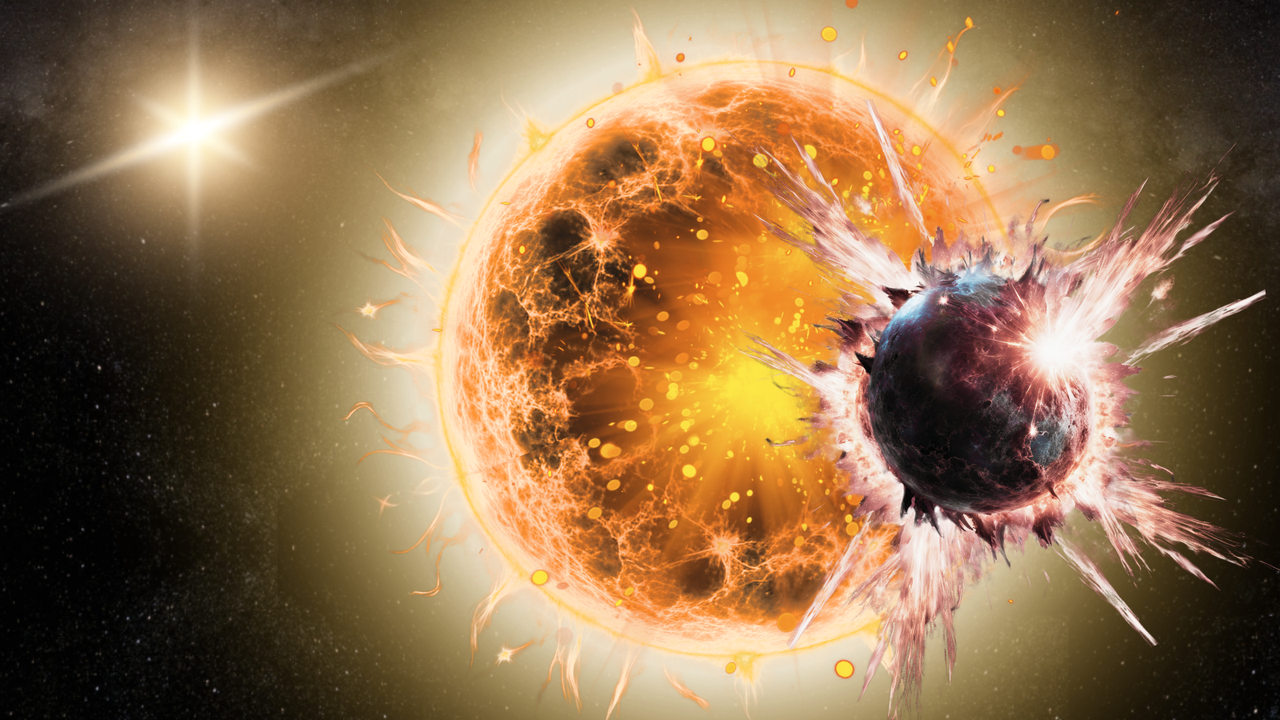
Astronomers have detected chemical signatures in a binary star system that reveal one star has consumed at least one exoplanet, while its twin has not. The discovery provides rare direct evidence of planetary destruction and accretion by stars.
The research team identified significant chemical imbalances between the two stars in the binary system. One star shows elevated levels of iron, nickel, and other heavy elements consistent with planetary material, while its companion star lacks these enrichments. This compositional difference suggests the metal-rich star pulled in and absorbed planetary bodies during its history.
Binary star systems offer ideal laboratories for this type of study. Because twin stars form from the same molecular cloud and should have identical chemical compositions initially, any differences reveal subsequent events. The researchers measured spectroscopic data to determine the precise abundances of various elements in each star's atmosphere.
The finding adds to mounting evidence that planets frequently migrate into their host stars or are stripped away during close stellar encounters. Previous studies documented individual cases of stars consuming planets, but direct chemical evidence remains rare. This work demonstrates a systematic approach to identifying planetary consumption by comparing stellar pairs.
The discovery holds implications for understanding planetary system architecture and stellar evolution. Stars in binary systems experience gravitational interactions that destabilize planetary orbits. The study suggests such disruptions may be common, with planets regularly falling into their stars or being ejected entirely.
The research team did not provide the specific location or names of the binary system in the available summary, limiting additional context. The study appears poised for publication in a peer-reviewed astronomy journal, though details remain forthcoming.
This work strengthens models showing that planetary survival depends heavily on system dynamics. Close stellar companions create hazardous environments for planets, making stable long-lived systems like our own solar system potentially less common in the galaxy.