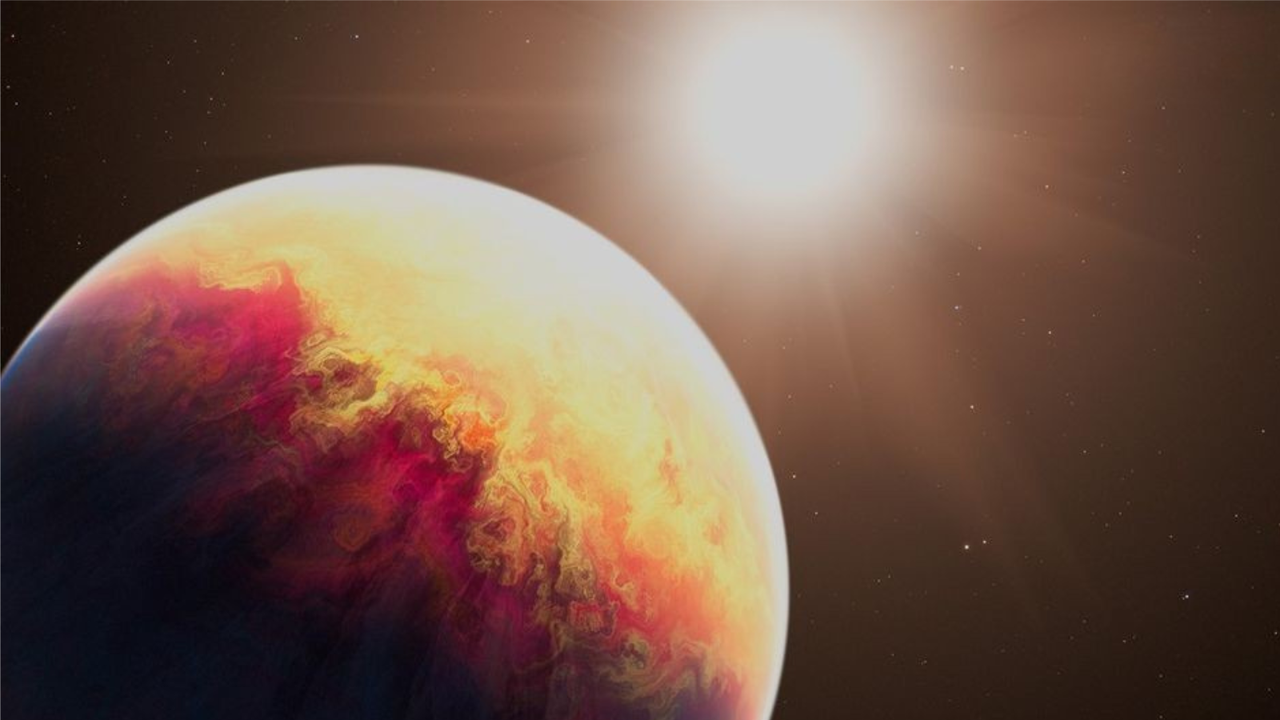
The James Webb Space Telescope has detected an exoplanet experiencing extreme conditions near its host star. Astronomers identified a "Hot Jupiter" type world being subjected to intense stellar radiation that roasts its atmosphere.
Hot Jupiters are gas giants that orbit unusually close to their parent stars, unlike Jupiter in our solar system. This proximity generates surface temperatures far exceeding those of planets in more distant orbits. The JWST observations reveal one of the most extreme examples yet discovered.
The telescope's infrared sensitivity allowed researchers to measure the planet's atmospheric composition and temperature with unprecedented precision. The data shows the world exists in a thermal environment that strips away atmospheric layers and fundamentally alters its chemistry. Stellar winds and radiation continuously batter the planet's upper atmosphere.
Understanding these extreme worlds provides insights into planetary formation and evolution. Hot Jupiters challenged initial planet formation theory because Jupiter-mass bodies shouldn't exist so close to stars based on traditional models. Yet they appear common in exoplanet surveys. Studying their atmospheric loss and degradation helps explain how systems evolve over time.
The JWST discovery adds to growing evidence that exoplanetary environments span a vast range of conditions. Some worlds experience hostile conditions that Earth-bound observers would find unimaginable. The telescope's ability to detect atmospheric signatures in infrared light makes it uniquely suited for characterizing such extreme planets.
This work represents one of many exoplanet studies JWST has conducted since its 2021 launch. The observatory continues revealing new details about distant worlds, from atmospheric composition to potential biosignatures on temperate planets. Each discovery refines models of planetary formation and the diversity of worlds orbiting other stars.