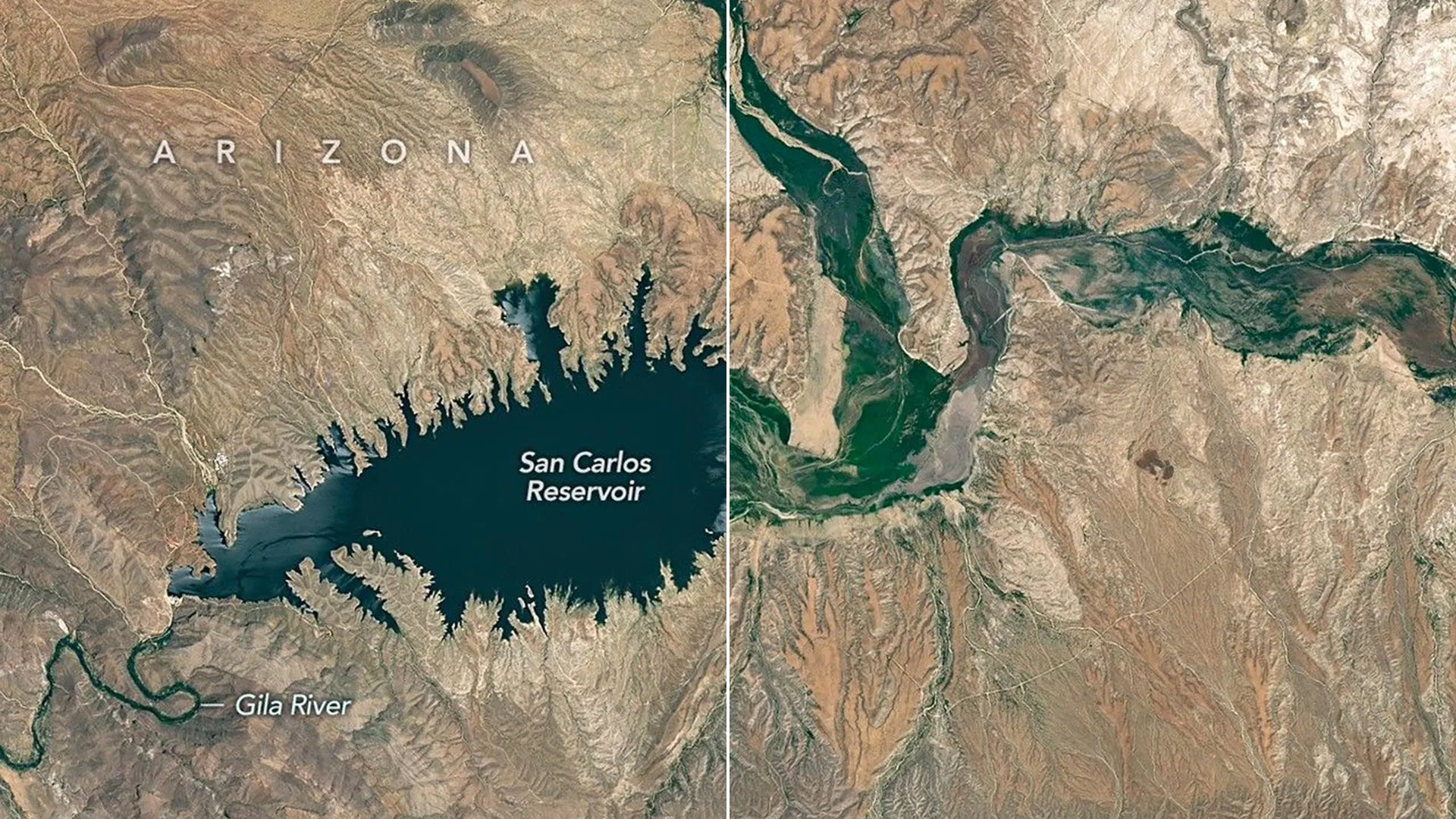
Arizona's San Carlos Reservoir has collapsed to less than 1% capacity following an unprecedented snowpack failure in the Gila River watershed. The drastic depletion triggered a catastrophic fish kill and forced officials to close the reservoir indefinitely.
The reservoir, a critical water storage facility for central Arizona, depends heavily on winter and spring snowmelt from the Rocky Mountains. This year, the Gila River watershed experienced a historic drought in snowfall, cutting off the primary water source that typically sustains the reservoir through dry months. As water levels plummeted, dissolved oxygen in the remaining water dropped to lethal concentrations, killing fish populations en masse.
The ecological collapse reflects broader patterns across the Colorado River Basin, where climate change has reduced average snowpack and accelerated snowmelt timing. Scientists have documented that warming temperatures shift peak runoff earlier in the year, reducing water availability during late spring and summer when demand peaks.
San Carlos Reservoir serves multiple functions for Arizona's water management. It supplies irrigation water to the Gila River Indian Community and provides flood control and hydroelectric power generation. The near-total depletion threatens agricultural operations and reduces the region's hydropower capacity.
However, meteorological forecasts offer a potential lifeline. Arizona's monsoon season, which runs from June through September, historically delivers heavy rainfall. If summer storms deliver substantial precipitation, the watershed could capture enough runoff to partially refill the reservoir and restore some ecological function.
Water managers now face difficult tradeoffs between maintaining minimal operational capacity and allowing natural recovery. Permanent solutions require addressing the underlying climate trends driving snowpack decline. Federal agencies managing Colorado River resources have implemented emergency conservation measures across multiple states, but long-term sustainability depends on reducing water consumption or securing additional sources.
The San Carlos crisis illustrates how climate-driven changes to winter precipitation patterns cascade through interconnected water systems. The reservoir's near-disappearance under