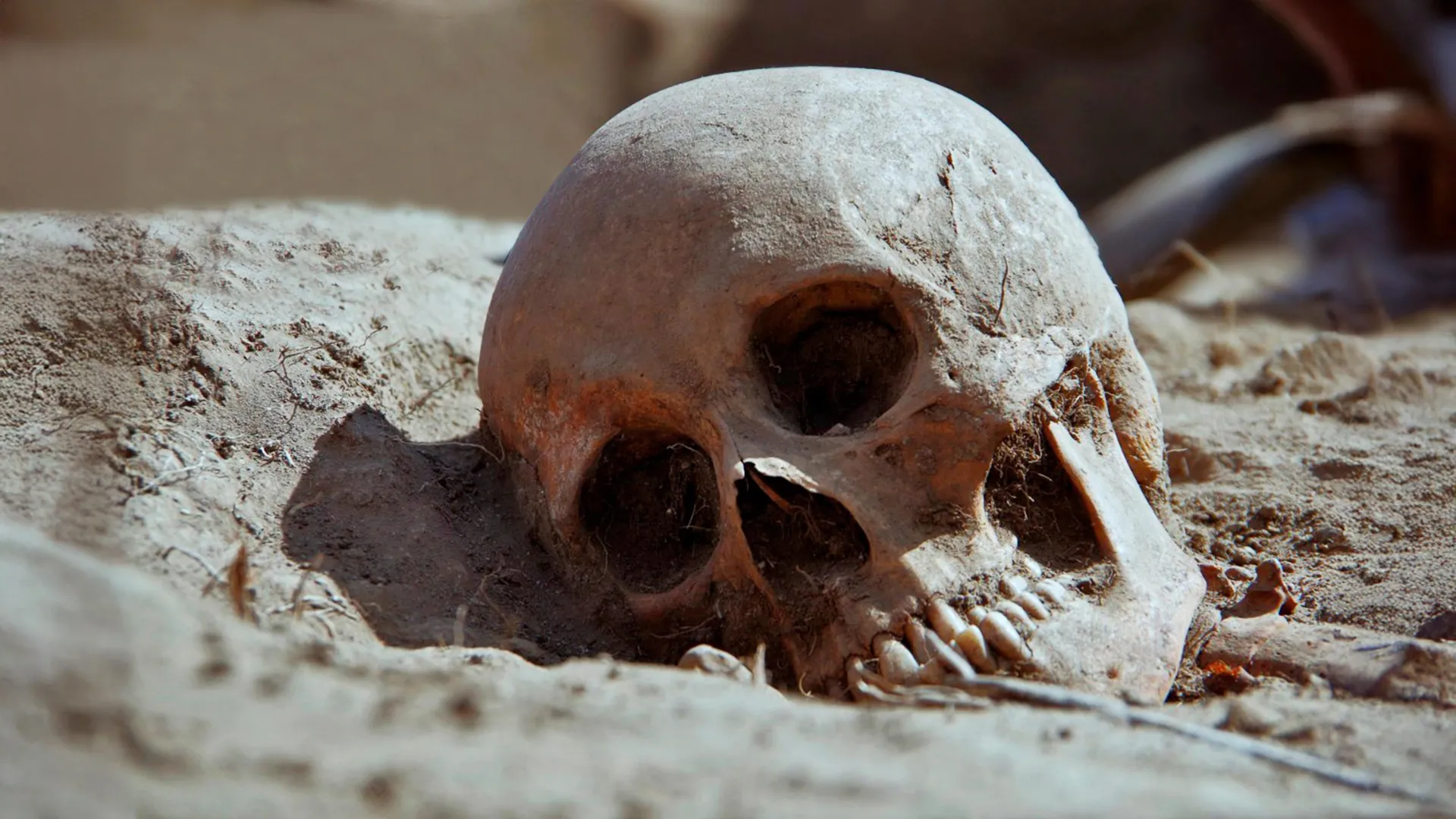
Plague killed humans at least 5,500 years ago, far earlier than historians previously thought. Researchers analyzing ancient DNA from hunter-gatherer burial sites in Siberia found the bacterium Yersinia pestis in nearly 40% of individuals examined, showing the disease struck long before cities, agriculture, or the rat populations typically blamed for spreading plague during medieval times.
The study reveals plague operated differently in prehistoric times. Family clusters in the Siberian cemeteries show rapid outbreaks that killed many children and teenagers, suggesting transmission happened through close contact rather than through rats or fleas in urban settings. The plague strains identified in these ancient remains represent early forms of the pathogen that would later cause some of history's deadliest pandemics.
This discovery fundamentally reshapes understanding of plague's origin and evolution. The bacterium Yersinia pestis did not emerge during recorded history. Instead, it infected hunter-gatherer populations for millennia before becoming the urban scourge remembered from medieval Europe and Asia. The disease apparently spread through direct human contact in family groups rather than relying on the rodent-flea-human transmission chain documented in later outbreaks.
The researchers examined skeletal remains and extracted DNA from teeth and bone tissue, comparing genetic sequences against known plague samples. The prevalence of the disease in these Siberian populations indicates plague was endemic enough to leave clear marks in the archaeological record. The concentrated deaths among young people suggest acute infections that moved rapidly through households.
These findings raise new questions about plague's ecological role across human history. For thousands of years, the disease apparently cycled through human populations without the prerequisites historians associated with plague outbreaks. Understanding how ancient plague spread and persisted could illuminate the pathogen's biology and help explain how it adapted to urban environments during later periods. The work also demonstrates the power of paleogenomics to detect infectious disease in the deep