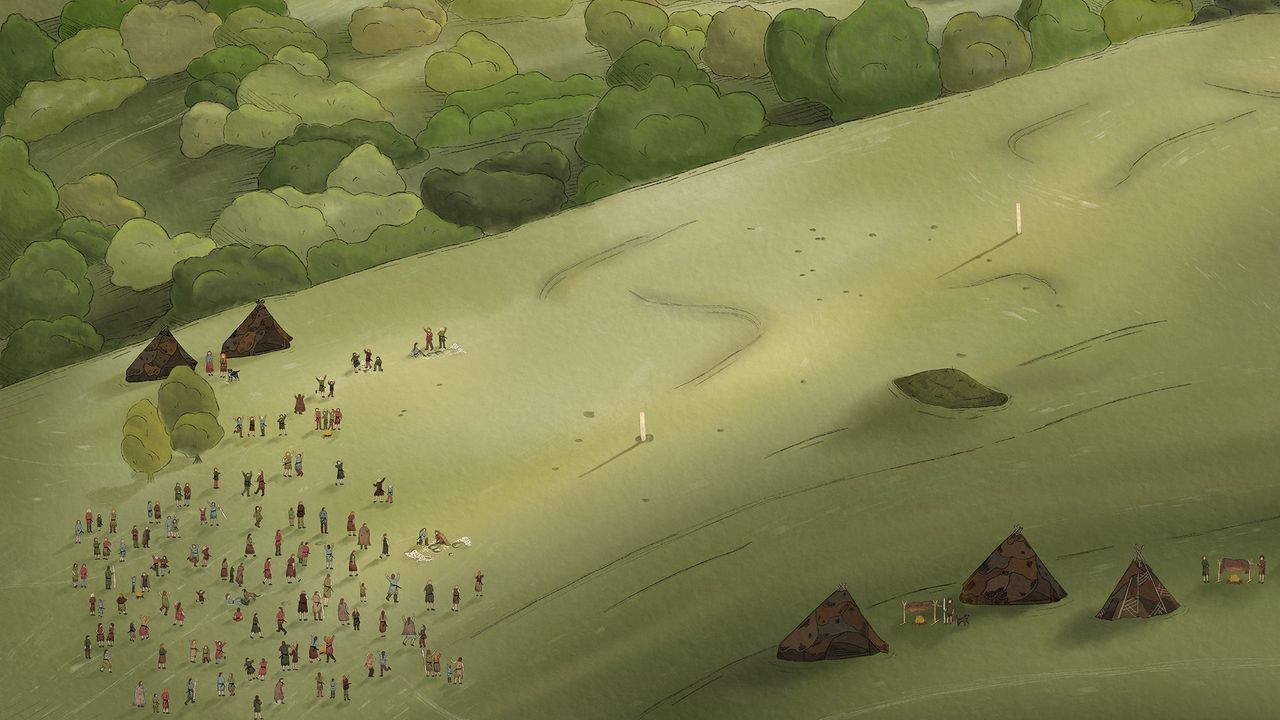
Archaeologists have discovered two ancient post holes near Stonehenge that reveal how people tracked the summer and winter solstices approximately 5,000 years ago. The holes, identified through excavation work at the famous Wiltshire site, contained evidence of wooden posts that once stood vertically and aligned with the sun's position at key times of the year.
The discovery suggests an earlier, simpler version of solstice observation predated the elaborate stone monument itself. Rather than the massive sarsen and bluestones visible today, prehistoric people initially used wooden posts as markers to monitor solar movements. This finding reshapes understanding of how ancient communities approached astronomical observation and seasonal timekeeping.
The posts would have allowed observers positioned at specific locations around the site to watch the sun rise or set at precise points on the horizon during solstices. Such knowledge held practical value for agricultural societies planning planting and harvest times. The alignment also carried ceremonial and spiritual weight in Bronze Age and Stone Age cultures.
This discovery fits within broader research into Stonehenge's astronomical dimensions. Previous studies confirmed the monument's primary axis aligns with the midwinter and midsummer sunrises and sunsets. The new evidence suggests people refined these observational techniques over centuries, eventually building permanent stone structures to mark the same celestial events.
The finding adds nuance to narratives about Stonehenge's construction and purpose. Rather than appearing fully formed around 3000 BCE, the site evolved through different phases, with wooden structures representing an earlier experimental approach. Archaeologists now view Stonehenge less as a sudden architectural achievement and more as a landscape where people continuously developed methods for reading the heavens.
Understanding these ancient astronomical practices illuminates how prehistoric communities organized themselves around natural cycles. The discovery underscores that sophisticated thinking about celestial mechanics emerged thousands of years before written history.