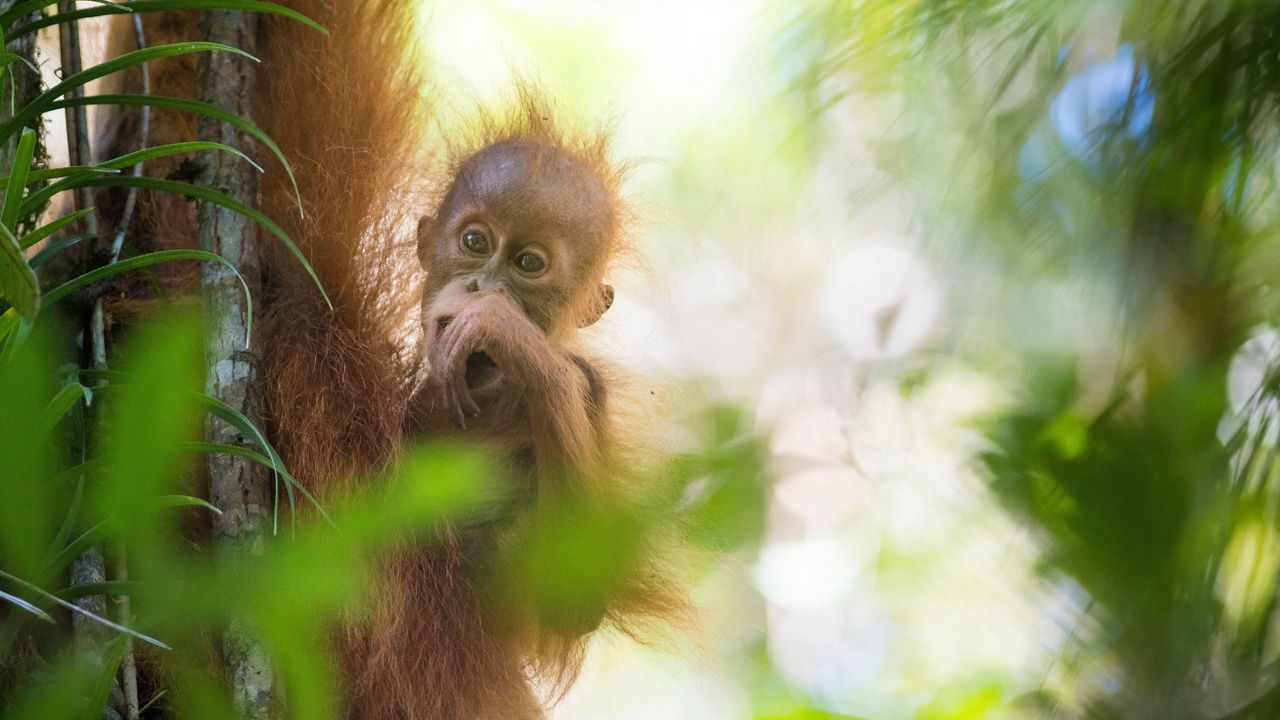
Cyclone Senyar killed approximately 58 Tapanuli orangutans in Indonesia, reducing the world's rarest great ape population by 7 percent. The extreme rainfall event, intensified by climate change, triggered landslides that crushed or buried the animals alive during just four days of severe weather.
The Tapanuli orangutan exists only in North Sumatra, Indonesia, with fewer than 800 individuals remaining in the wild. This species, formally identified as distinct from other orangutan species only in 2017, occupies a fragmented habitat already under pressure from deforestation and human encroachment. The sudden loss of 58 individuals represents a catastrophic blow to an already critically endangered population.
Researchers documented the deaths following Cyclone Senyar, which struck in late 2022 or early 2023. The combination of heavy rainfall and steep terrain in the orangutans' forest habitat created conditions for rapid landslide formation. Unlike more mobile animals, the slow-moving, arboreal apes could not escape the collapsing earth and vegetation.
Climate change amplifies the intensity and frequency of tropical cyclones in Southeast Asia. Warmer ocean temperatures fuel more powerful storms, increasing the risk of extreme precipitation events. For a population already numbering fewer than 800 individuals, a single catastrophic event poses extinction risks that stable populations might absorb.
The Tapanuli orangutan's extreme rarity makes it especially vulnerable. The species inhabits a relatively small geographic area, limiting genetic diversity and population resilience. Previous conservation efforts focused on habitat protection and anti-poaching measures, but natural disasters reveal the limits of ground-level protection strategies.
This event underscores a growing challenge for conservation: protecting endangered species in an era of increasingly severe weather. The Tapanuli orangutan's survival now depends on multiple fronts,