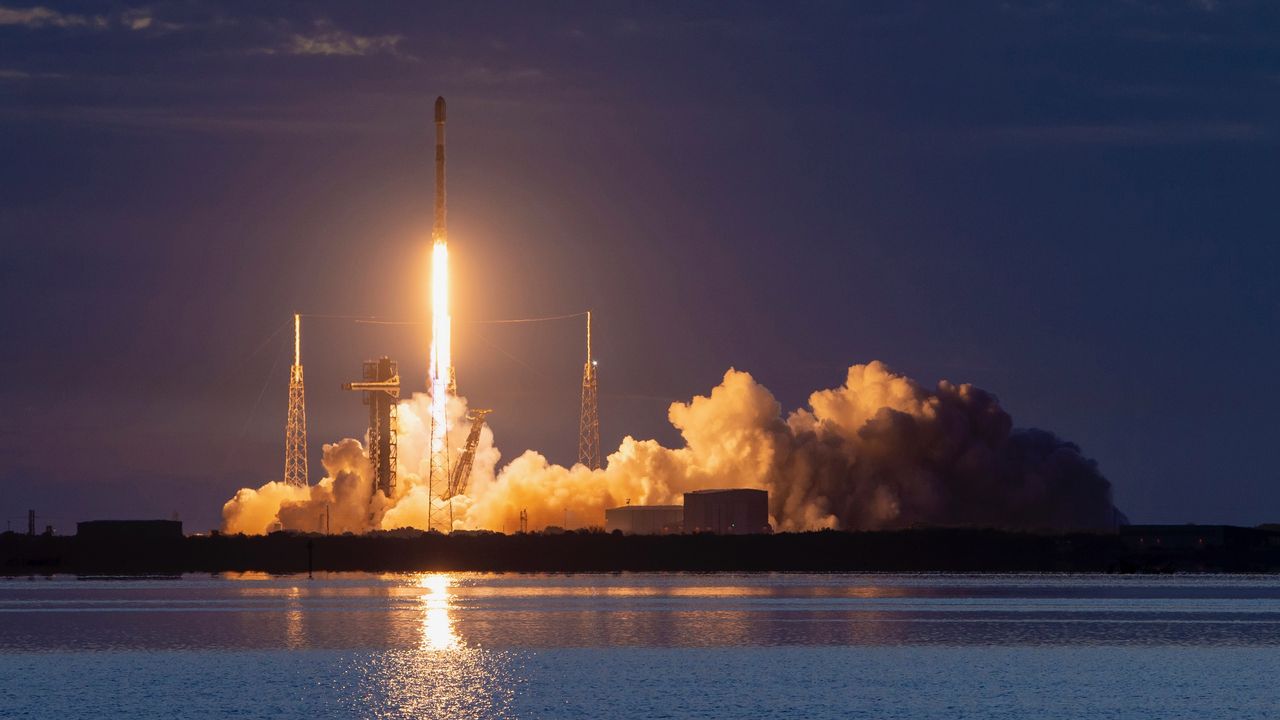
SpaceX plans to launch three AST SpaceMobile BlueBird satellites aboard a Falcon 9 rocket from Florida on Wednesday, June 17. The direct-to-cell satellites represent a push to provide cellular coverage from space, eliminating dead zones on Earth without requiring ground infrastructure.
AST SpaceMobile, founded in 2017, developed BlueBird as a constellation of large satellites capable of connecting directly to standard smartphones. Unlike traditional satellite communication systems that require specialized equipment, these satellites aim to work with ordinary mobile devices. The company has been testing this technology for years, with previous test satellites demonstrating the concept.
The BlueBird satellites are among the largest commercial spacecraft ever built, designed to house massive phased-array antennas that transmit signals powerful enough to reach consumer phones. This engineering approach differs sharply from competitors like Starlink, which requires dedicated terminals.
SpaceX has secured a contract with AST SpaceMobile to launch multiple BlueBird satellites. The company expects these launches to accelerate deployment of its constellation, with plans to eventually operate dozens of satellites in orbit. Carriers including AT&T and Vodafone have signed agreements to integrate BlueBird connectivity into their networks once the system becomes operational.
The service aims to provide connectivity in remote areas, during natural disasters when infrastructure fails, and in maritime and aviation environments. Industry analysts view direct-to-cell technology as a complementary system to terrestrial networks rather than a replacement.
Challenges remain, including regulatory approval from the Federal Communications Commission, competition from other direct-to-cell providers, and the technical complexity of maintaining reliability across a constellation. AST SpaceMobile has faced delays in its deployment timeline, but the company continues advancing toward commercial service.
Live coverage of the launch begins several hours before liftoff on Space.com and other outlets. Exact launch time depends on weather conditions at