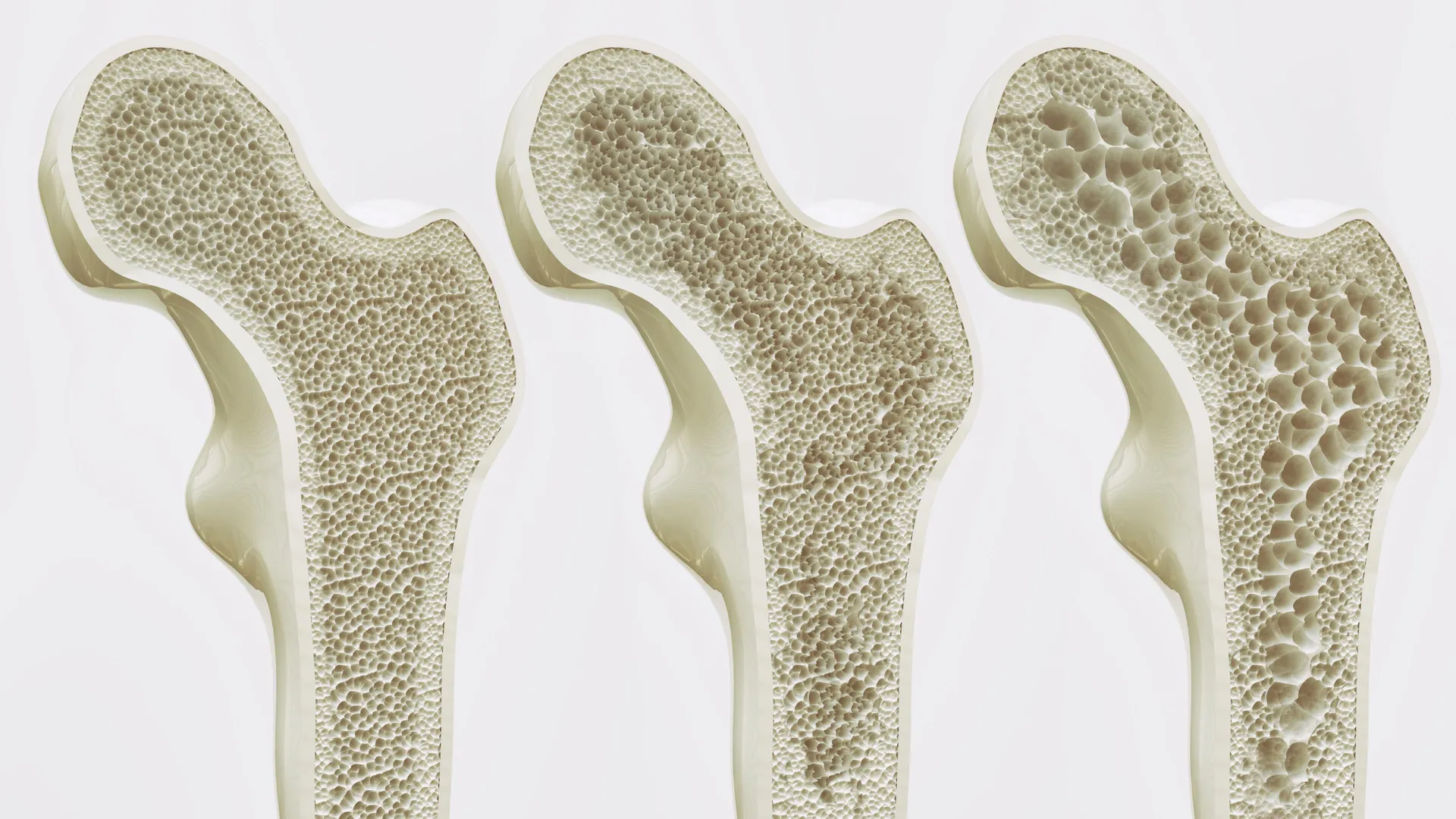
Semaglutide users experience 15% fewer bone fractures than people taking other weight-loss drugs, even while losing more weight, according to a large real-world analysis of nearly 60,000 adults with type 2 diabetes.
The finding contradicts conventional expectations. Rapid weight loss typically increases fracture risk because bone density declines when the body sheds pounds quickly. Semaglutide, a glucagon-like peptide-1 (GLP-1) receptor agonist sold as Ozempic, Wegovy, and Rybelsus, achieved greater weight reduction than alternative medications yet paradoxically reduced fracture rates.
Researchers extracted data from health records spanning thousands of patients, comparing fracture outcomes between semaglutide users and individuals on other common weight-loss medications. The 15% reduction persisted even after accounting for the greater weight loss semaglutide produced, suggesting mechanisms beyond simple body mass changes protect bone integrity.
The protective effect likely involves semaglutide's direct actions on bone metabolism. GLP-1 receptors exist on bone cells, and semaglutide may enhance bone formation or slow bone loss through pathways independent of weight change. The drug also affects gut hormones and nutrient absorption in ways that could benefit skeletal health.
This observation holds particular importance for older diabetic patients, who face elevated fracture risk from both diabetes itself and age-related bone loss. If semaglutide genuinely strengthens bones while promoting weight loss, it could address two health concerns simultaneously in this vulnerable population.
The study represents a real-world analysis rather than a controlled trial, meaning researchers observed patterns in existing medical records without randomly assigning patients to treatment groups. Real-world evidence captures how drugs perform outside clinical settings but cannot definitively prove causation. Confounding variables, such as exercise patterns