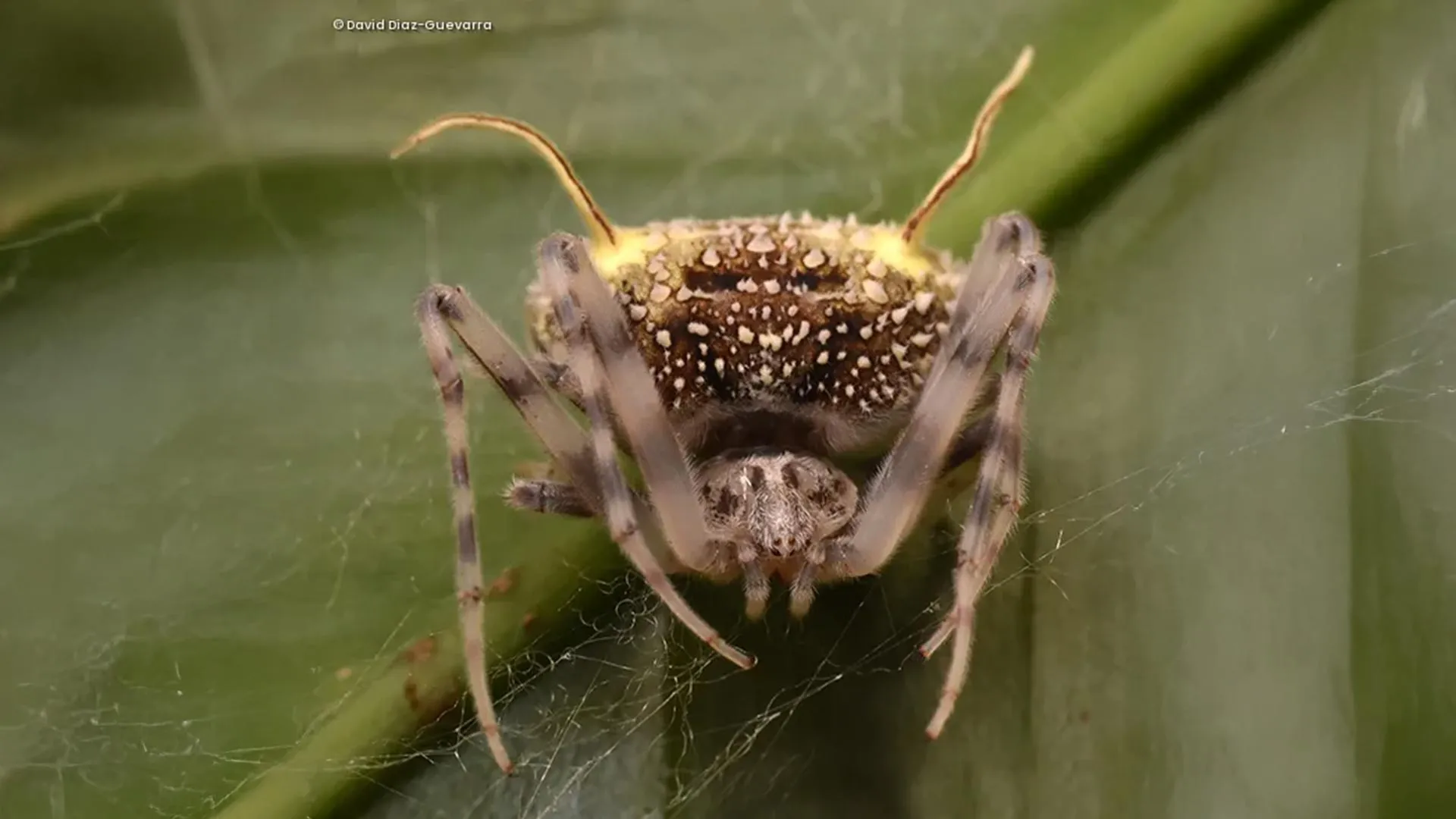
Researchers have identified a new Amazonian spider species, Taczanowskia waska, that employs an extraordinary defense strategy by mimicking the appearance and behavior of a parasitic fungus. This discovery represents a rare example of fungal mimicry in spiders.
The spider achieves its disguise through morphological features that closely resemble infected insects colonized by pathogenic fungi. By adopting this deceptive appearance, T. waska gains dual benefits. The mimicry shields the spider from predators that would otherwise target it, as potential attackers avoid contaminated prey. The disguise also creates hunting advantages, allowing the spider to ambush unsuspecting arthropods that approach what they perceive as infected hosts.
Fungal mimicry remains uncommon in arachnids compared to other forms of camouflage. Most spiders rely on color matching, pattern mimicry of leaves or bark, or behavioral concealment. T. waska's strategy represents convergent evolution with organisms like certain flies and insects that gain protection by resembling fungus-infected arthropods.
The discovery emerged through field surveys in Amazonian rainforests, where biodiversity continues to yield unexpected species despite centuries of scientific study. The spider's cryptic nature and specialized habitat likely contributed to its remaining unknown to science until now.
The findings highlight how evolutionary pressure in tropical ecosystems drives elaborate deceptive adaptations. Predation and competition for resources in rainforests select for innovations in camouflage and hunting strategies. Fungal mimicry may represent an underappreciated ecological strategy that warrants further investigation across arthropod communities.
Additional research on T. waska's behavior, prey preferences, and the specific fungal species it mimics could reveal whether this represents a standalone evolutionary experiment or part of a broader pattern of fungal mimicry in Amazonian a