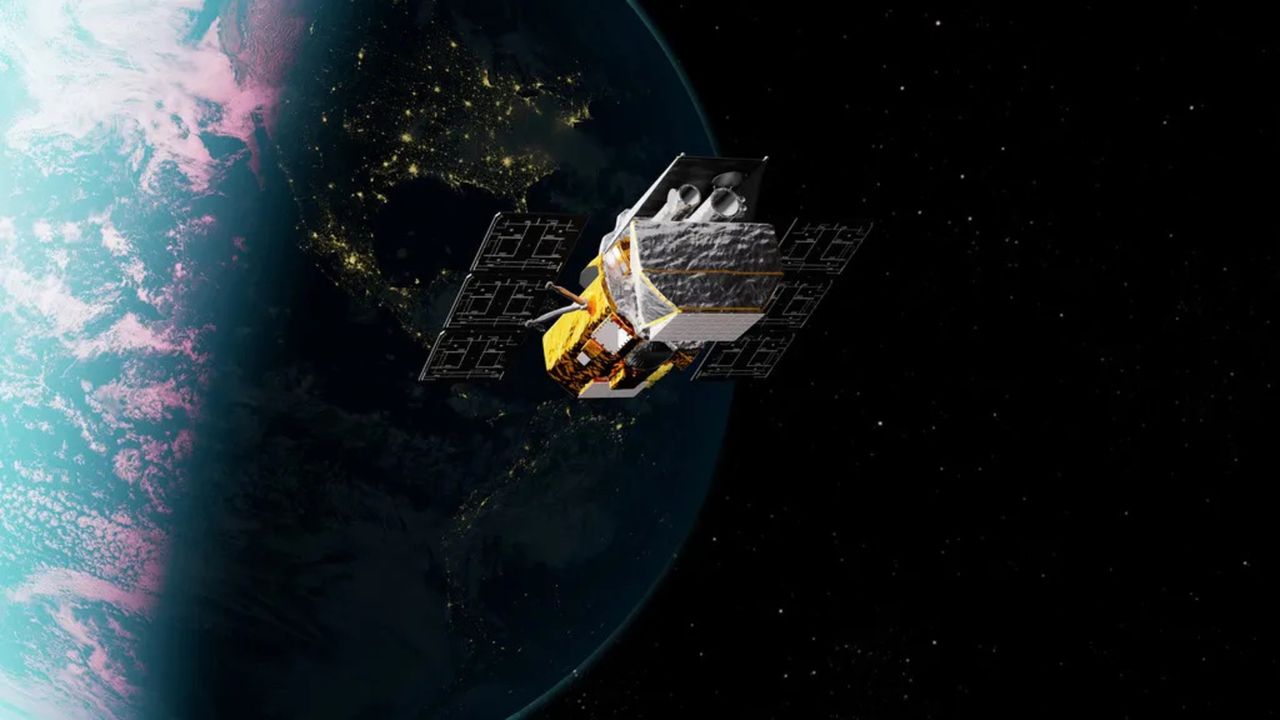
NASA is hosting a press conference today to discuss plans for an ambitious orbital reboost of the Swift space telescope, a gamma-ray burst observatory that has operated for nearly two decades. The agency will announce details about the mission during the live event.
Swift, launched in 2004, has become one of astronomy's most productive instruments for studying transient cosmic phenomena. The telescope detects gamma-ray bursts, supernovae, and other explosive events across the universe. Its rapid-response capabilities allow astronomers to observe afterglows and follow-up observations within minutes of initial detection, often coordinating with ground-based observatories worldwide.
The spacecraft has been gradually losing altitude due to atmospheric drag, a natural consequence of operating in low Earth orbit. Without intervention, Swift's orbit will eventually decay to the point where the telescope becomes unusable. A reboost mission would extend the observatory's operational lifespan by several years, preserving access to its unique scientific capabilities.
NASA has increasingly turned to commercial partnerships for servicing aging space assets. The agency previously contracted with Axiom Space to develop a reboost module for the Hubble Space Telescope, though that mission remains under development. A similar approach for Swift would involve attaching a propulsion system to raise the telescope's orbit.
The Swift mission represents a shift in how NASA manages its space infrastructure. Rather than allowing valuable instruments to deorbit when fuel runs low, the agency explores cost-effective ways to sustain them. Swift's scientific return remains exceptional, regularly producing discoveries about the universe's most violent events and serving as a crucial tool for multimessenger astronomy alongside gravitational wave detectors.
The press conference begins today at 2 p.m. EDT. NASA will provide details on the proposed reboost timeline, technical specifications, partnership arrangements, and expected mission costs.