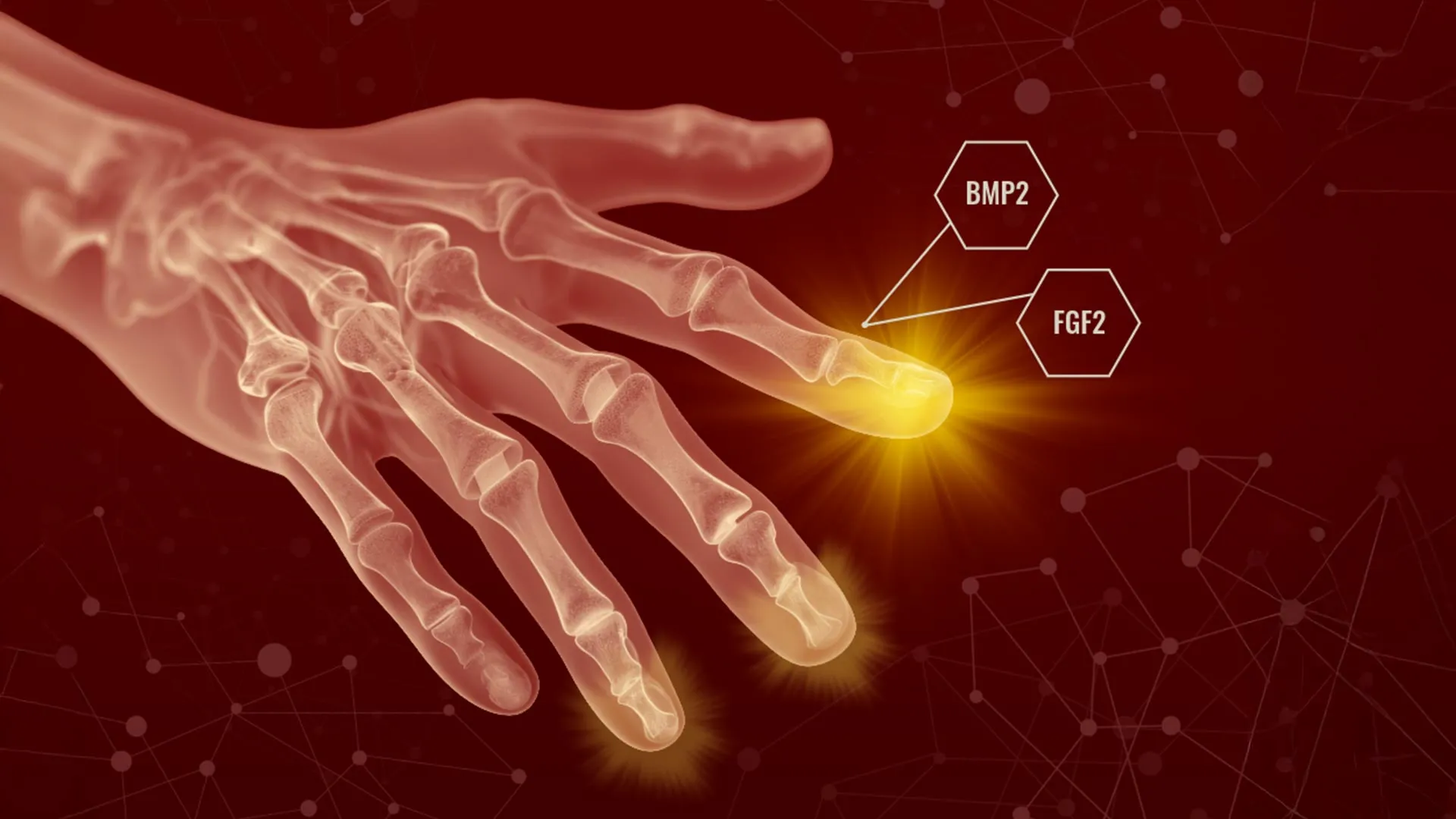
Researchers have demonstrated that mammals retain dormant regenerative capabilities that can be reactivated through targeted intervention. A team used a two-stage treatment approach to reprogram the body's wound-healing response, shifting it from scar formation toward actual tissue regrowth in animal models following amputation.
The findings suggest that regeneration in mammals isn't permanently lost during evolution, as previously assumed. Instead, the capacity remains encoded in our biology but remains suppressed under normal conditions. The treatment successfully restored bone, joints, ligaments, and tendons, suggesting the approach could work across multiple tissue types.
The research builds on decades of comparative biology showing that some animals like salamanders and zebrafish retain robust regenerative abilities throughout life, while mammals largely lost this capacity. This work indicates that difference stems not from missing genetic machinery but from how healing signals are regulated after injury.
The two-stage process works by first interrupting the standard inflammatory cascade that typically leads to scarring, then activating genes and cellular pathways that promote growth rather than fibrosis. By timing these interventions carefully, researchers essentially tricked the body into using its dormant regenerative program instead of its default repair protocol.
This approach has clear applications for treating traumatic injuries, degenerative conditions, and potentially birth defects. Human clinical trials remain years away, as researchers must first determine optimal dosing, identify potential side effects, and verify that the treatment translates from animal models to human physiology.
The work also raises questions about why mammals evolved to suppress regeneration. Some scientists hypothesize that scarring provides faster, if inferior, wound closure under evolutionary pressure. Others suggest that reduced regenerative capacity represents a trade-off enabling increased cognitive development or other adaptations.
The study represents a conceptual shift in regenerative medicine. Rather than attempting to engineer entirely new biological pathways or implant cells, this approach activates existing but dormant cellular programs.