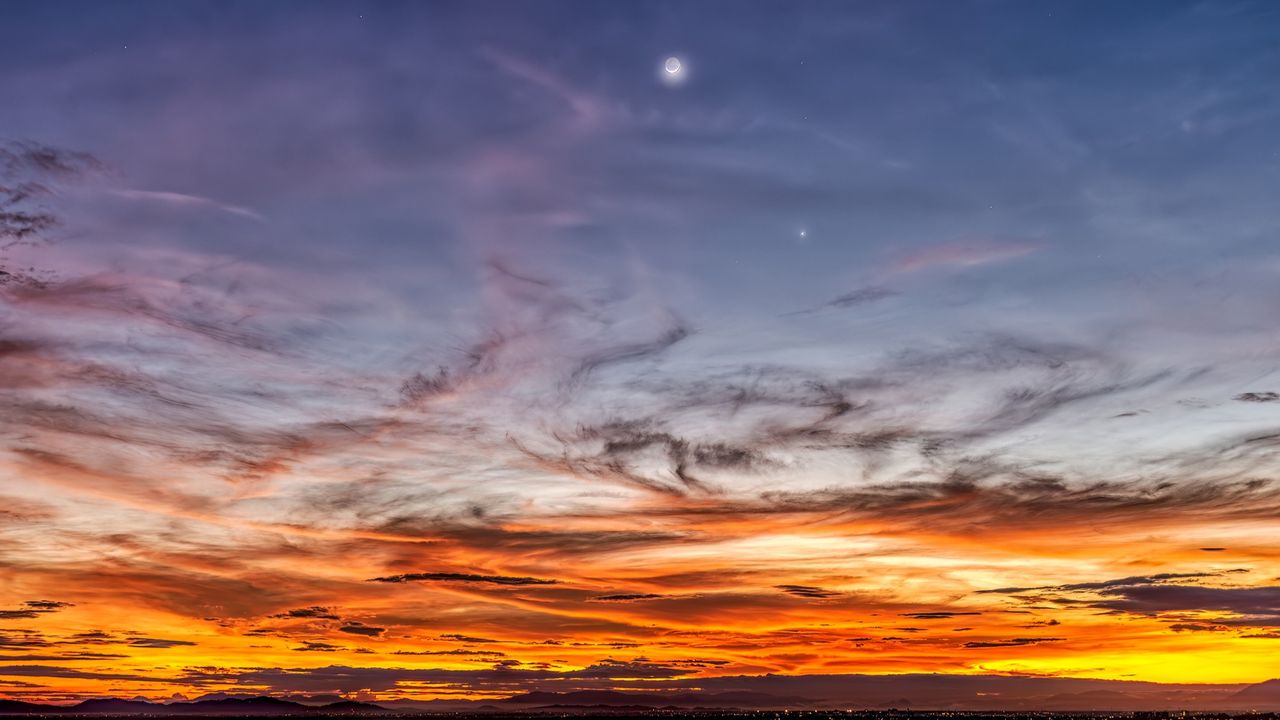
On June 17, stargazers across parts of Earth will witness a rare daytime occultation as a thin crescent moon slides directly in front of Venus, one of the brightest objects in the sky. The event occurs when the moon passes between Earth and Venus, blocking the planet from view in what astronomers call an occultation.
Daytime occultations involving Venus rank among astronomy's rarer spectacles. While the moon occults Venus roughly once every eight years, most events happen at night or in twilight conditions. Viewing them during daylight requires precise positioning on Earth and clear skies, making the June 17 event noteworthy for observers in the right locations.
The occultation begins when the moon's dark edge first touches Venus and concludes when the bright planet emerges from behind the lunar disk. The exact timing and visibility depend on geographic location. Observers in parts of North Africa, the Middle East, and southern Europe will have the best views, though exact locations remain crucial for witnessing the phenomenon.
Safely observing this event requires optical aid. Binoculars or a telescope work well, but observers must use proper solar filters or projection techniques since daytime viewing puts the sun nearby in the sky. Direct viewing without protection risks eye damage. Some planetarium apps and astronomy software can pinpoint the exact time the occultation occurs from specific locations.
The thin crescent moon contrasts dramatically with Venus's brilliant yellow-white disk during an occultation. As the moon slides across Venus, the planet seems to disappear gradually behind the lunar edge, then reappear on the opposite side. The visual contrast makes it one of nature's compelling astronomical events.
Those unable to view the event directly can follow live feeds from observatories or organized viewing events. Space agencies and astronomy organizations often provide updates during rare occultations. The next comparable daytime occultation of Venus