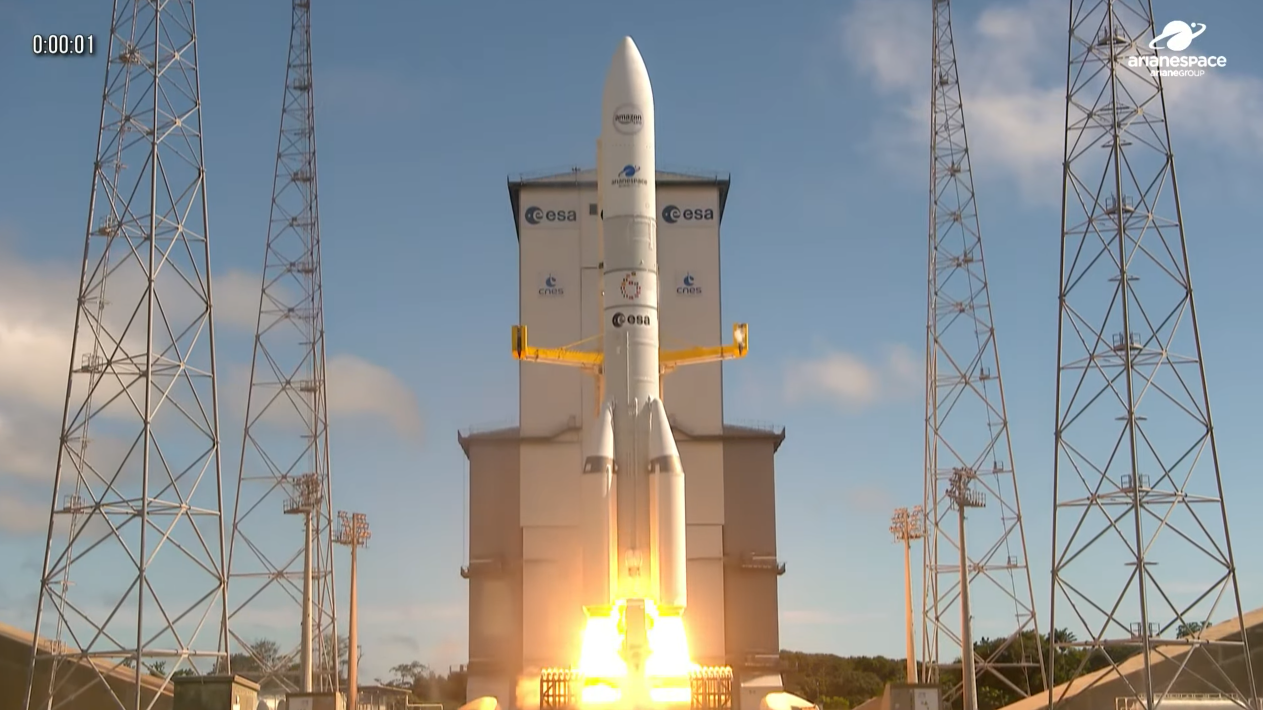
Europe's Ariane 6 rocket successfully lifted off early Wednesday, June 17, deploying a record-breaking payload of Amazon's Leo internet satellites to orbit. The heavy-lift vehicle, operated by the European Space Agency and built by Arianespace, carried the largest batch of Leo satellites launched to date as part of Amazon's Project Kuiper constellation.
Project Kuiper aims to deliver broadband internet coverage globally through low-Earth orbit satellites, competing directly with SpaceX's Starlink and other emerging megaconstellations. Amazon has regulatory approval to launch up to 3,236 satellites in its network. The Ariane 6 launch demonstrates Europe's continued role in the commercial space race, particularly as demand for satellite internet infrastructure accelerates.
Ariane 6 completed its second operational flight with this mission, following its maiden commercial launch in July 2024. The heavy-lift rocket can carry payloads weighing up to 5.9 metric tons to geostationary transfer orbit, making it competitive with other launch vehicles for heavy cargo deployment.
The successful launch underscores growing momentum in satellite internet development. SpaceX has deployed thousands of Starlink satellites since 2019, while OneWeb and other operators continue expanding their constellations. Amazon's aggressive timeline for Project Kuiper positions it as a major player in the anticipated trillion-dollar space economy.
The mission also highlights Europe's strategic importance in launch services. Following the loss of Ariane 5 in retirement and early technical challenges with Ariane 6, this successful operational flight validates the new rocket's commercial viability. European launch capacity strengthens the continent's independence in accessing space and reduces reliance on other nations' vehicles.
Future Ariane 6 launches will carry additional Amazon Leo satellites and other commercial payloads. The rocket's design flexibility allows it to accommodate various