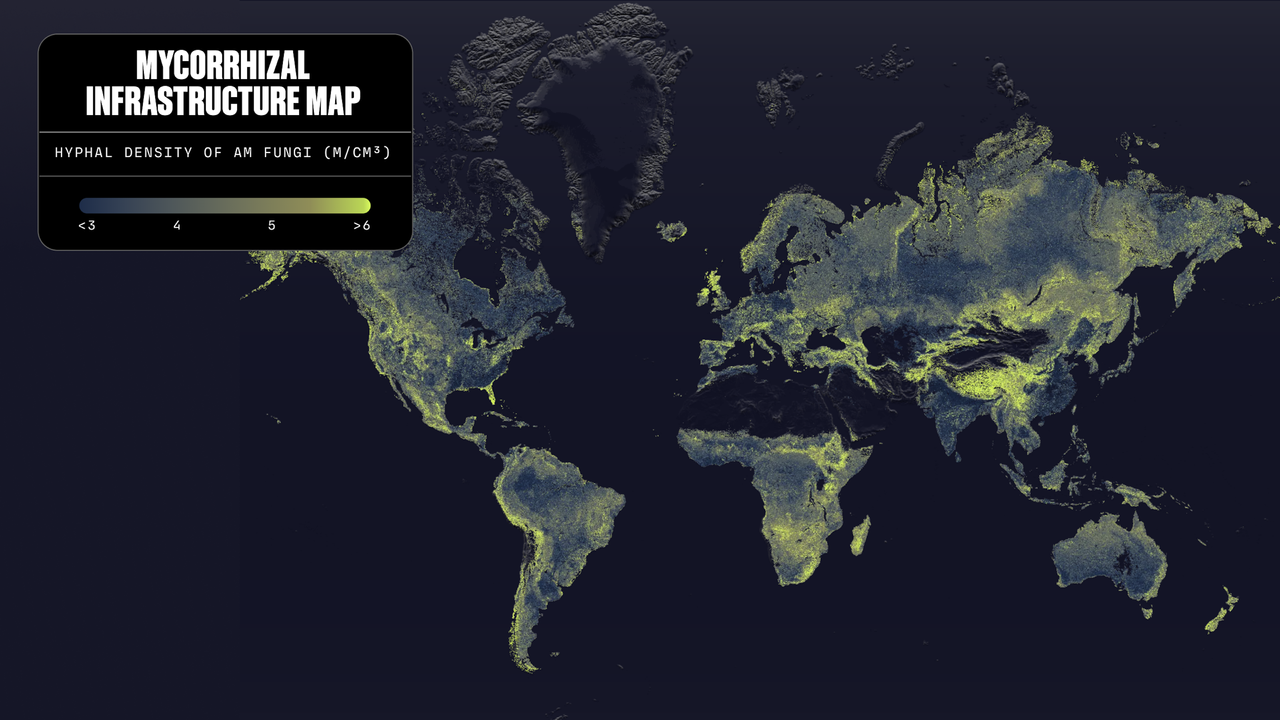
Researchers have created the first global map of underground fungal networks, revealing their staggering extent across Earth's ecosystems. The fungal structures span distances so vast they would cover roughly 10 percent of the Milky Way galaxy if stretched in a line.
These underground networks, called mycorrhizal fungi, form symbiotic relationships with plant roots across nearly every terrestrial habitat on the planet. The fungi exchange nutrients and water with plants in return for sugars produced during photosynthesis. This partnership fundamentally shapes soil health, carbon cycling, and plant survival worldwide.
The mapping effort compiled data from thousands of studies and field observations to quantify fungal distribution across different biomes. Forests, grasslands, and agricultural regions all harbor extensive fungal networks that regulate nutrient availability and influence ecosystem productivity. The sheer scale of these networks underscores their ecological importance at a planetary level.
The research highlights fungi's role in global biogeochemical cycles. These organisms store significant amounts of carbon in soil and facilitate its movement between soil and the atmosphere. Understanding their distribution helps scientists model carbon sequestration and predict how ecosystems respond to environmental changes.
The findings carry implications for agriculture and land management. Many crops depend on mycorrhizal associations for optimal nutrient uptake. Soil disturbances from tilling and chemical treatments can damage these networks, reducing their effectiveness. Recognizing the complexity and extent of fungal systems may prompt farmers to adopt practices that preserve these beneficial underground partnerships.
The global map also reveals knowledge gaps. Certain regions, particularly in the tropics and developing nations, contain relatively sparse data. Researchers emphasize the need for expanded field surveys in understudied areas to refine understanding of fungal distribution in biodiverse regions.
This baseline mapping effort provides a foundation for future research on how fungal networks respond to climate change, deforestation, and other environmental stressors