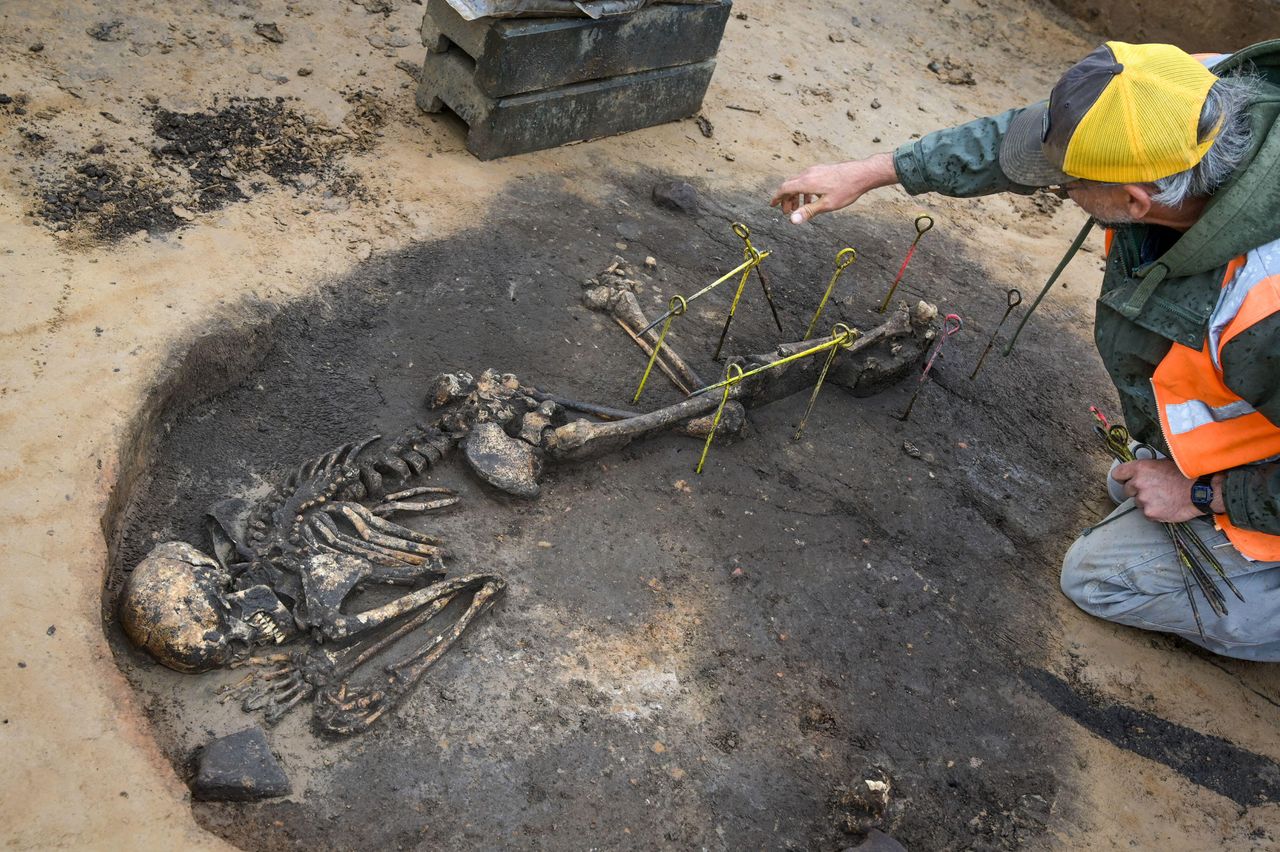
Archaeologists in Germany have uncovered a 5,000-year-old burial that reveals a possible human sacrifice. The remains, belonging to a man from the Corded Ware culture, show severe head trauma consistent with intentional violence.
The skeleton was interred in a pit that had previously served as a kiln, suggesting the burial site held ritual significance. The man's skull bore multiple fractures and blunt-force injuries. Researchers interpret the pattern of damage as deliberate violence rather than accidental trauma, pointing toward sacrifice as part of funeral or religious practices within this Bronze Age community.
The Corded Ware culture, which flourished across northern and central Europe from roughly 3000 to 2300 BCE, is known for distinctive pottery with cord-marked patterns and a pastoral economy centered on herds. Scholars have long debated whether human sacrifice played a role in their religious or social systems. This discovery provides archaeological evidence supporting that practice.
The positioning and context of the burial within a former kiln site adds another layer of interpretation. The reuse of kilns for burials may indicate the transformation of utilitarian spaces into sacred ground, a practice documented in various ancient cultures. The deliberate placement of an injured individual in such a location suggests community participation in or sanction of the act.
The remains now warrant further analysis to determine the man's age at death, health status, and whether similar injuries appear in other burials from the same period and region. Isotope analysis of bone and teeth could reveal his geographic origins and diet, offering insight into whether he was a local community member or an outsider.
This discovery contributes to growing evidence that ritual violence and sacrifice were embedded in Corded Ware societies. Previous findings from other European sites have hinted at such practices, but skeletal remains with clear trauma marks represent tangible proof. The burial's location within a former ki