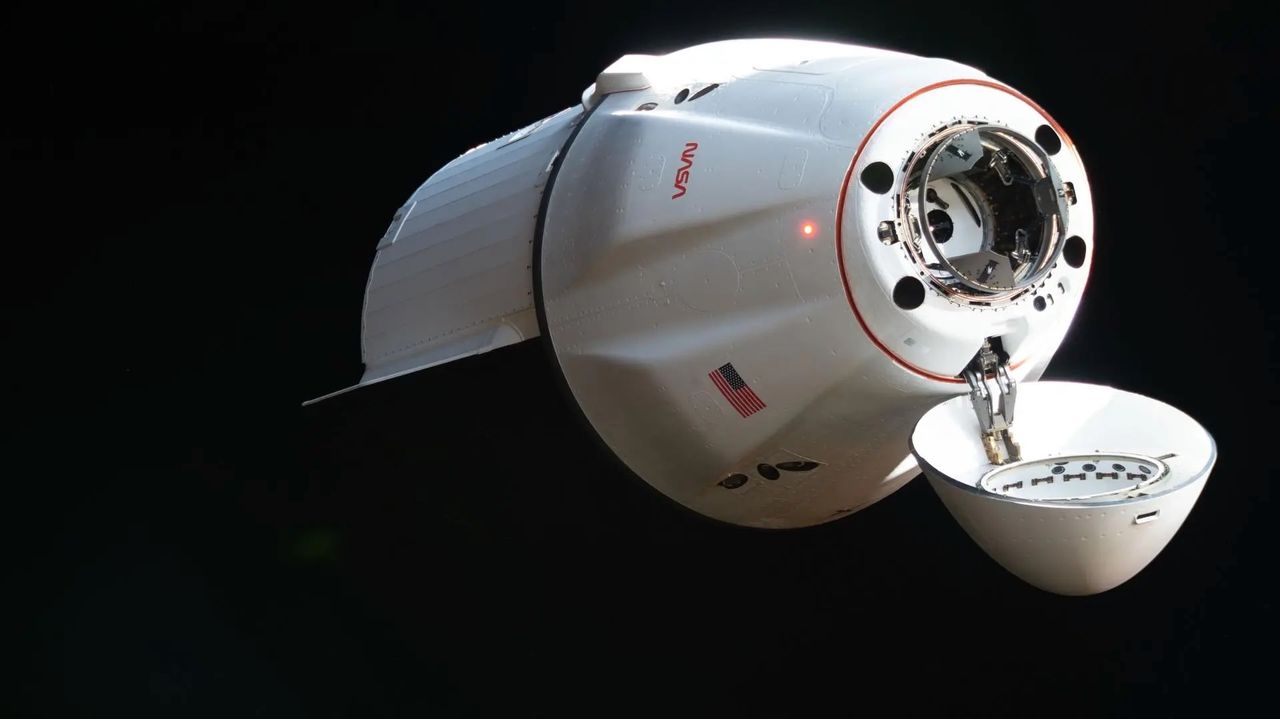
SpaceX's Dragon cargo capsule is returning to Earth today after completing its resupply mission to the International Space Station. The spacecraft will undock from the orbiting laboratory and execute a controlled descent through the atmosphere before splashing down in the Atlantic Ocean.
Dragon capsules fly regularly for NASA under the Commercial Resupply Services contract, delivering equipment, experiments, and supplies to astronauts aboard the ISS. Unlike crew vehicles, cargo Dragons are designed to survive reentry intact, allowing them to return experiments and equipment to Earth for analysis and reuse.
The return flight involves several critical stages. After undocking, Dragon's thrusters will fire to lower its orbit and begin the descent sequence. The capsule then enters the atmosphere at hypersonic speeds, relying on its heat shield to withstand temperatures exceeding 3000 degrees Fahrenheit. Parachutes deploy near the ocean surface to slow the final descent before the capsule splashes down, where recovery ships retrieve it.
SpaceX has conducted dozens of these missions since Dragon began flying in 2012. The capsule's ability to return significant cargo volumes makes it valuable for ISS operations. Researchers use returning Dragon spacecraft to bring back experiments that require Earth's laboratories for analysis, from biological samples to materials science investigations.
Space.com is offering live coverage of the undocking and deorbit burn, which viewers can watch online. The exact timing depends on ISS orbital mechanics and mission requirements, but the spacecraft typically requires several hours from undocking to splashdown.
This routine resupply cycle reflects the maturation of commercial spaceflight. What once required government spacecraft now occurs regularly through private industry partnerships, freeing NASA resources for deeper space exploration goals.