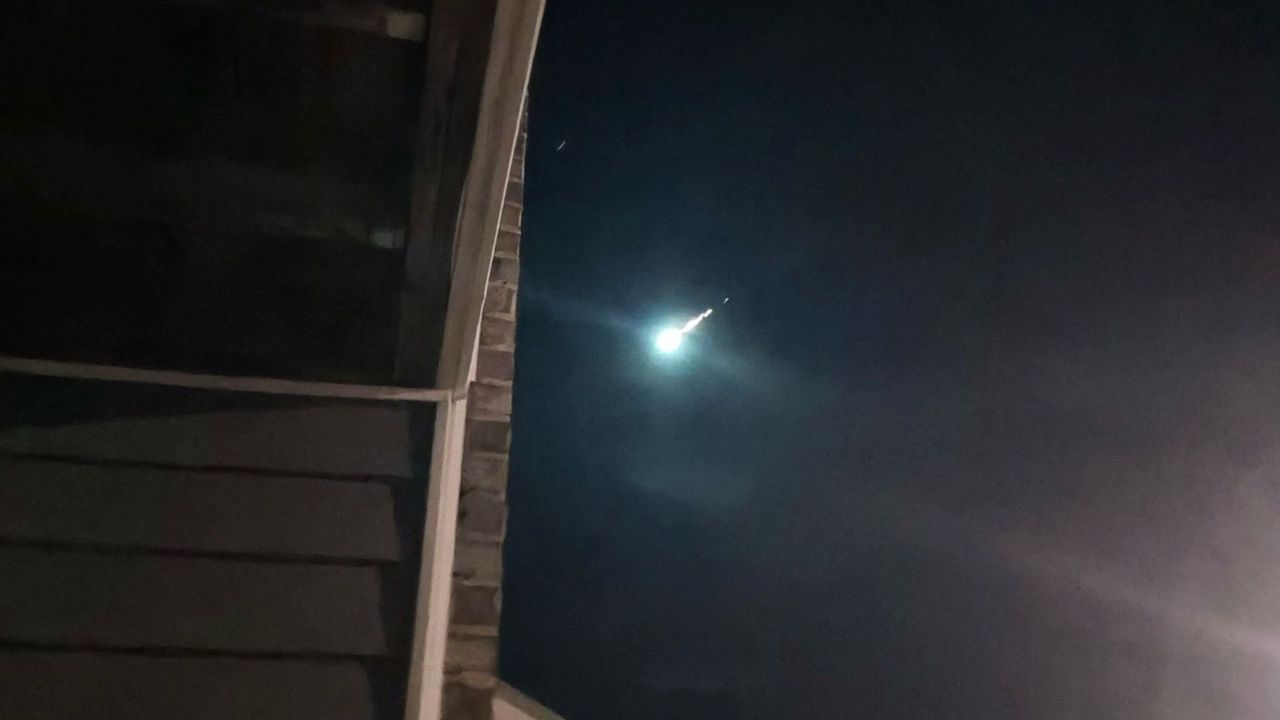
A spectacular fireball streaked across the Midwest sky, traveling 300 miles in seconds before burning up in the atmosphere. Witnesses across multiple states reported the bright meteor, which created a visible trail as it descended through Earth's atmosphere at extreme velocity.
The fireball's rapid traversal of such a vast distance underscores the incredible speeds at which meteoroids enter the atmosphere. Objects entering from space typically travel at speeds exceeding 45,000 miles per hour. As friction with air molecules increases, the meteoroid heats to thousands of degrees, producing the brilliant light and ionized gases that create the visible trail observers reported.
The Midwest sighting joins a pattern of notable meteor events captured across North America in recent years. Amateur astronomers and casual observers with smartphones have increasingly documented these phenomena, providing valuable data to researchers studying meteoroid composition and trajectory. Organizations like the American Meteor Society collect eyewitness reports that help scientists triangulate the meteor's path and estimate its original size.
Fireballs bright enough to be visible in daylight or to cast shadows on the ground remain relatively rare events. The spectacle occurs when a meteoroid large enough to survive initial atmospheric friction enters at a steep angle, maximizing the heated column visible from the ground. Once the object disintegrates completely, fragments that reach the surface become meteorites available for scientific analysis.
No impacts or injuries were reported from this event. Most fireballs either disintegrate entirely at altitude or break into pieces too small to cause damage. The 300-mile visibility range indicates witnesses across multiple states saw the phenomenon, though the actual meteoroid path likely covered less distance at lower altitudes.
Continued documentation of such events helps astronomers refine models of meteoroid populations near Earth and improves understanding of atmospheric entry dynamics. Each sighting contributes to the growing database researchers use to predict future events and assess the risk posed by larger objects.