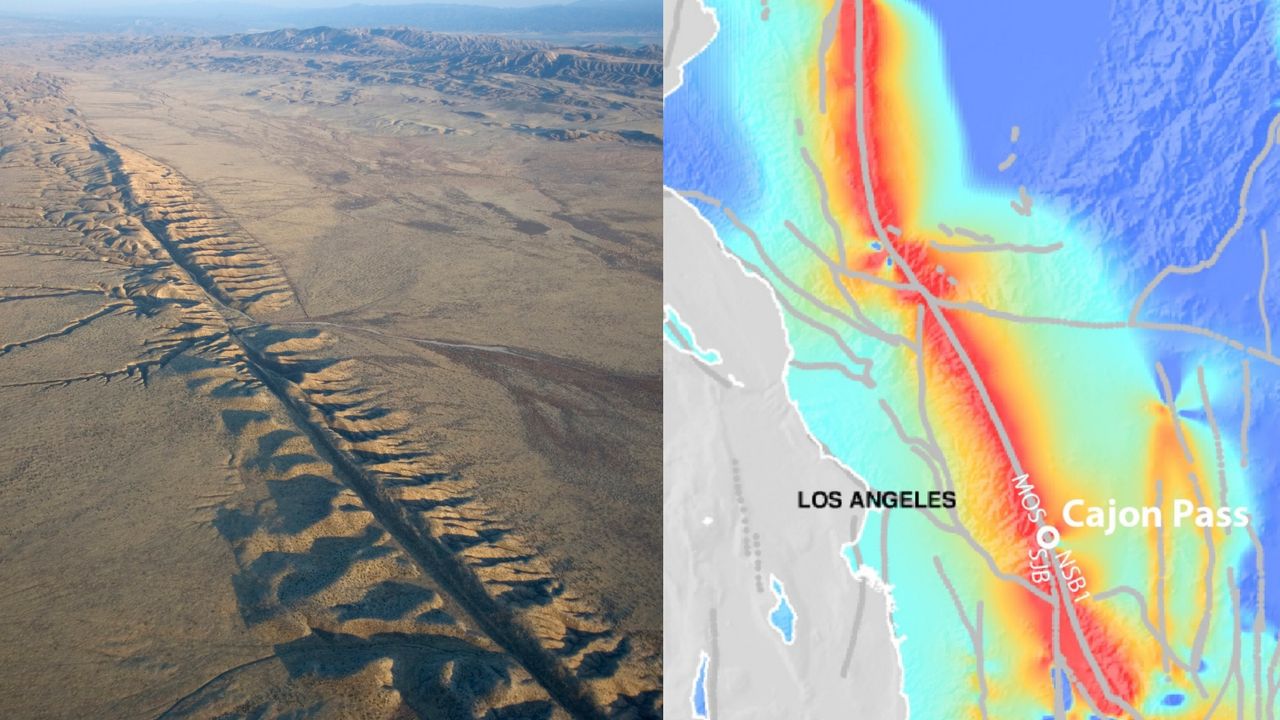
Researchers have determined that the San Andreas fault and the San Jacinto fault in Southern California have accumulated tectonic stress at levels not seen in 1,000 years, raising the prospect of a major earthquake rupturing across both faults simultaneously.
The study analyzed the buildup of strain energy along these two major fault systems. The San Andreas fault, which runs roughly 800 miles through California, and the San Jacinto fault, located to the south and east, sit close enough that a rupture initiating at one could potentially propagate to the other. When tectonic plates move, they accumulate stress at fault boundaries. Once stress exceeds the strength of the rock, rupture occurs, releasing that energy as an earthquake.
The researchers found both faults now carry record stress levels for the past millennium. This observation follows decades of smaller earthquakes in the region and ongoing plate motion that continues to strain the fault systems. The proximity of these faults creates a particular hazard. If the San Andreas ruptures first, the released energy and ground motion could trigger failure along the San Jacinto fault, potentially creating a larger, more destructive event than either fault alone would produce.
Southern California sits at the boundary between the North American and Pacific plates, which move horizontally past each other at roughly two inches per year. This motion concentrates stress along major fault lines. Historical records and geological evidence show large earthquakes struck this region periodically before modern seismic monitoring began in the early 1900s.
The timing of rupture remains unpredictable. Stress accumulation does not follow a strict clock. Earthquakes can occur suddenly after gradual stress buildup, or stress can remain locked for centuries longer than recent patterns suggest. This uncertainty complicates hazard planning for the millions of people living in Southern California.
The findings underscore why earthquake preparedness remains essential for the region. Emergency management officials