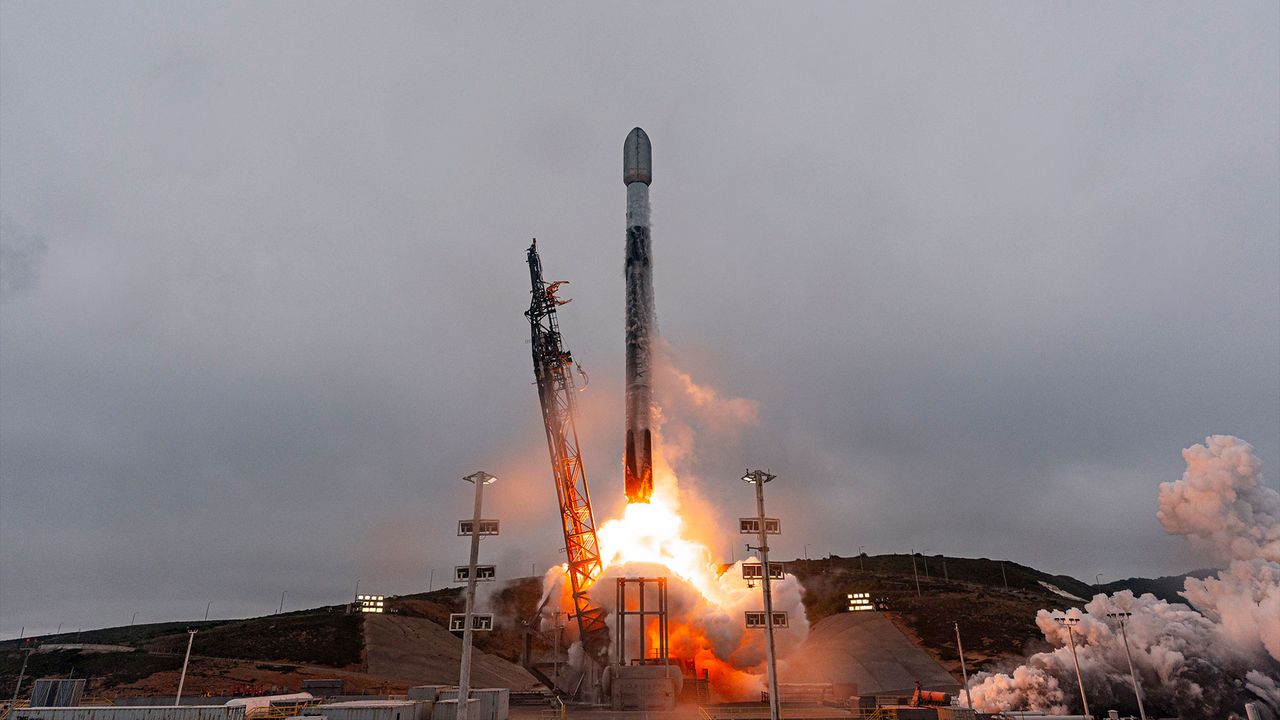
SpaceX launched its first Starlink mission following the company's public offering on June 15, 2026. The Falcon 9 rocket carrying 24 Starlink internet satellites lifted off from Vandenberg Space Force Base in California.
The launch marked a return to normal operations after SpaceX completed its transition from private to publicly traded status. The company has been regularly deploying batches of Starlink satellites since the program's inception, adding to the constellation that now numbers in the thousands in low Earth orbit.
Starlink satellites deliver broadband internet to remote regions worldwide where traditional infrastructure proves impractical or prohibitively expensive. Each satellite weighs approximately 573 pounds and operates at an altitude of roughly 340 miles. SpaceX designed the constellation to provide global coverage with thousands of individual spacecraft working in concert.
The Falcon 9 rocket used for Monday's launch is SpaceX's primary workhorse, capable of lifting roughly 50,000 pounds to low Earth orbit. After deployment, the rocket's first stage returns to Earth for landing and reuse, a key component of SpaceX's cost reduction strategy. The company has successfully landed and reflown first stages hundreds of times.
This mission continues SpaceX's aggressive cadence of Starlink launches. The company targets deploying hundreds of satellites annually to maintain network coverage and replace aging spacecraft. Each launch adds redundancy and capacity to the constellation.
SpaceX went public in May 2026, ending nearly two decades as a privately held company. The move provided capital for expanded operations and accelerated development of other projects, including Mars exploration plans and its larger Starship vehicle currently in testing.