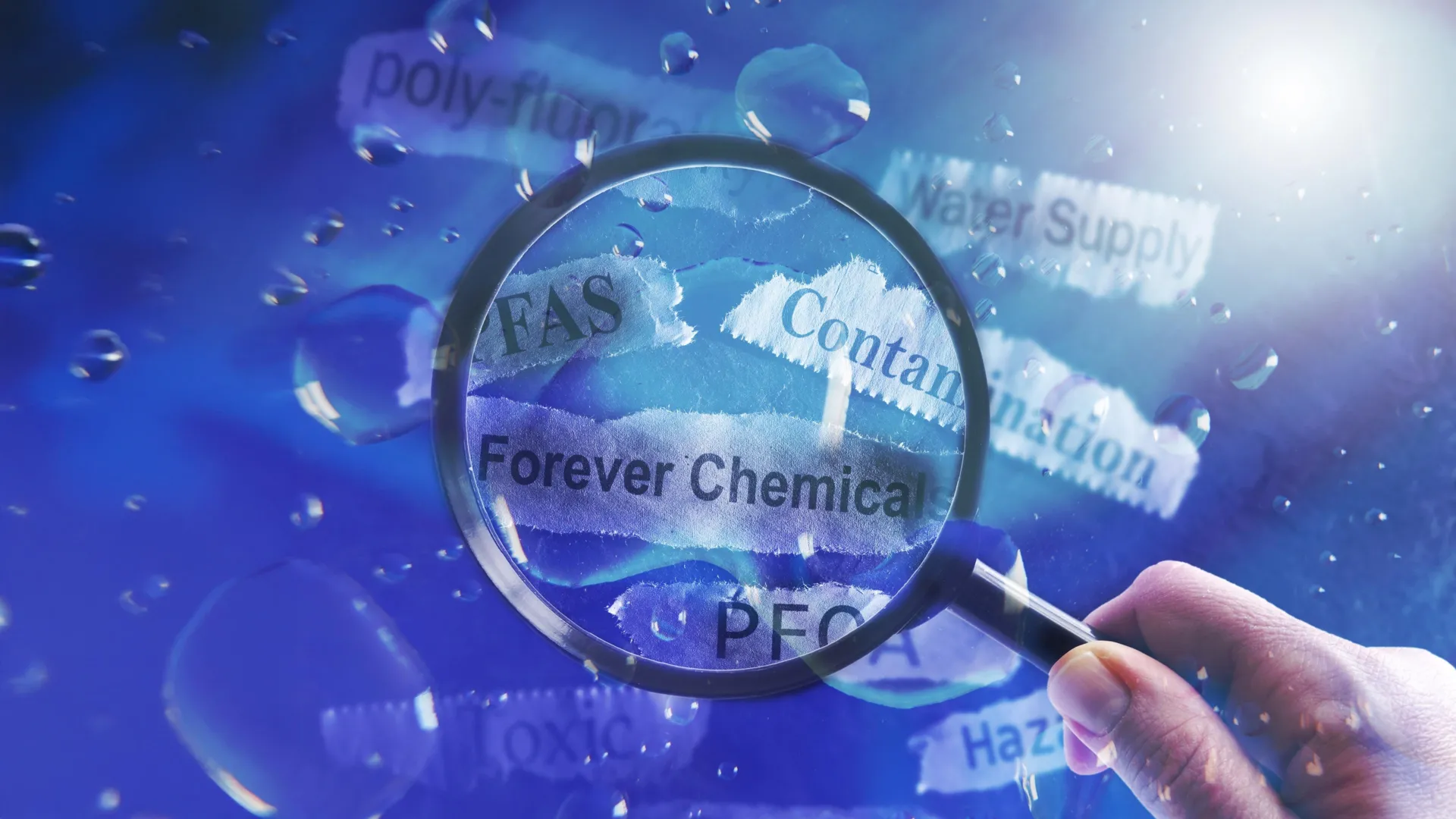
Researchers have identified a previously unknown vulnerability in PFAS, the notorious "forever chemicals" that persist in the environment and accumulate in human bodies. Scientists discovered that hydrogen radicals produced by intense ultraviolet light can degrade these stubborn compounds without requiring additional chemical treatments.
The finding emerges from work examining how UV radiation interacts with PFAS at the molecular level. Hydrogen radicals, highly reactive atoms created when UV light breaks apart hydrogen-containing molecules, attack the carbon-fluorine bonds that make PFAS so resistant to degradation. This mechanism offers a pathway to destroy these chemicals more efficiently than existing methods.
PFAS contamination represents a major environmental and public health challenge. These synthetic compounds, used in non-stick cookware, water-resistant textiles, and aqueous film-forming foams, resist heat, water, and oil. Their extreme stability means they accumulate in soil, groundwater, and organisms rather than breaking down. Military bases, industrial sites, and firefighting training areas show particularly high PFAS concentrations.
Current remediation approaches rely on activated carbon filters, which trap PFAS without destroying them, or chemical treatments that add complexity and cost. The UV-hydrogen radical mechanism offers a potentially cleaner approach. By harnessing natural photochemical processes, researchers could develop technologies that mineralize PFAS into harmless byproducts.
The discovery carries limitations. Laboratory conditions using intense UV light differ from real-world contamination sites. Scaling the approach to industrial levels requires solving engineering challenges around light intensity, exposure time, and water matrix interference. Murky water with high organic content may shield PFAS from UV penetration.
Despite these hurdles, the research illuminates a fundamental weakness in PFAS chemistry. This understanding could accelerate development of photochemical reactors or hybrid systems combining UV treatment with other degradation pathways. As regulations around