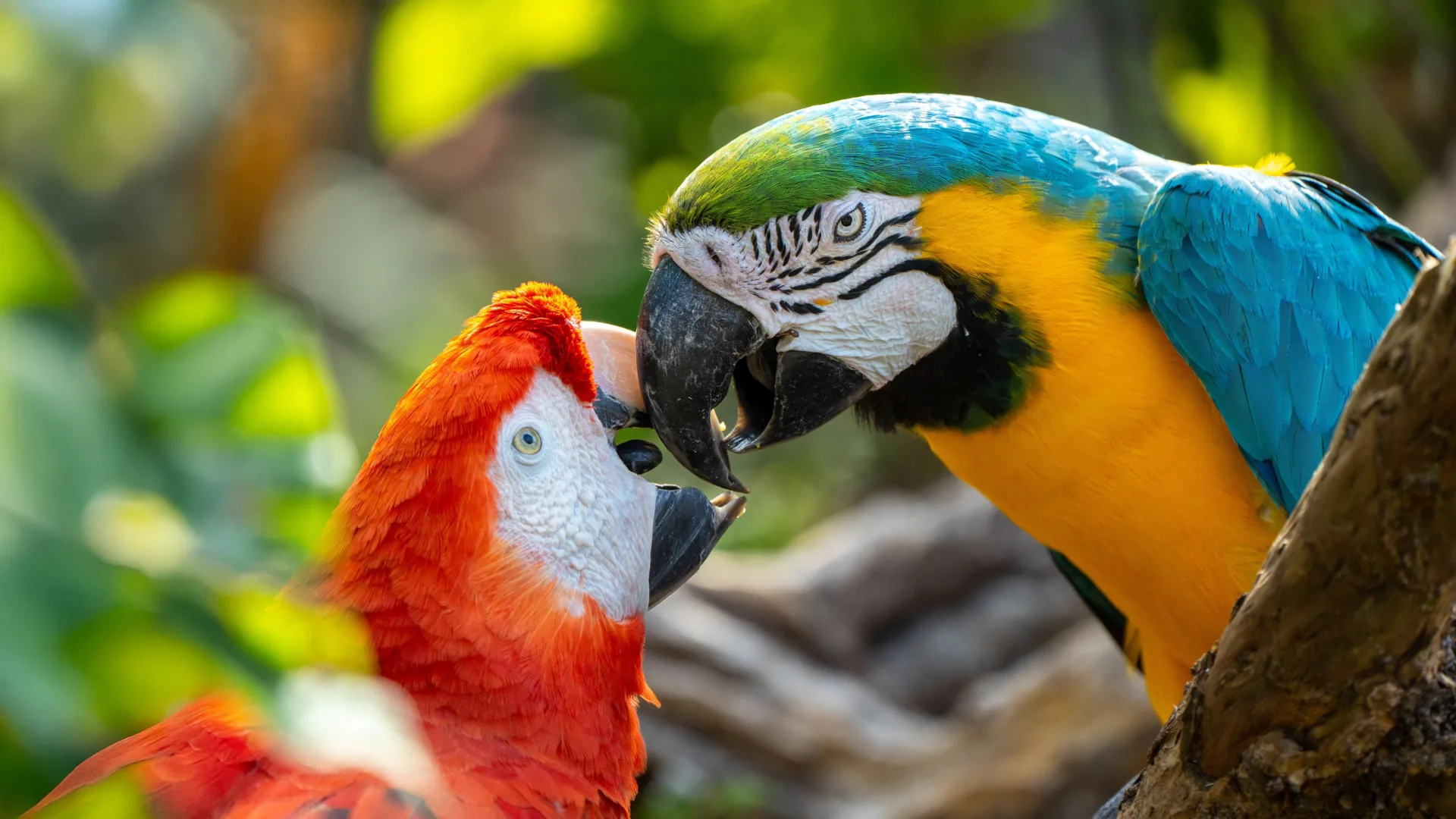
Parrots employ names as functional labels rather than merely mimicking human speech, according to new analysis of pet parrot recordings. Researchers examined hundreds of audio samples and identified patterns showing birds use distinct vocalizations to identify specific people, animals, and individual companions.
The findings reveal parrots apply names in sophisticated ways. Some birds produced names for individuals absent from the room, suggesting they reference entities beyond immediate context. Others used their own names strategically to capture attention, demonstrating intentional communicative purpose rather than reflexive repetition.
This research expands understanding of parrot cognition and communication. Previously, scientists debated whether parrots truly comprehend language or simply reproduce sounds through learned association. The evidence of referential naming suggests parrots possess conceptual understanding of identity and employ vocal signals purposefully within social contexts.
The study contributes to broader evidence of avian intelligence. Parrots rank among the most cognitively advanced birds, with brain-to-body ratios approaching some primate species. They solve complex problems, use tools, and demonstrate self-awareness. Evidence of name usage aligns with these capacities and indicates their vocal communication operates at levels more complex than previously understood.
Limitations exist. The research focused on pet parrots in human environments, where birds experience intensive language exposure. Wild parrot communication patterns may differ substantially. Additionally, analyzing recordings introduces interpretive challenges. Researchers must distinguish intentional naming from coincidental vocal similarities or conditioned responses to human speech patterns.
The findings open questions about how parrots acquire names, whether different species vary in naming abilities, and how this communication system functions in wild populations. Future research might examine whether parrots teach names to offspring or modify names across social groups, revealing deeper organizational principles in avian communication.
This work demonstrates that animal cognition frequently exceeds initial scientific assumptions. As researchers apply more rigorous analytical methods to behavior studies