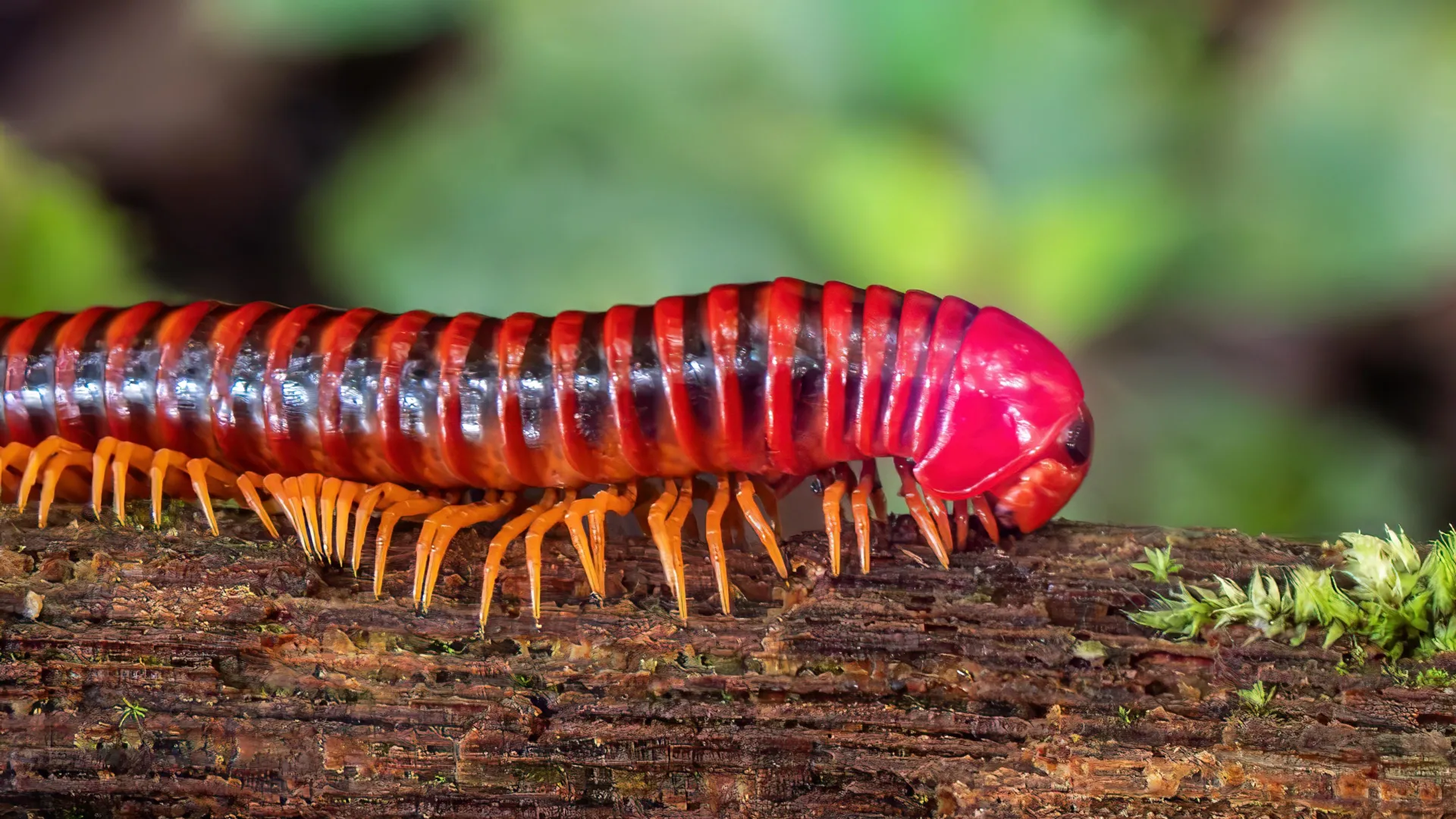
Millipedes colonized land approximately 460 million years ago, beating vertebrates to terrestrial environments by roughly 80 million years, according to new research that reconstructs the evolutionary history of these arthropods.
Scientists completed a comprehensive phylogenetic analysis of millipedes, creating the first detailed family tree for the group. The study reveals that millipedes evolved sophisticated chemical defense mechanisms early in their history, allowing them to survive in hostile terrestrial environments long before other animals made the transition from water to land.
The research identifies millipedes as ecosystem engineers whose burrowing and feeding activities shaped early soil development and nutrient cycling on primitive continents. Their ability to process plant material and break down organic matter contributed significantly to transforming barren landscapes into habitable environments for later-arriving organisms.
The evolutionary timeline places millipede diversification in the Ordovician period, when most complex life remained aquatic. Vertebrates did not establish permanent populations on land until the Devonian period, roughly 375 million years ago. This 80-million-year gap demonstrates that arthropods, particularly millipedes, pioneered terrestrial colonization and modified ecosystems before larger, more familiar animals arrived.
The team's phylogenetic work clarifies relationships between major millipede lineages and traces the origins of their chemical defenses. These compounds, which millipedes still use today for protection against predators, likely evolved as adaptations to survive desiccation and predation in early land environments. The specific defensive chemistry varied among different millipede groups, reflecting diverse ecological niches they occupied.
This research fills a significant gap in understanding early terrestrial ecosystems. Previous studies focused heavily on vertebrate transitions to land, overlooking arthropod contributions to planetary habitability. The findings underscore how invertebrates fundamentally shaped Earth's biosphere before larger creatures emerged, establishing soil structure and nutri