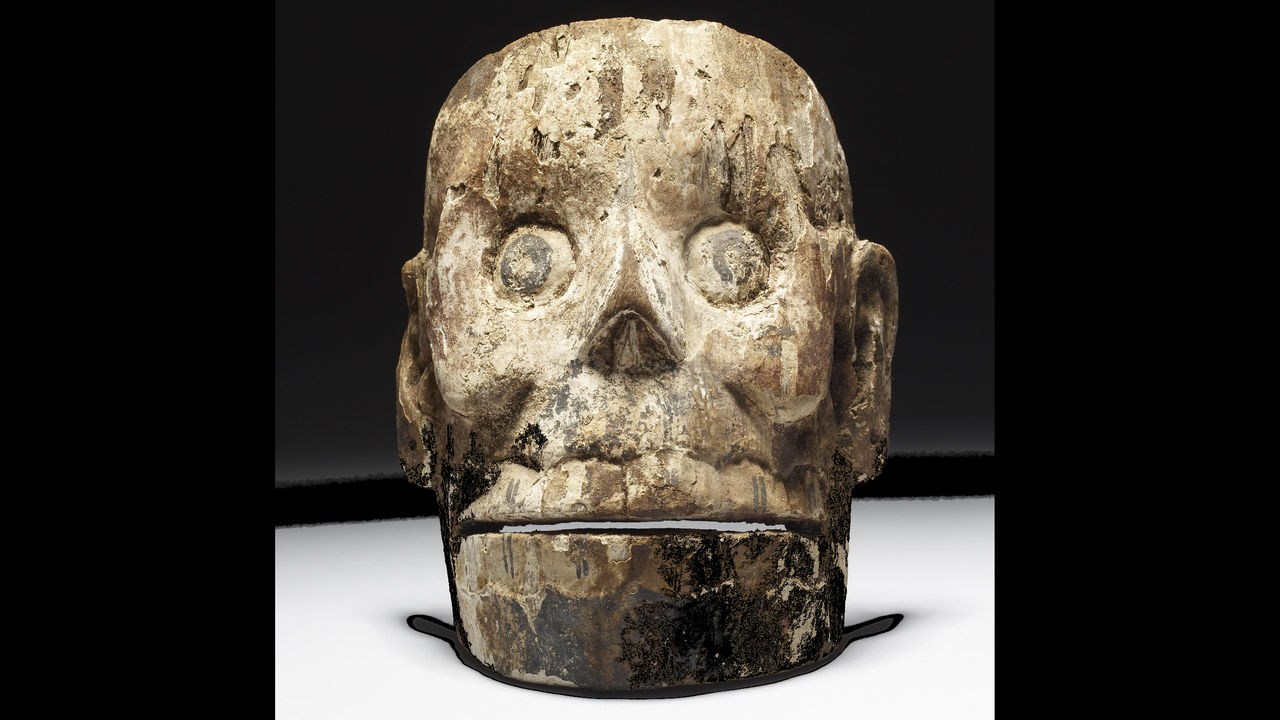
Archaeologists have identified a 500-year-old skull-shaped mask as a ritual object connected to Mictlantecuhtli, the Aztec god of the underworld. The mask, crafted during the Aztec Empire era, served ceremonial purposes in rites honoring the death deity who was believed to dismember the deceased as they entered his realm.
The artifact represents a window into Aztec spiritual practices and beliefs about the afterlife. Mictlantecuhtli held a central role in Aztec cosmology, governing Mictlan, the underworld realm where the dead faced transformation and judgment. Ritual masks like this one allowed participants to embody the god during ceremonies, creating a direct spiritual connection between the living and the divine forces controlling death and rebirth.
The mask's design reflects the Aztec artistic tradition of depicting death imagery through skeletal features. Such objects were typically used by priests or nobility during important ceremonial occasions, particularly those marking transitions between seasons or honoring deceased community members. The craftsmanship involved in creating the mask demonstrates the technical skill Aztec artisans possessed, as well as the cultural investment in death-related religious observance.
Scholars continue to examine how these ritual objects functioned within Aztec religious practice. The mask provides tangible evidence of ceremonial life in pre-Hispanic Mesoamerica, offering insights into how the Aztecs conceptualized death not as an ending but as a transformation requiring specific rituals and divine mediation.
The discovery and analysis of artifacts like this mask enriches understanding of Aztec civilization beyond warfare and political structures, revealing the sophisticated theological framework that guided daily and ceremonial life. Museums and research institutions preserve such objects to maintain knowledge of indigenous American cultures and their sophisticated approaches to spirituality and mortality.