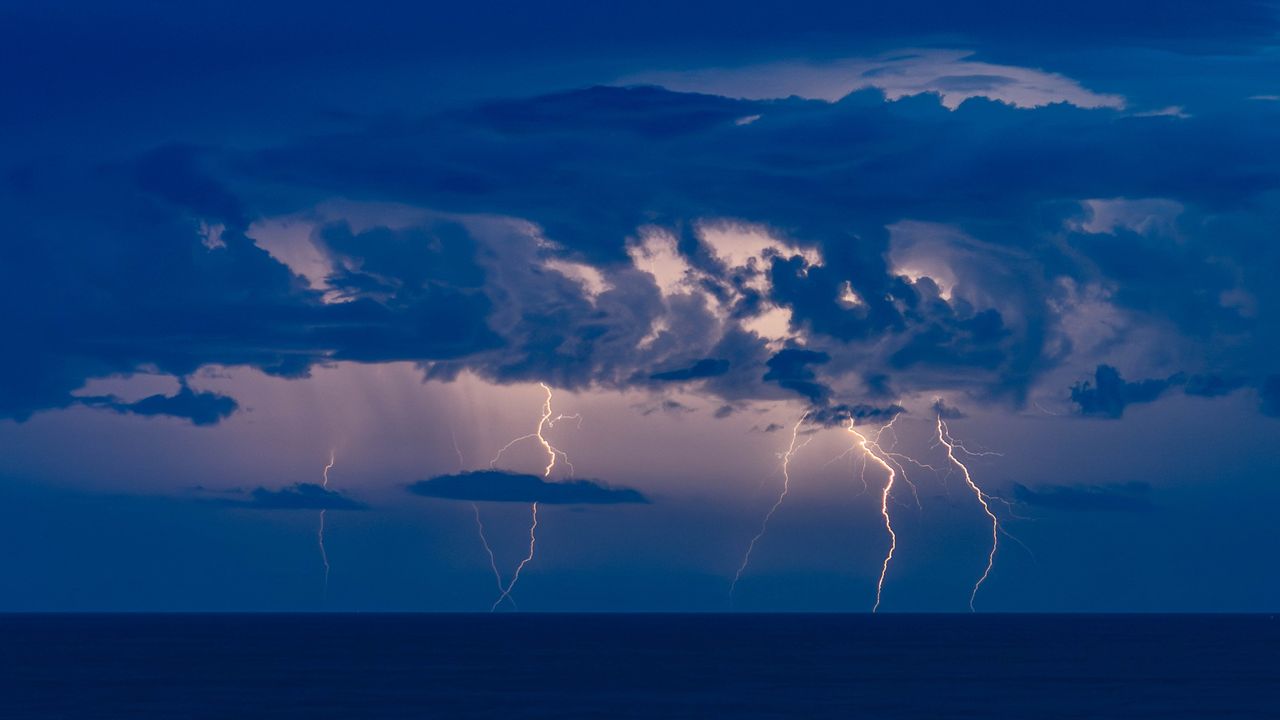
The National Oceanic and Atmospheric Administration declared El Niño officially underway, with forecasters assigning a 63 percent probability that the climate pattern will rank among the strongest ever recorded since 1950.
NOAA's Climate Prediction Center made this determination based on oceanic and atmospheric conditions across the tropical Pacific Ocean. El Niño occurs when unusually warm water spreads across the equatorial Pacific, disrupting global weather patterns and ocean circulation. The phenomenon typically develops every few years but varies dramatically in intensity.
Strong El Niño events reshape weather worldwide. They bring increased rainfall to parts of South America and the southern United States, while triggering droughts in Southeast Asia, Australia, and parts of Africa. Ocean temperatures rise globally, affecting marine ecosystems and fisheries. The pattern also influences hurricane seasons in the Atlantic and Eastern Pacific basins.
NOAA's 63 percent confidence level reflects current sea surface temperatures and subsurface ocean heat content measured by buoys and satellites. The agency monitors these indicators continuously to track El Niño development and strength. Historical data since 1950 provides the baseline for comparisons, showing that the strongest El Niño events cause measurable disruption to global food production, water availability, and economic activity.
The announcement carries weight for agriculture, disaster preparedness, and climate planning across multiple nations. Meteorologists use El Niño forecasts to adjust seasonal predictions for precipitation, temperature, and severe weather months in advance. Insurance companies and commodity traders incorporate these outlooks into risk assessments.
NOAA updates its El Niño outlook monthly as new observational data arrives. The agency's long-range forecast models, which incorporate ocean temperatures, atmospheric pressure patterns, and historical analogs, guide these projections. Even with modern forecasting tools, predicting the exact strength and duration of El Niño remains challenging because subsurface ocean conditions sometimes