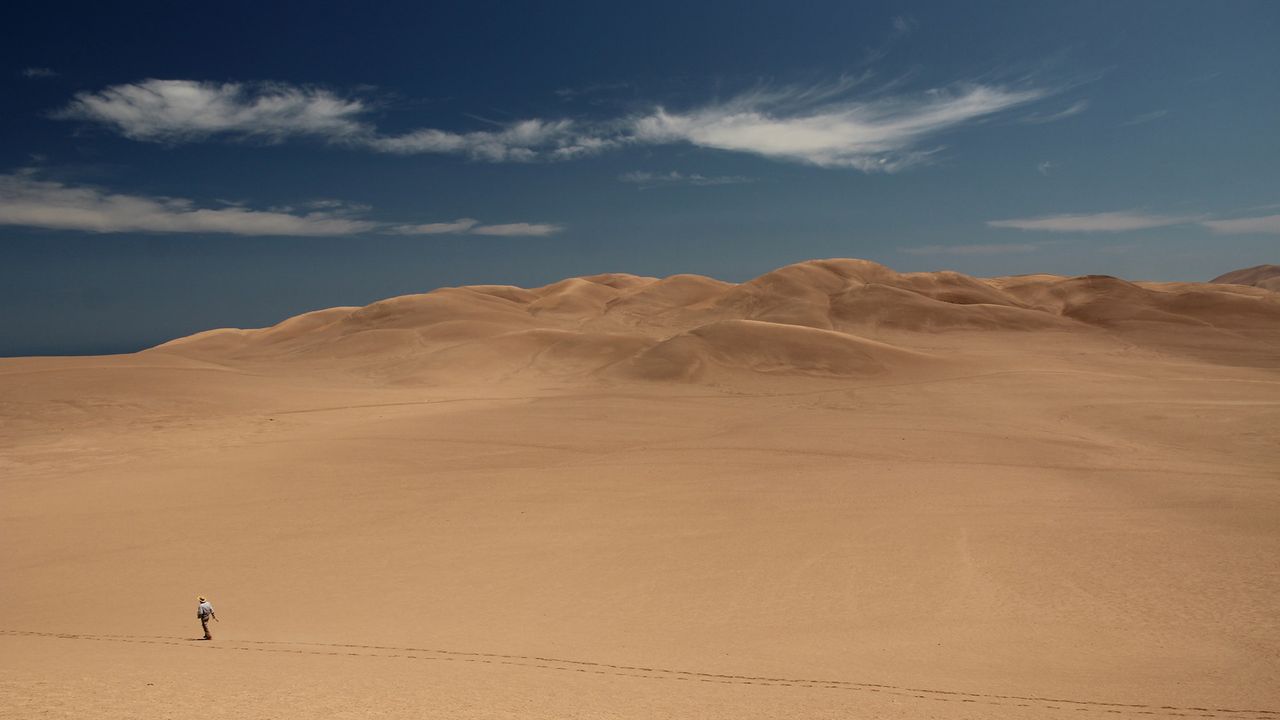
Researchers have pushed back the timeline for the Atacama Desert's formation by 20 million years, revealing that South America's driest region began drying out more than 40 million years ago, long before the Andes Mountains rose to their current height.
The Atacama Desert, which receives less than 5 millimeters of rainfall annually, represents one of Earth's most extreme arid environments. The conventional understanding held that the desert's aridity resulted primarily from the Andes' formation, which created a rain shadow effect by blocking moisture-laden air from the Pacific. The new research upends this assumption by establishing that the desert's core had already become hyperarid well before the mountains reached their present elevation around 20 million years ago.
Scientists reached this conclusion by studying geological records and climate patterns preserved in the desert's sediments and mineral deposits. The evidence indicates that other factors beyond the Andes contributed to the Atacama's emergence as a hyperarid zone. Changes in ocean circulation patterns, particularly the strengthening of the cold Peru Current along the Pacific coast, likely played a substantial role in extracting moisture from the atmosphere before it could reach inland regions. Additionally, the positioning of continents and shifts in atmospheric circulation systems would have influenced precipitation patterns during this earlier period.
This revised chronology reshapes our understanding of how extreme deserts form and evolve. It demonstrates that hyperaridity can establish through multiple mechanisms operating independently, not solely through mountain-building processes. The Atacama's 40-million-year history makes it one of the world's longest-existing deserts, with implications for understanding planetary climate stability over deep time.
The finding also carries relevance for studying life in extreme environments. Organisms adapted to the Atacama's harsh conditions may have been evolving in response to aridity for far longer than previously believed, potentially explaining the unique biological and chemical signatures found in