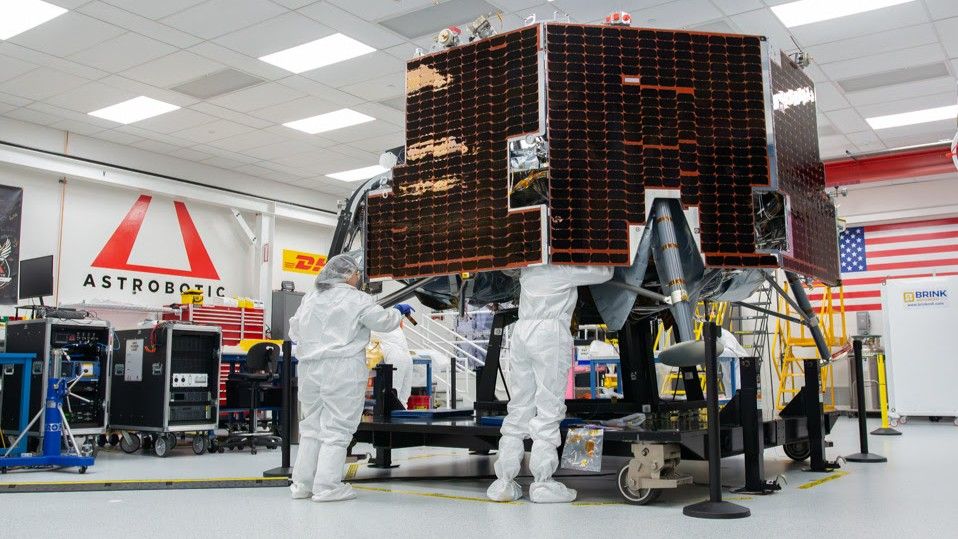
Astrobotic Technology revealed Griffin-1, a lunar lander designed to transport one of the heaviest cargo loads ever delivered to the Moon's surface. The Pittsburgh-based company built Griffin-1 as part of NASA's Moon Base initiative, which aims to establish sustained human presence on the lunar surface.
Griffin-1 represents a significant advancement in commercial lunar logistics. The lander can carry substantially more mass than previous commercial lunar vehicles, addressing a critical need for NASA's Artemis program and future Moon Base operations. Heavy payload capacity enables delivery of life support systems, habitats, scientific instruments, and equipment necessary for extended lunar missions.
The lander builds on Astrobotic's experience with its Peregrine lander, which made a lunar approach flight in early 2024. While Peregrine encountered technical challenges during its mission, it provided valuable engineering data that informed Griffin-1's design.
Griffin-1 features an increased cargo deck and enhanced power systems to support the additional weight. The lander uses propulsive landing technology, allowing precise placement of equipment in designated lunar base locations. Its design prioritizes compatibility with NASA's existing Moon Base architecture and future commercial lunar economy requirements.
NASA selected Astrobotic as one of several commercial partners under its Commercial Lunar Payload Services program. This initiative leverages private industry expertise and innovation to reduce costs while accelerating lunar exploration timelines. Companies like Intuitive Machines and Firefly Aerospace are also developing heavy-lift lunar landers for similar NASA contracts.
Griffin-1's development reflects growing momentum in commercial space exploration. As multiple private companies race to establish reliable lunar cargo transport capabilities, competition drives technological innovation and cost efficiency. The lander's creation demonstrates that sustained lunar development requires partnership between government agencies and commercial enterprises.
Astrobotic has not yet announced a specific launch date for Griffin-1, but the company expects missions within the coming