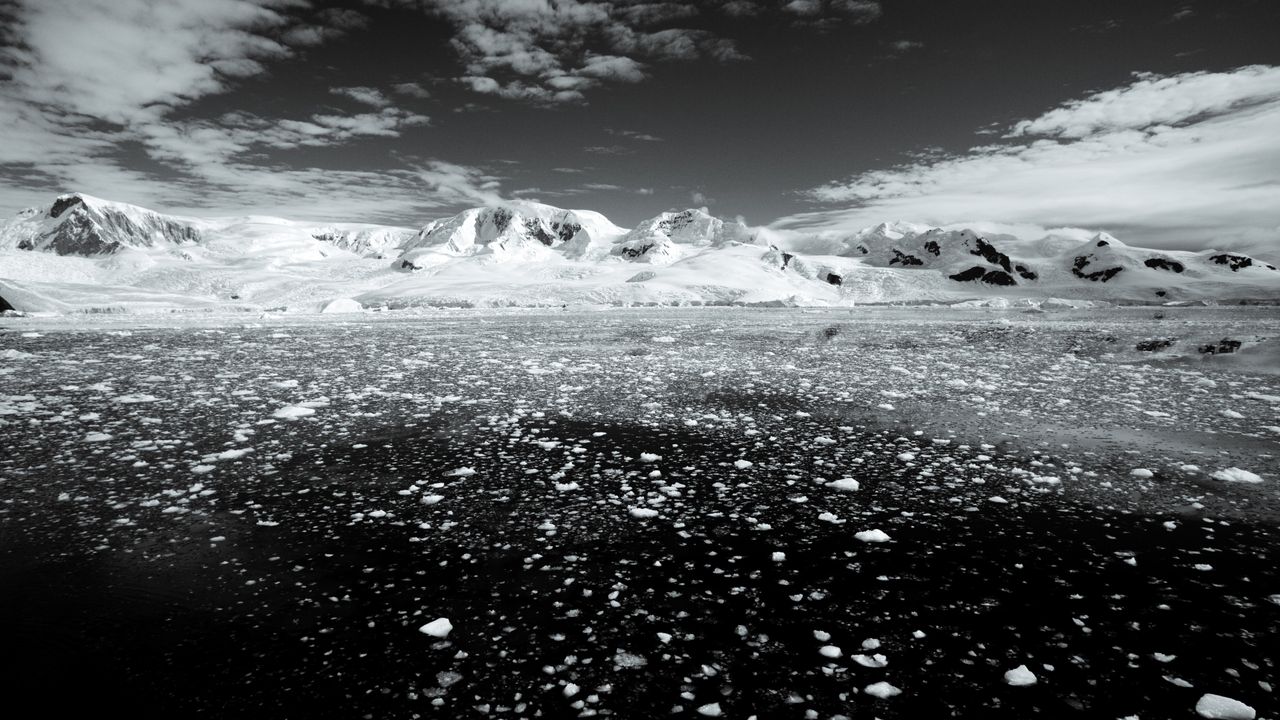
A patch of Antarctic sea ice roughly the size of Texas has failed to form over the Bellingshausen Sea off western Antarctica, marking a dramatic departure from historical patterns and raising alarms about climate change's grip on polar regions.
Scientists monitoring the Bellingshausen Sea have documented the persistent absence of winter sea ice that normally accumulates in this area each year. The missing ice sheet spans an expanse comparable to the entire state of Texas. Researchers are now investigating whether this loss represents a permanent shift in Antarctic sea ice dynamics or a temporary anomaly driven by warming ocean and atmospheric conditions.
The Bellingshausen Sea sits among the most climate-sensitive regions of Antarctica. Water temperatures in this zone have warmed substantially over recent decades, and atmospheric circulation patterns have shifted in ways that discourage ice formation. Unlike the Arctic, where sea ice loss has been tracked rigorously for decades, Antarctic sea ice dynamics remain less well understood, making this event particularly notable to researchers.
The implications extend beyond the immediate region. Sea ice plays a critical role in Antarctic ecosystems, providing habitat for krill and fish species that form the base of the Southern Ocean food web. Penguins, seals, and whales depend on these organisms for survival. Loss of sea ice can cascade through these systems, affecting breeding cycles and food availability.
The connection between this ice loss and anthropogenic warming remains under investigation. Ocean circulation patterns, atmospheric pressure systems, and sea surface temperatures all influence ice formation in the region. Some researchers point to regional atmospheric variations, while others highlight the broader warming trend affecting the Southern Ocean. The distinction matters for understanding whether this represents a localized event or a symptom of accelerating polar climate change.
Scientists have emphasized that the absence of this ice mass this winter does not necessarily mean it will never return. However, if warming trends continue unabated, the Bellingshausen Sea could experience a new normal of reduced