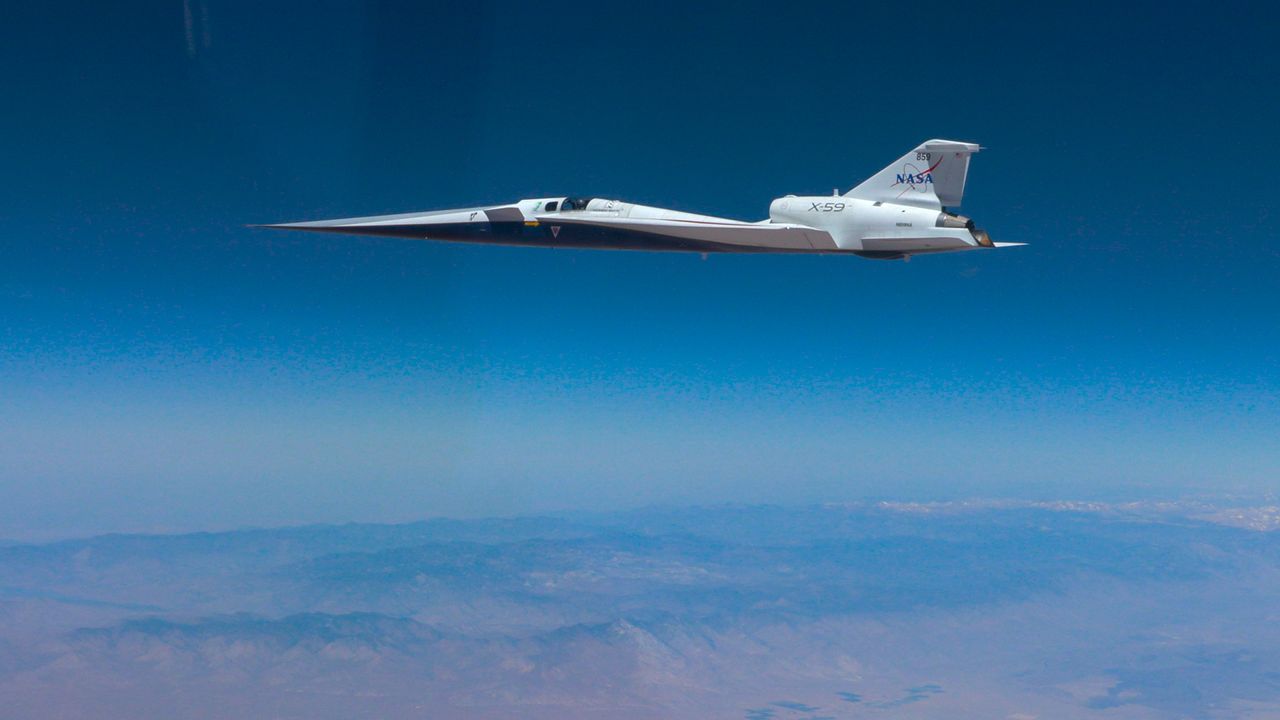
NASA and Lockheed Martin's experimental X-59 aircraft achieved supersonic flight for the first time, reaching Mach 1.1 and completing a critical milestone toward developing quieter commercial supersonic travel.
The X-59 represents a fundamental shift in supersonic aviation design. Rather than producing the thunderous sonic boom that has limited supersonic flight to remote areas since the 1970s, the aircraft uses novel aerodynamic shaping to reshape shock waves. This compression manages sound pressure differently, creating a series of quieter thumps instead of a single explosive boom.
The aircraft's unusual design reflects this goal. Its long, slender fuselage, thin delta wing, and distinctive nose configuration all work together to control how shock waves propagate. Engineers positioned the engines high on the fuselage to shield the ground from engine noise. The result looks nothing like conventional aircraft, but form follows the physics of acoustic management.
This test flight validates years of computational modeling and wind tunnel research. NASA and Lockheed Martin designed the X-59 to produce noise levels around 75 decibels at ground level, comparable to a passing garbage truck rather than a jet engine. Conventional supersonic aircraft generate 130-140 decibels.
The breakthrough matters because supersonic flight bans over populated areas stem directly from noise concerns. Concorde flights, which crossed the Atlantic at Mach 2, were restricted to ocean routes partly due to sonic boom regulations. If quiet supersonic technology matures, commercial routes could open over cities. A transatlantic flight time cut to 3-4 hours from today's 7-8 hours could transform long-distance travel.
NASA plans continued testing throughout the program to refine quiet supersonic flight characteristics and gather data for future certification. The agency will conduct flyovers at different altitudes and speeds to measure actual acoustic signatures. This