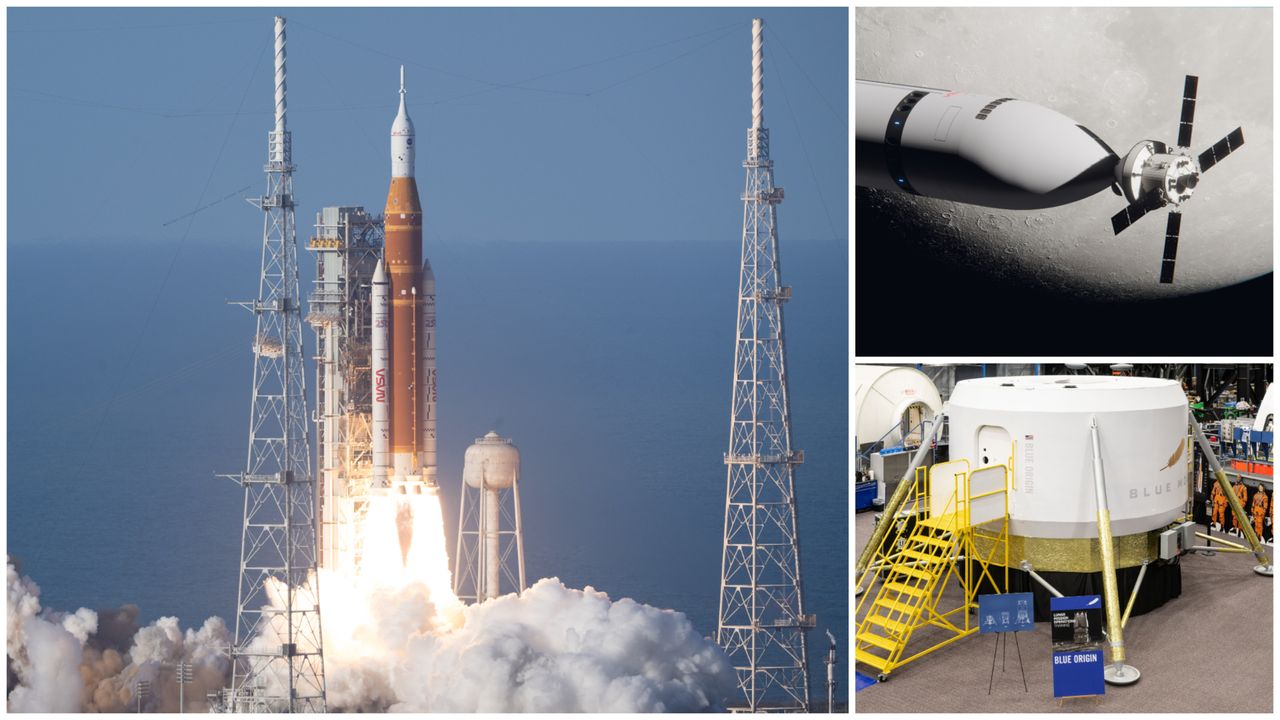
NASA is planning Artemis 3 for 2027 as an extraordinarily complex undertaking that will require three separate launches of heavy-lift rockets and coordination with two private moon landers that remain in early development stages. The mission represents a dramatic escalation in NASA's lunar ambitions beyond the initial Artemis 1 and 2 test flights.
The architecture relies on multiple moving parts executing flawlessly in sequence. NASA will launch its Space Launch System rocket multiple times to ferry components into space, including the Orion spacecraft and lunar gateway station elements. These separate launches must dock together in Earth orbit or lunar orbit before astronauts can descend to the lunar surface. Two commercial lunar lander companies, selected through NASA's Human Landing System program, will provide the actual descent vehicles to transport crews from orbit to the surface.
The operational complexity introduces significant risk. Each launch window depends on previous missions succeeding without delays. Any failure in rocket performance, spacecraft docking procedures, or lander functionality could cascade through the timeline. The private landers themselves have never flown humans and their prototypes are not yet constructed, adding technological uncertainty to an already ambitious schedule.
NASA has justified this multi-launch approach as necessary to achieve sustainable lunar operations. The distributed architecture allows for larger payloads and redundancy compared to single-mission designs. The inclusion of private industry partners reflects NASA's strategy to reduce costs through commercial competition and leverage private sector innovation.
However, the 2027 target date faces scrutiny. Technical development timelines for new hardware consistently slip, and integrating three separate rocket launches with untested private hardware has never been attempted at this scale. Mission managers must validate each component thoroughly while maintaining the aggressive schedule.
NASA officials have publicly acknowledged the complexity but express confidence in the approach. Success would demonstrate that human lunar return is achievable within this decade and establish a sustainable model for deep space exploration. Failure or significant