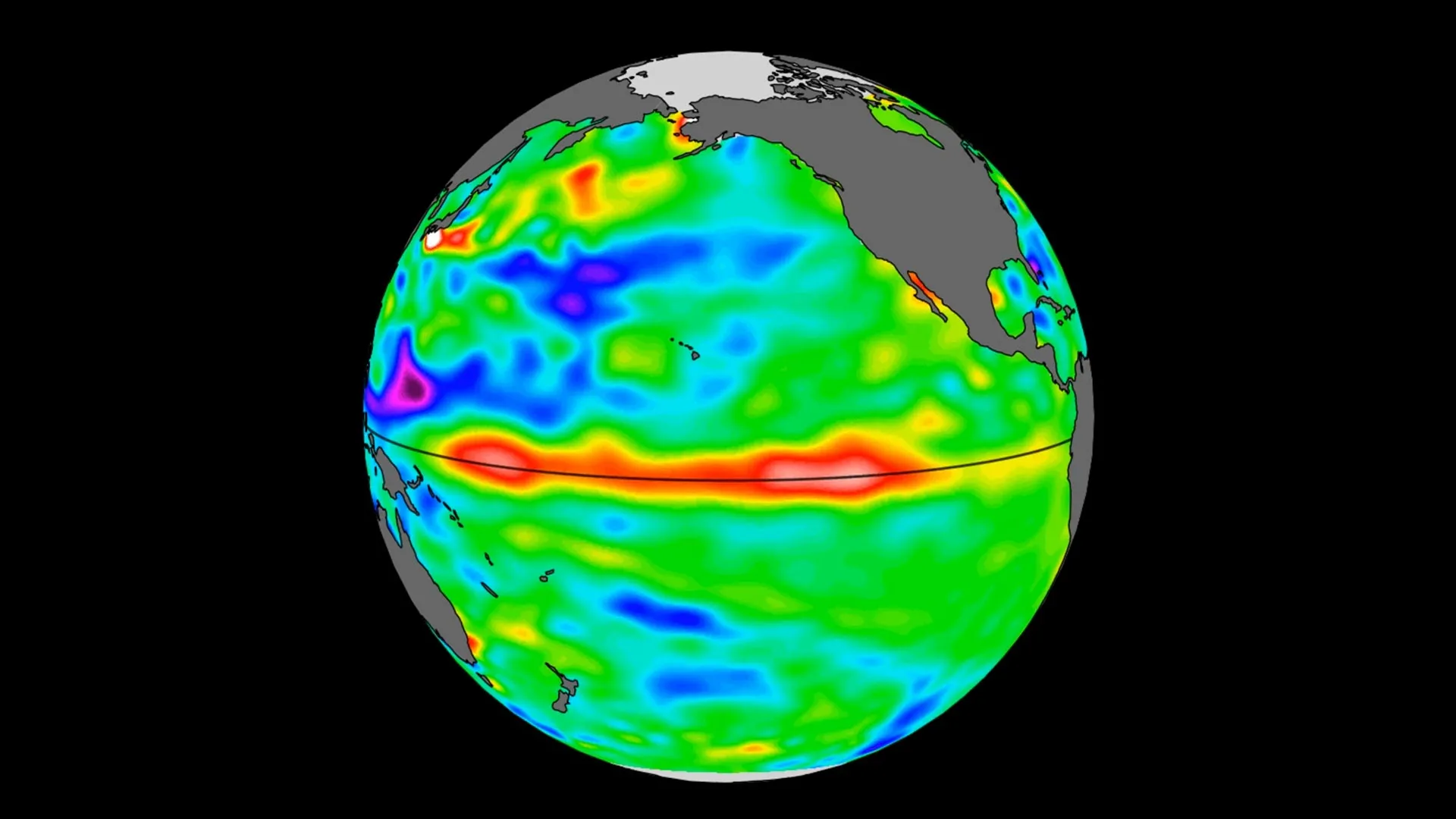
NASA's Earth-observing satellites have detected a enormous pulse of warm water moving toward South America's coast, indicating that El Niño conditions are probably developing. The warm water travels eastward across the Pacific Ocean via Kelvin waves, massive ocean swells that also elevate sea levels as they propagate.
Kelvin waves are equatorial ocean waves that can stretch thousands of kilometers and transport heat across entire ocean basins. When these waves deposit warm water along the South American coast, they trigger the atmospheric and oceanic changes that define El Niño, a climate pattern that occurs irregularly every few years.
El Niño reshapes global weather patterns with substantial consequences. The phenomenon typically brings heavy rainfall and flooding to parts of South America while simultaneously triggering droughts across Southeast Asia, Australia, and other regions. Temperature extremes, disrupted monsoons, and altered hurricane activity follow in its wake. The pattern also suppresses Atlantic hurricane formation while intensifying Pacific storms.
This detection arrives as ocean temperatures have already climbed significantly. Water in the equatorial Pacific has warmed beyond typical thresholds, and atmospheric indicators show developing conditions consistent with El Niño onset. Meteorologists monitor multiple factors including sea surface temperatures, wind patterns, and ocean heat content to confirm whether the developing conditions will fully mature into a recognized El Niño event.
Scientists rely on satellite data from instruments like those aboard NASA's Sentinel missions and other Earth-monitoring platforms to track these massive ocean features in real time. The early warning provides governments, agricultural sectors, and disaster management agencies weeks or months to prepare for expected weather disruptions.
The return of El Niño follows several years of La Niña conditions, which produced opposite effects. Understanding these oceanic cycles remains essential for seasonal weather prediction and climate forecasting. Ocean heat content and atmospheric circulation patterns will determine whether this emerging warm water pulse develops into a full El Niño episode or