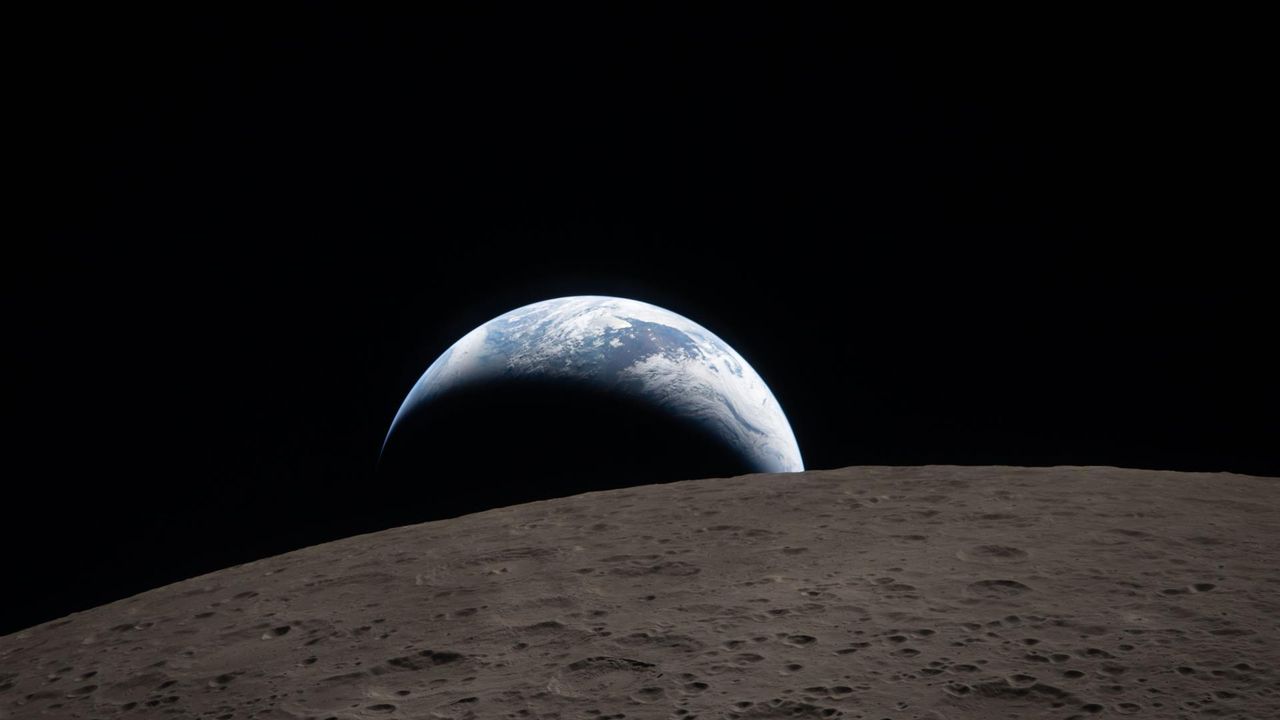
NASA's Artemis 2 mission used a laser communication system to stream video directly from astronauts traveling around the moon, marking a significant advance in deep-space connectivity. The technology, called the Optical Communications and Sensing (OCSM) system, had been previously validated aboard the International Space Station before deployment on this crewed lunar mission.
The laser system enabled real-time video transmission from the spacecraft to Earth, bypassing traditional radio frequency communications. This represents a jump in bandwidth capacity. Deep-space missions typically rely on radio waves, which transmit data at lower rates and require massive ground antennas to maintain contact. Laser systems can transmit far more information across the same distance, making them valuable for supporting future human exploration.
The Artemis 2 crew relied on the technology during their transit to lunar orbit. Successfully demonstrating the system during an actual crewed mission validates its readiness for operational use on Artemis 3, which aims to land humans on the moon's surface. The technology could prove essential for streaming high-definition video, medical telemetry, and other data-intensive communications from lunar missions and future deep-space exploration.
NASA has been investing in optical communication systems as part of its Space Communications and Navigation program. The agency recognizes that as missions venture farther from Earth, traditional radio communication infrastructure reaches practical limits. Laser systems offer a path forward for missions to Mars and beyond, where communication delays already stretch to minutes each way.
The successful transmission demonstrates that the system can operate reliably in the harsh environment of space, maintaining alignment between orbiting spacecraft and ground stations despite the vast distances involved. The Artemis program will continue testing and refining this technology through subsequent missions, laying groundwork for sustained human presence beyond Earth orbit.