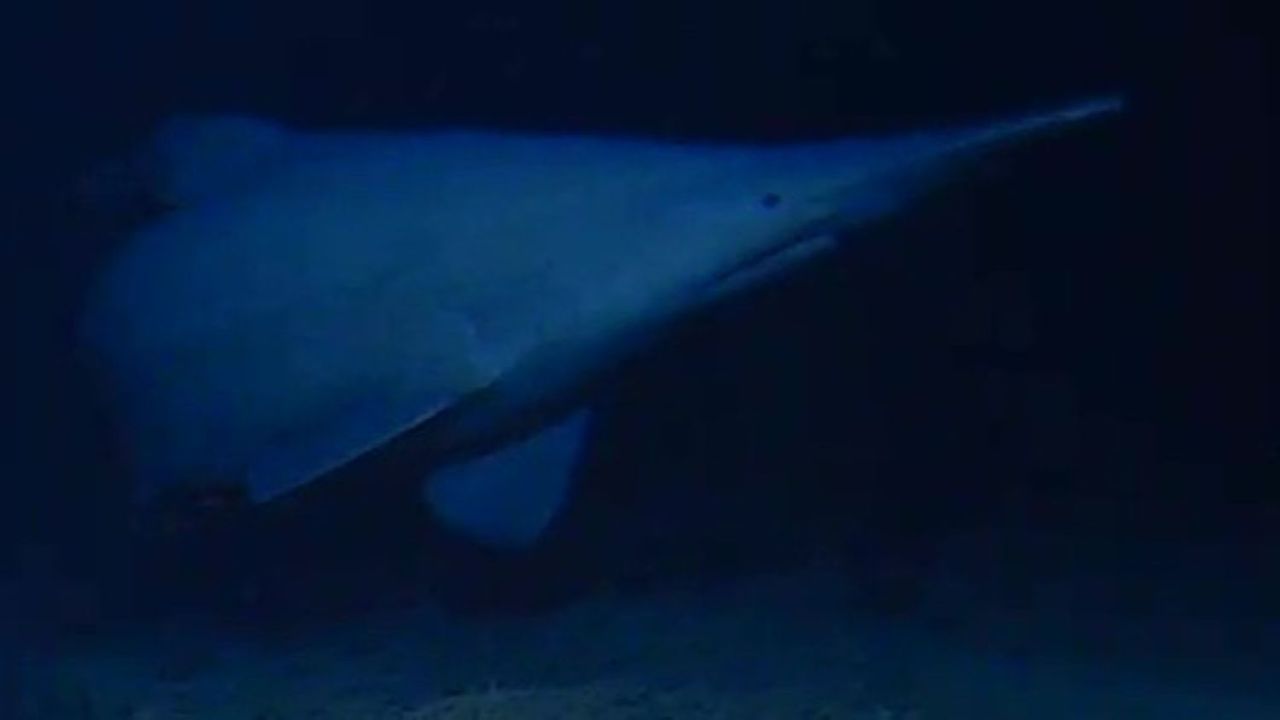
Researchers have captured the first-ever footage of goblin sharks alive in their natural deep-sea habitat, marking a watershed moment in marine biology. Previously, the only living goblin sharks scientists observed were specimens hauled to the surface by fishing vessels, making this achievement a genuine breakthrough in studying one of the ocean's most elusive creatures.
Goblin sharks inhabit depths where light fails to penetrate and pressure crushes most organisms. Their rarity in human observation stems from their preference for the abyssal zone, typically found thousands of meters below the surface. The species possesses distinctive features including an elongated snout and protruding teeth, adaptations that have fascinated scientists for decades despite the near-total absence of behavioral data from natural settings.
The successful filming expedition relied on specialized deep-sea camera technology and remotely operated vehicles capable of withstanding extreme pressure and darkness. Researchers deployed these instruments into the waters where goblin sharks roam, capturing behavior patterns that remain largely unknown to science. The footage reveals details about locomotion, feeding strategies, and environmental interactions that dead or dying specimens cannot provide.
This documentation carries substantial research value. Studying organisms in their native environment yields insights impossible to obtain from surface-collected specimens, which often sustain injuries during capture and ascent. Scientists can now observe goblin shark responses to stimuli, interaction with other deep-sea fauna, and adaptation to pressure conditions exceeding 1,000 atmospheres.
The achievement underscores persistent knowledge gaps about deep-ocean life. Despite covering more than 60 percent of Earth's surface, the deep sea remains less explored than the lunar surface. Thousands of species inhabit these regions, with human encounters limited to occasional fishing bycatch or research expeditions equipped with cutting-edge technology.
Future research will likely examine the footage frame-by-frame to extract biological information. Scientists aim to understand goblin shark diet, reproductive behavior