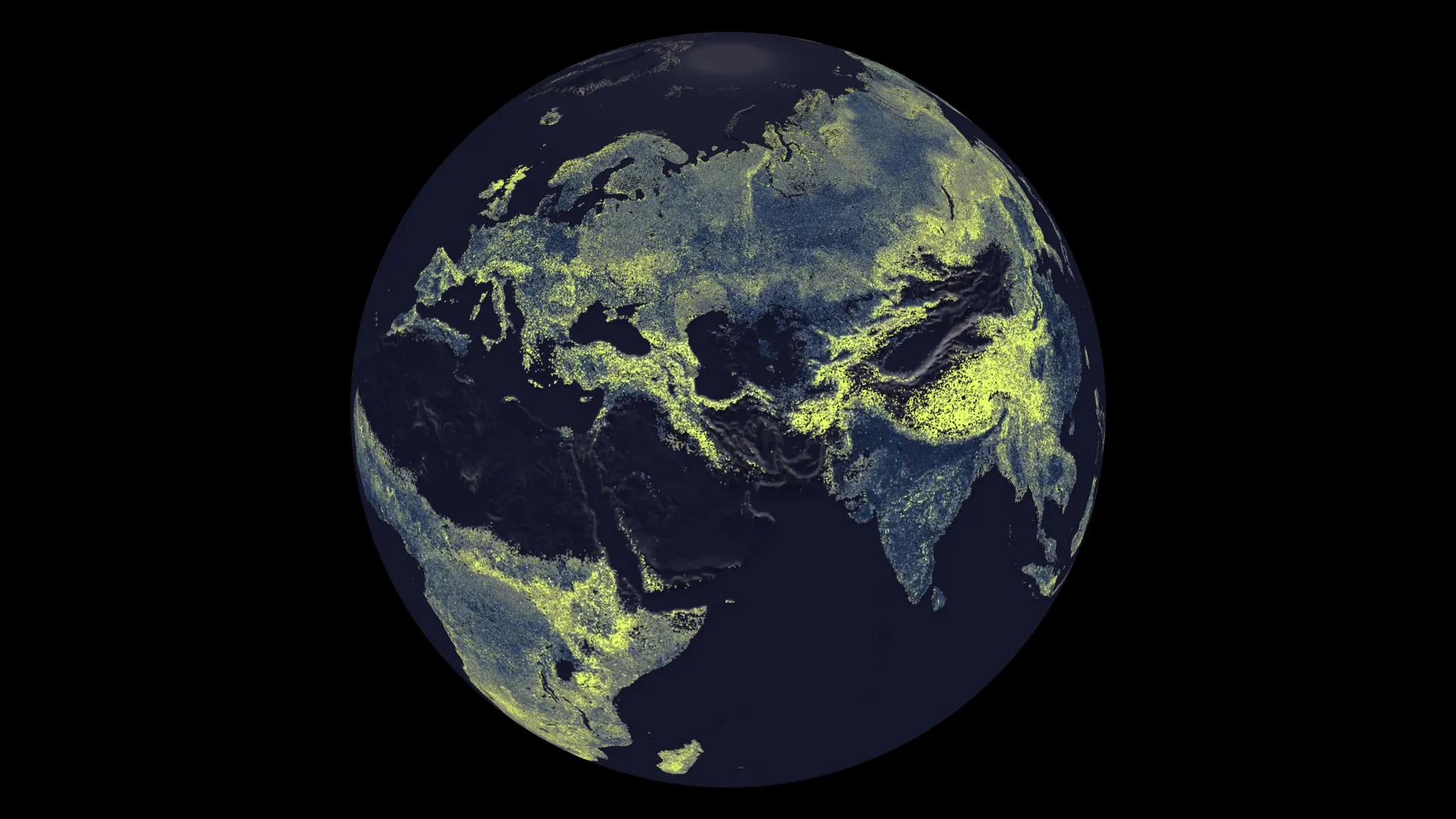
Scientists have mapped the world's underground fungal networks for the first time, revealing a staggering biological infrastructure that spans 110 quadrillion kilometers beneath Earth's surface. These mycorrhizal networks, which connect fungi to plant roots, transfer roughly 4 billion tons of carbon dioxide annually into soils while sustaining plant growth across ecosystems.
The research quantifies the planetary scale of fungal-plant symbiosis. Mycorrhizal fungi extend from plant roots into surrounding soil, forming what researchers call the "wood wide web." In exchange for sugars produced by plants through photosynthesis, fungi provide plants with water and nutrients, particularly nitrogen and phosphorus, that would otherwise remain locked in soil minerals. This relationship fundamentally shapes forest composition, grassland productivity, and crop yields globally.
The carbon sequestration function represents a crucial climate feedback mechanism. As fungi transport carbon dioxide into soils, they help bury atmospheric carbon while simultaneously enhancing soil structure and fertility. This process connects fungal network activity directly to terrestrial carbon cycling, one of the planet's most important biogeochemical processes.
The mapping effort synthesized data from multiple sources, including field surveys, laboratory studies, and computational models, to estimate global fungal biomass and network extent. Previous research documented mycorrhizal fungi's importance in individual ecosystems, but quantifying their planetary footprint required scaling up from regional observations to a global model.
The findings carry practical implications for agriculture, forestry, and climate policy. Understanding fungal network function could improve soil health without chemical inputs, strengthen crop resilience to drought and pests, and enhance carbon storage in managed lands. Some researchers have proposed that protecting and restoring fungal networks represents an underutilized tool for climate mitigation.
However, limitations remain. The estimates depend on model assumptions and field data that vary in quality across regions. Tropical forests and boreal systems show