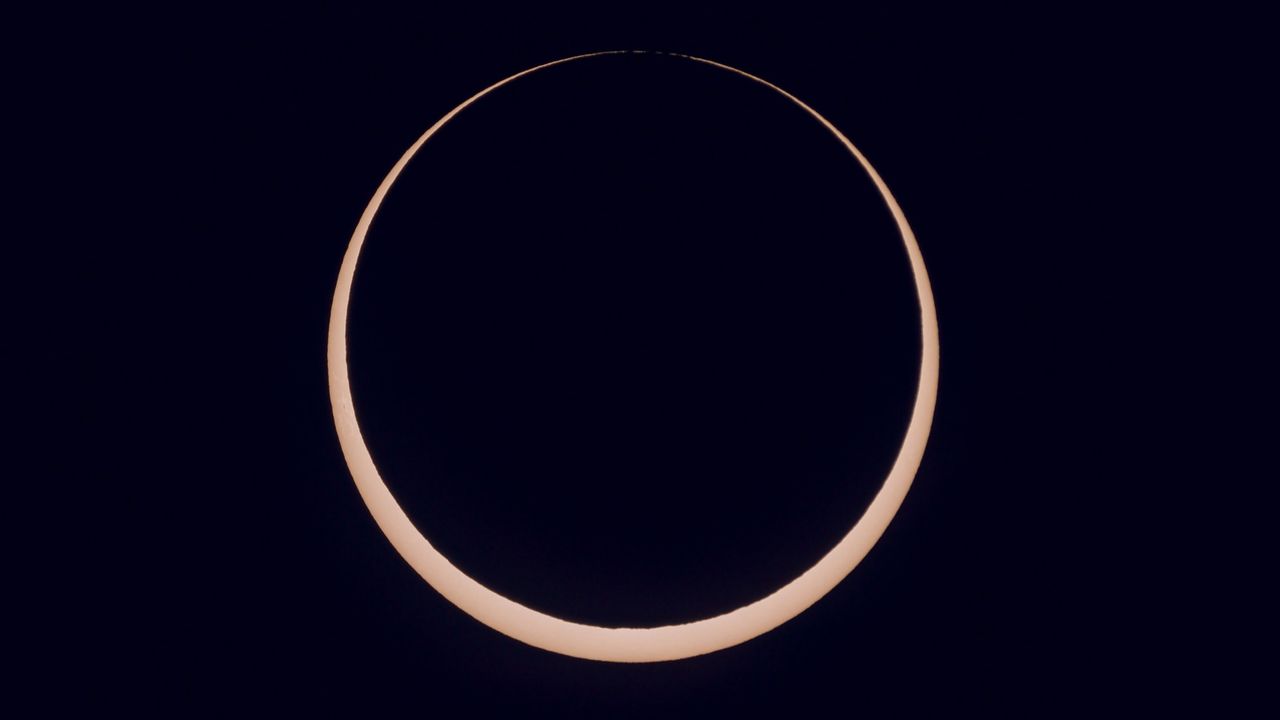
An annular solar eclipse will occur on February 6, 2027, creating a dramatic "ring of fire" effect across Earth's surface. During an annular eclipse, the Moon passes directly in front of the Sun but appears too small to completely block it, leaving a bright ring of solar surface visible around the Moon's silhouette.
The eclipse path will cross southern Spain and Portugal, northern Morocco, Mauritania, Mali, Niger, Chad, and Sudan before ending in southern Saudi Arabia. The path of annularity will be roughly 200 miles wide, and observers within this zone will experience the full ring effect. Partial eclipse visibility extends far beyond the annular path, reaching parts of Europe, Africa, and the Middle East.
The peak annular phase will last approximately 11 minutes and 36 seconds at its maximum point, making this one of the longer annular eclipses. Timing varies by location, but the eclipse reaches its greatest duration over Mauritania and Mali.
Observers in the path must use proper solar eclipse glasses to view the event safely. Standard eclipse glasses meet ISO 12312-2 international standards and block 99.99% of the Sun's light. Even during the ring of fire phase, the eclipse remains dangerous to view without protection, as the exposed crescent of the Sun remains extremely bright.
This eclipse follows the total solar eclipse of August 2026, providing skywatchers with two major solar events within six months. Travel companies and astronomy groups are already organizing eclipse-chasing expeditions to optimal viewing locations across North Africa and the Iberian Peninsula.
The 2027 annular eclipse represents the next major opportunity for eclipse tourism in the Northern Hemisphere. Unlike total solar eclipses, annular eclipses occur more frequently, with another scheduled for October 2028. However, the unique geography of the 2027 path makes it