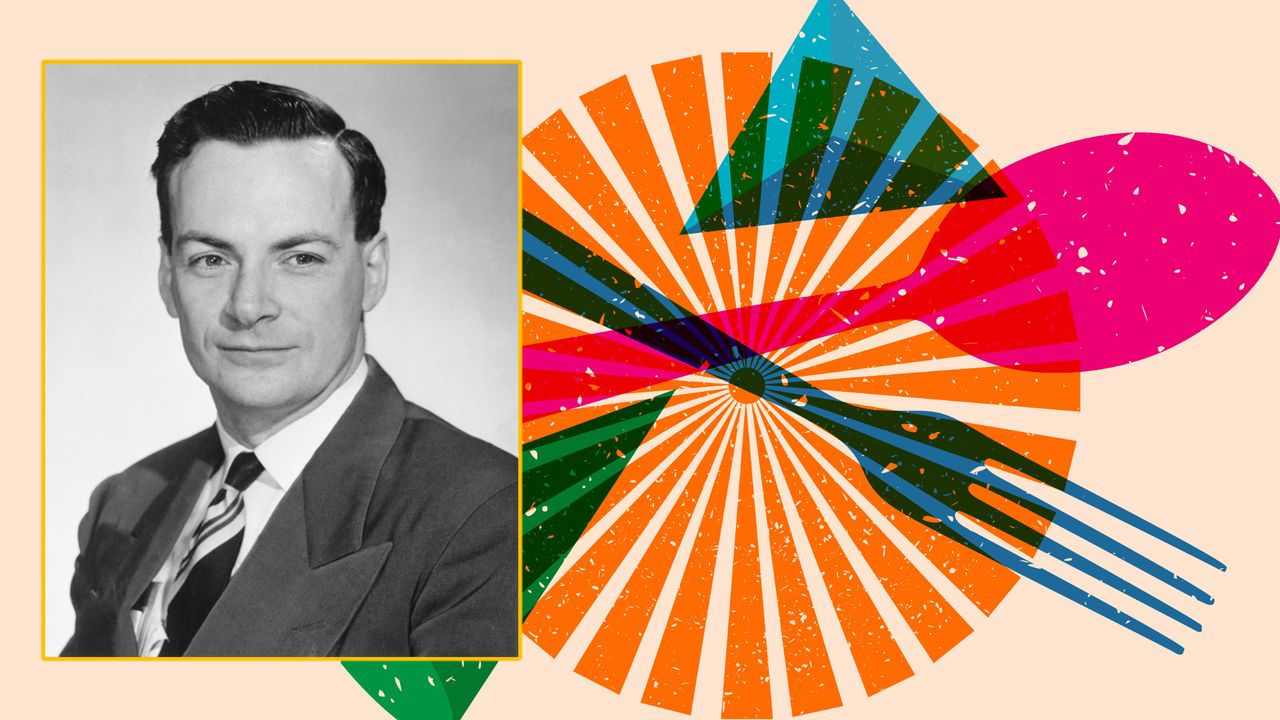
Richard Feynman's hastily written notes from a lunch conversation have yielded their mathematical secrets half a century later. Researchers recently deciphered equations the Nobel Prize-winning physicist sketched regarding what became known as "the restaurant problem," revealing insights into human decision-making that challenge conventional assumptions.
The specific problem Feynman tackled concerns optimal choices when facing incomplete information. His scrawled calculations addressed how people should rationally decide between competing options when they cannot know all available alternatives upfront. This scenario mirrors real-world situations like choosing a restaurant without seeing all options on a street or selecting a job candidate from a limited interview pool.
The team that decoded Feynman's notes found his mathematical framework suggests humans perform better at these kinds of decisions than earlier scientific models proposed. Traditional theories assumed people would struggle with such optimization problems, often making suboptimal choices. Feynman's approach, when fully analyzed decades later, demonstrated that decision-making ability exceeds these pessimistic predictions.
The research connects to broader mathematical fields including optimal stopping theory and search algorithms. These frameworks help explain strategies like the "secretary problem," where someone must decide whether to hire a candidate without knowing who might apply later. Feynman's particular contribution appears to offer a more nuanced view of human rationality in such situations.
The significance lies partly in validating intuitive decision-making processes. His analysis suggests that heuristics people naturally employ are more sophisticated than computational models from that era acknowledged. This bridges the gap between pure mathematics and how actual humans navigate uncertainty in everyday choices.
The discovery also highlights how Feynman's informal jottings contained publishable scientific work. His reputation for solving problems at restaurants and on napkins earned literal vindication here. The delay in deciphering these notes reflects both their cryptic nature and the evolution of mathematical tools needed to fully interpret them.
This work reinforces that breakthrough ideas