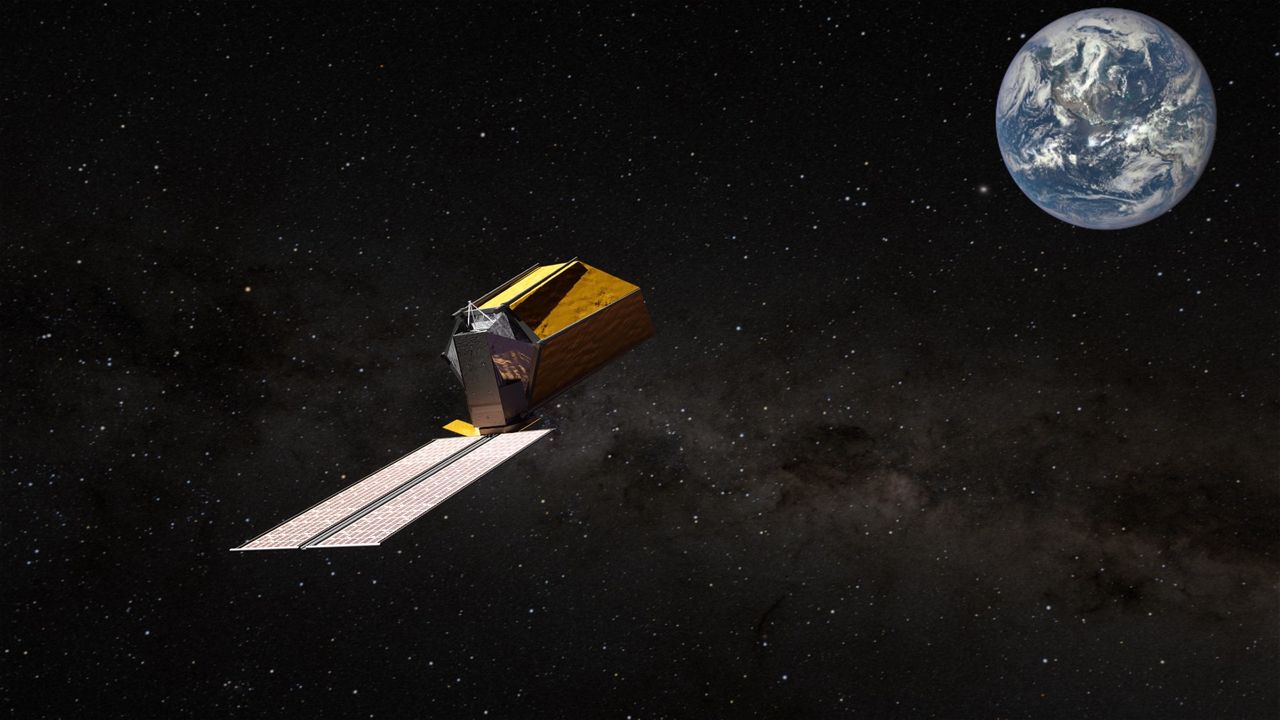
NASA's planned Habitable Worlds Observatory could detect atmospheric biosignatures on planets resembling ancient Earth, according to new research examining the telescope's detection capabilities.
The study evaluated whether the Habitable Worlds Observatory, currently in development, possesses sufficient sensitivity to identify chemical markers of life in exoplanet atmospheres. Researchers modeled how the telescope would perform when observing a planet with atmospheric conditions matching Earth between 2 and 3 billion years ago, when microbial life dominated but oxygen levels remained far below modern concentrations.
The analysis focused on detecting combinations of gases that would indicate biological activity. Early Earth's atmosphere contained methane from microbial metabolism alongside other compounds. The research determined that the Habitable Worlds Observatory could reliably distinguish these biosignature gases from chemical processes that occur without life present.
This capability matters for the search for extraterrestrial life. Many potentially habitable exoplanets orbiting nearby stars likely sit in early evolutionary stages similar to ancient Earth. If life emerged on such worlds, the Habitable Worlds Observatory could identify it through atmospheric analysis across interstellar distances.
The study's scope carries limitations. Laboratory tests of atmospheric detection remain incomplete for some compound combinations. The research assumed ideal observing conditions and clear atmospheric chemistry. Real exoplanet atmospheres may contain dust, clouds, or chemical mixtures that complicate detection. Additionally, biosignatures detectable in ancient Earth's atmosphere may not match those produced by life forms that evolve under different planetary conditions.
NASA's Habitable Worlds Observatory represents an upgrade in capability over the James Webb Space Telescope, which currently conducts exoplanet atmospheric studies. The new instrument design prioritizes sensitivity to biosignature gases across ultraviolet and infrared wavelengths. Launch remains years away pending continued funding and technical development.
The research demonstrates that future generations of space telescopes will likely