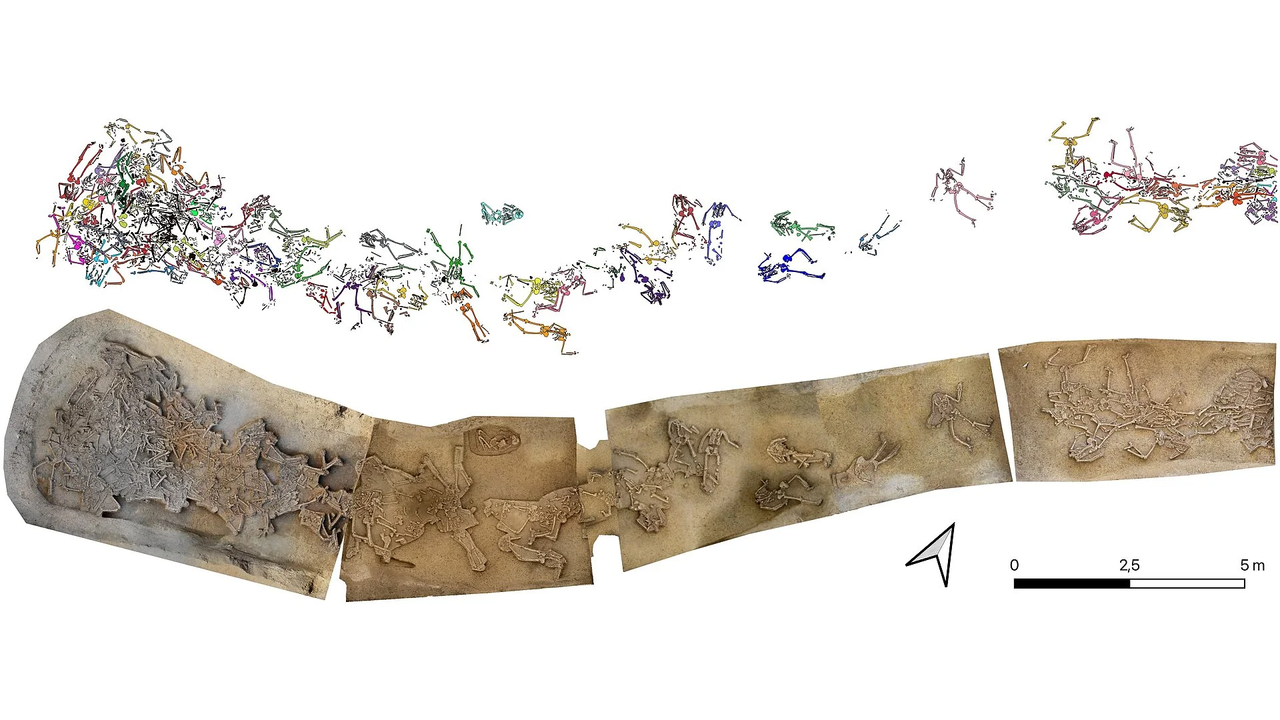
Archaeologists excavating a Neolithic site in Slovakia uncovered a mass burial containing thousands of headless skeletons dating back approximately 7,000 years, creating a puzzle that challenges conventional understanding of Stone Age burial practices.
The discovery emerged from a routine excavation in a residential neighborhood where workers encountered a ditch filled with decapitated human remains. The find suggests a deliberate practice of removing heads before interment, rather than accidental damage or post-mortem decay.
The sheer scale of the burial—housing over 7,000 individuals—indicates this represented a significant communal or ritual event, not isolated deaths. Archaeologists remain divided on the motivation. Several theories compete for explanation. One proposes ritualistic significance tied to spiritual beliefs about death and the afterlife. Another suggests warfare or violent conflict, with decapitation serving as a form of conquest display. A third possibility centers on resource scarcity or disease outbreak that overwhelmed the community's normal burial capacity.
The Neolithic period in central Europe (roughly 8000-4000 BCE) witnessed dramatic cultural transitions from hunter-gatherer societies to agricultural communities. Burial practices varied widely, but mass interments of this type remain uncommon. Most known examples from the era involve individual or small-group burials with intact skeletal structures.
The headless remains complicate analysis. Without intact crania, archaeologists cannot easily determine age distribution, disease patterns, or nutritional status that might illuminate who these people were and why they died. DNA analysis could potentially reveal genetic relationships between individuals and trace migration patterns, though such testing requires proper preservation of bone material.
Local authorities and the excavation team have not yet released detailed findings about artifact associations, soil dating, or whether other evidence—weapons, pottery, or settlement remains—surrounds the ditch. These contextual details will prove essential for testing burial hypotheses.
The discovery under