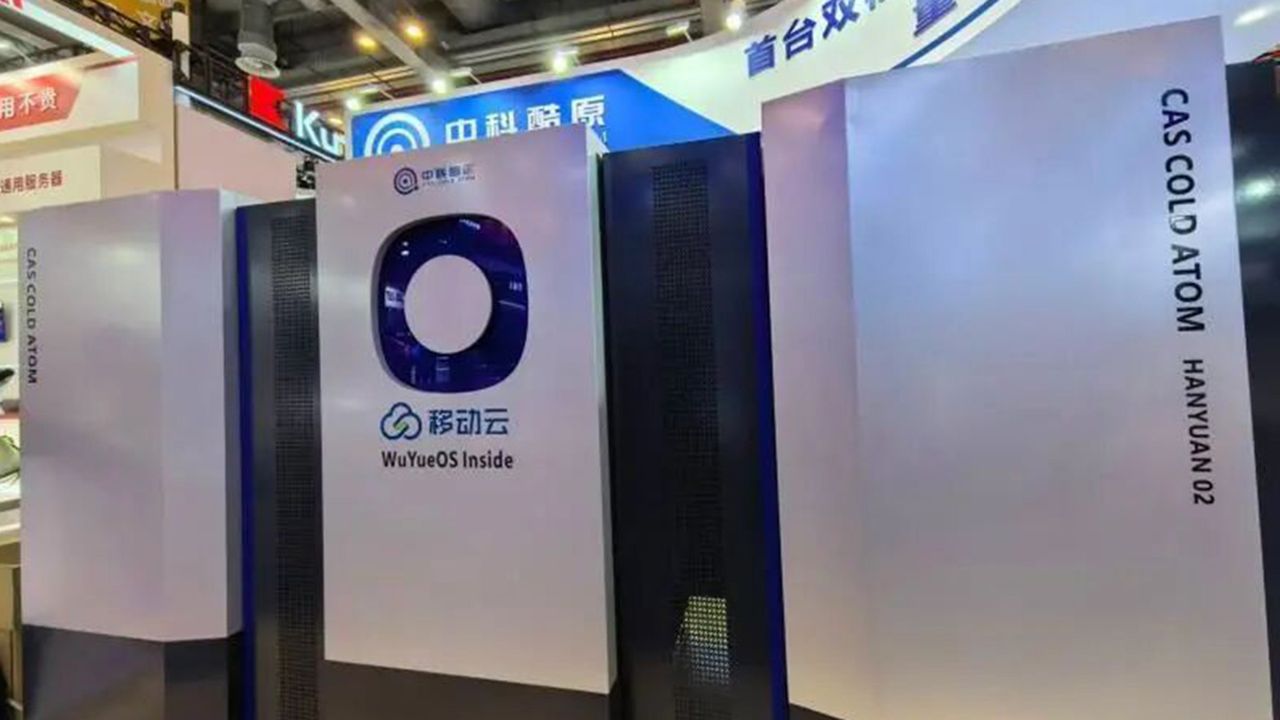
Chinese researchers have unveiled a quantum computer with a novel "dual-core" architecture that pairs two independent neutral-atom arrays within a single processor. The design targets three persistent challenges in quantum computing: stability, efficiency, and scalability.
The system represents a departure from conventional single-core quantum architectures. By splitting processing tasks between two neutral-atom arrays, the dual-core approach distributes computational load, potentially reducing errors that accumulate during operations. Neutral atoms, which the system uses as quantum bits, offer advantages over superconducting qubits because they maintain coherence longer and can be scaled more easily.
The key innovation lies in how the two cores interact. Rather than operating in complete isolation, they function as complementary units within the same processor. This configuration allows researchers to correct errors more effectively by cross-checking results between the two arrays. The distributed design also permits individual cores to undergo maintenance or recalibration without shutting down the entire system, improving practical operational efficiency.
Scalability benefits emerge from this architecture as well. Adding more neutral atoms becomes less problematic when computational tasks spread across multiple cores rather than concentrating in a single array. This modularity could accelerate the path toward quantum computers with thousands or millions of qubits, a threshold researchers believe necessary for practical real-world applications.
The announcement positions China as a serious competitor in quantum computing development, following investments by the United States, European Union, and other nations. Chinese quantum research has accelerated significantly in recent years, with government backing and institutional focus on the technology.
However, the dual-core system faces validation challenges ahead. Researchers must demonstrate that it outperforms existing quantum computers on complex problems. Most quantum systems currently excel only at specialized tasks rather than general computation. Independent verification of the stability and efficiency claims remains essential before the technology influences the broader quantum landscape.
The neutral-atom quantum computing field continues expanding. Companies like Atom Computing and