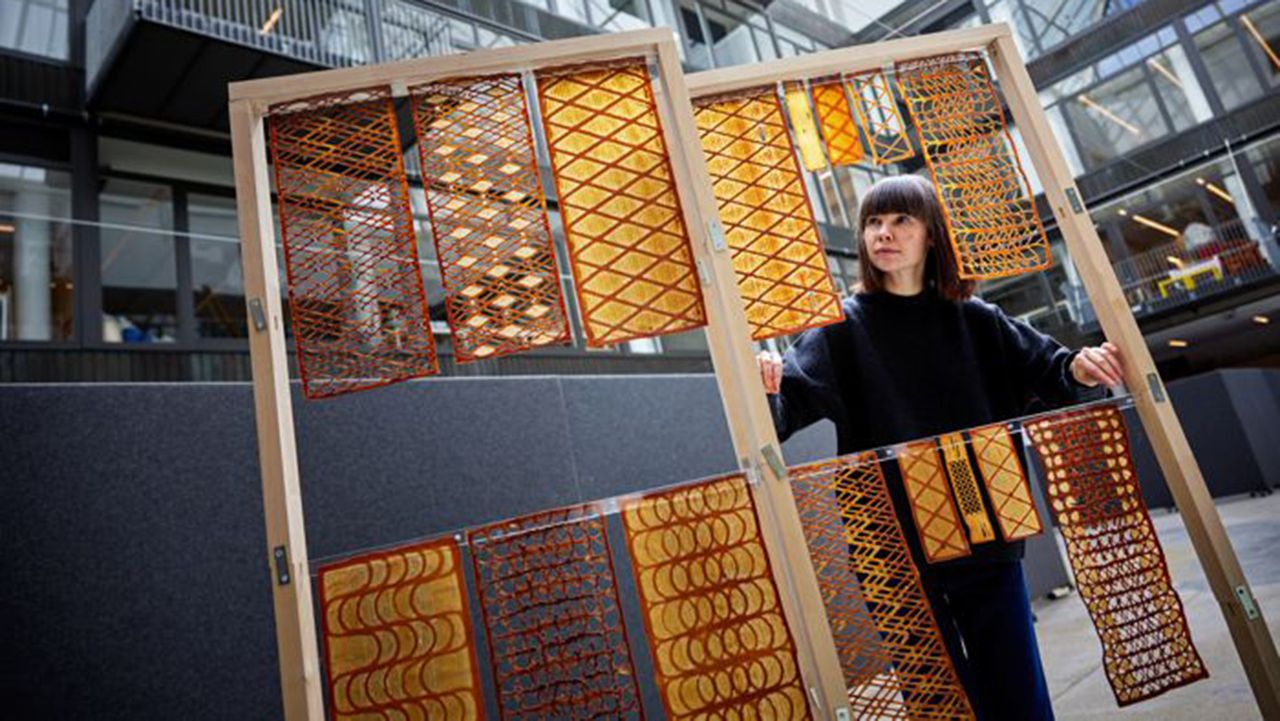
Researchers have engineered a novel biomaterial using yeast that exhibits mechanical properties comparable to fruit leather and could eventually replace conventional wallpaper and window treatments. The development addresses the environmental burden of textile waste from indoor decoration.
The team constructed the material through 3D printing technology, leveraging yeast as a biological base component. The resulting biomaterial achieves tensile strength similar to commercial fruit roll-ups, making it flexible yet durable enough for practical applications. This property profile suggests the material could withstand the physical demands of wall coverings and fabric-based home furnishings.
The yeast-based approach offers sustainability advantages over traditional wallpaper and drapes, which typically accumulate as waste when replaced or discarded. Indoor decor contributes substantially to textile and construction waste streams. A biodegradable alternative derived from yeast and shaped through additive manufacturing could reduce this environmental footprint.
The researchers have not yet disclosed full specifications regarding production scalability, cost-effectiveness, or commercial viability timelines. Additional work likely remains to optimize manufacturing processes, demonstrate long-term durability in actual indoor environments, and establish whether the material meets fire safety and other building code requirements.
The yeast-based biomaterial represents a convergence of biotechnology and materials science. Using renewable biological organisms as feedstock for 3D printing aligns with growing interest in sustainable construction and design innovation. While current tensile strength matches fruit leather rather than traditional fabrics, further development could enhance material performance through composition refinement or structural modifications.
The work suggests that biological manufacturing approaches may reshape how we approach everyday consumer products, particularly items discarded frequently. Success in this application area could establish protocols for applying yeast-based biomaterials to other sectors facing waste challenges.