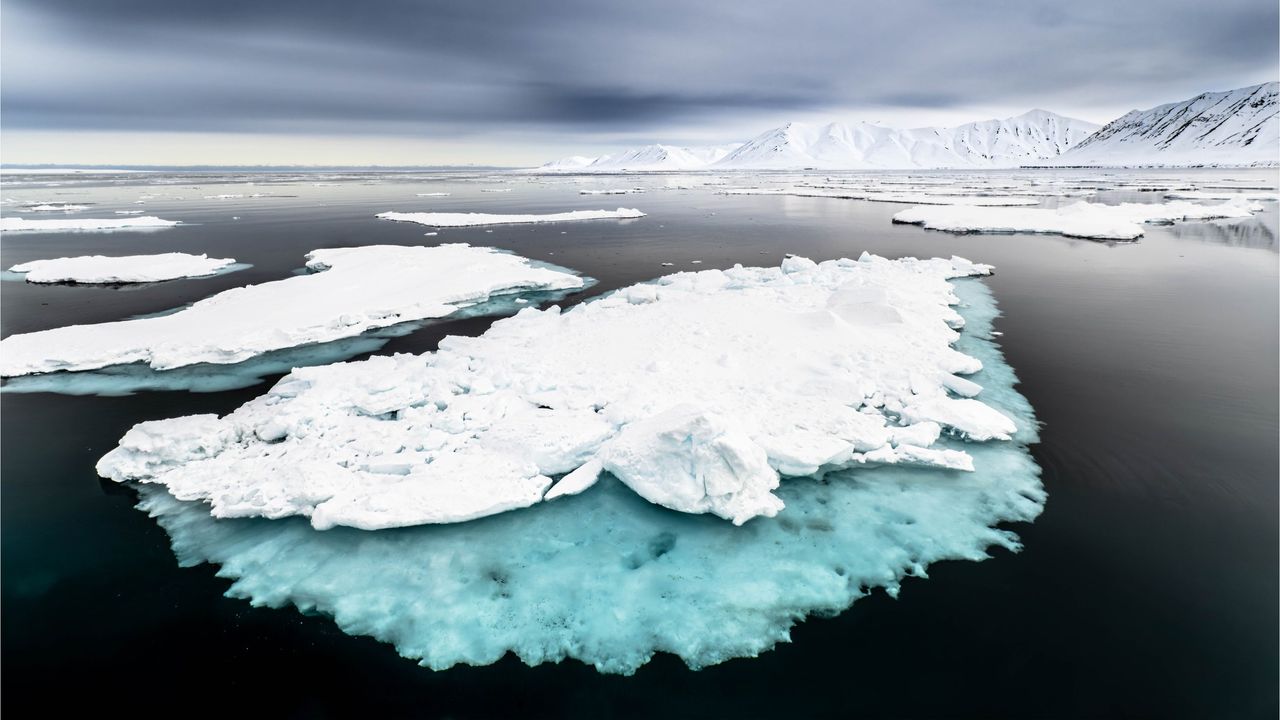
Researchers have identified a critical biological tipping point in the Arctic Ocean that occurred in 2009, when the region's shrinking sea ice triggered a cascade of changes in marine ecosystems. The discovery reveals how physical climate changes in polar regions directly destabilize food webs at their foundation.
According to the findings, sea ice loss correlates directly with declining nitrate levels in Arctic waters. Nitrate serves as essential nutrient for phytoplankton, microscopic organisms that form the base of marine food chains. When sea ice extent decreased dramatically, nitrate concentrations dropped sharply, limiting phytoplankton growth and propagating consequences up the food chain to fish, seabirds, and marine mammals.
The 2009 threshold represents what researchers describe as a tipping point, a moment when gradual environmental change crosses into abrupt ecosystem reorganization. Before 2009, Arctic nitrate levels had remained relatively stable despite climate warming. The sudden shift suggests the region's biological systems possessed resilience thresholds that, once exceeded, triggered irreversible changes in nutrient cycling.
Sea ice loss affects Arctic nutrient dynamics through multiple mechanisms. Ice-covered waters suppress vertical mixing of ocean layers, reducing nutrient upwelling from deeper zones. As ice disappears, increased solar radiation and wave action alter ocean stratification, disrupting the delicate balance that sustained historical phytoplankton productivity. Additionally, freshwater from melting ice dilutes surface waters, further affecting nutrient concentrations and availability.
The implications extend beyond the Arctic. Arctic food webs support populations of commercially important fish species and marine mammals that migrate globally. Ecosystem disruption in polar regions can reverberate through international fisheries and wildlife populations. The identification of 2009 as a tipping point suggests current Arctic conditions may already reflect post-transition biology, meaning recovery to previous states could prove impossible without major interventions.