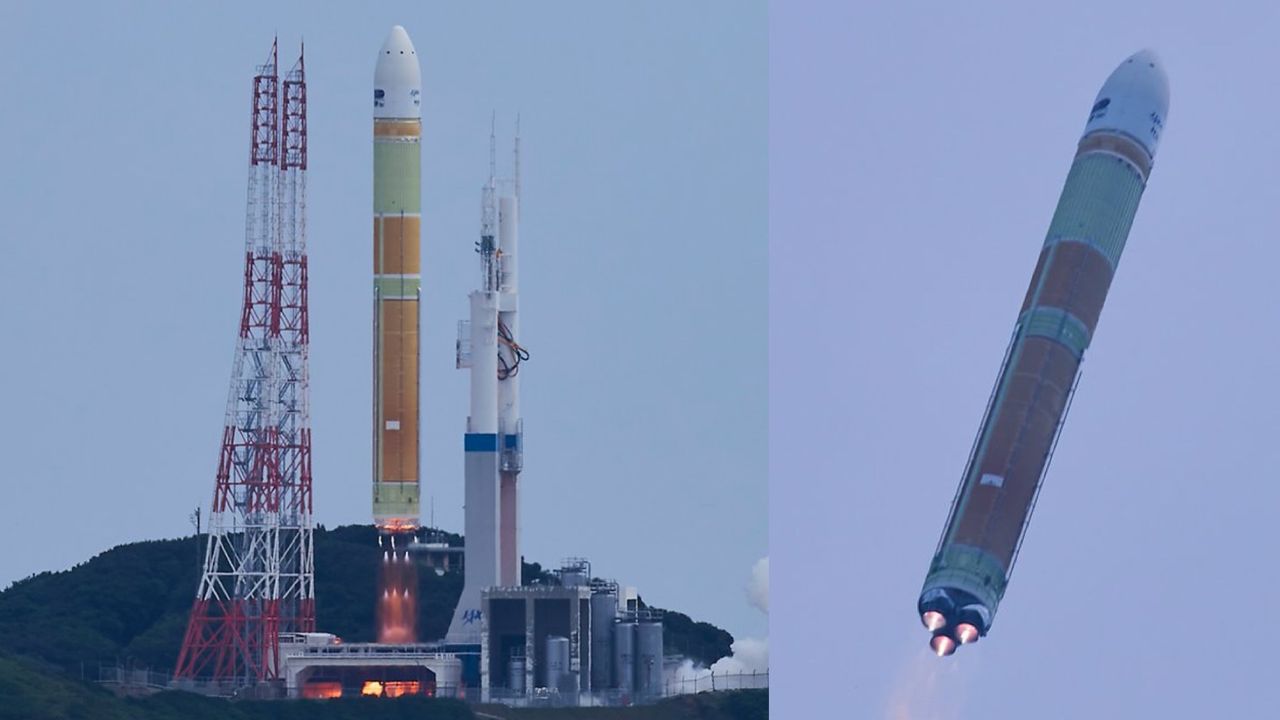
Japan's space program scored a critical victory on Wednesday as the H3 rocket completed its first successful mission since an engine failure destroyed a payload in March 2023. The vehicle lifted off carrying six satellites, restoring confidence in the nation's next-generation launch system.
The H3 represents Japan's most advanced indigenous rocket, designed to reduce launch costs and frequency while competing with commercial providers like SpaceX. The March 2023 failure dealt a serious blow to the Japanese Aerospace Exploration Agency (JAXA) and threatened the program's future. Investigators determined that an engine shutdown during the first stage caused the catastrophic loss.
Engineers implemented hardware and software modifications to prevent similar failures. The redesigned engine underwent extensive ground testing before JAXA cleared the vehicle for flight operations. Wednesday's successful deployment of the satellite payload validated those corrections and demonstrated that the H3 can reliably reach orbit.
The six satellites included earth observation and technology demonstration spacecraft. Their successful deployment marks a turning point for Japan's independent access to space, reducing reliance on foreign launch providers for critical national assets. The mission also validates investments Japan made in domestic launch capability, with the H3 expected to conduct multiple missions annually going forward.
This return to flight holds weight beyond Japan's borders. Global spacefaring nations closely monitor competitor rocket programs. A successful H3 reestablishes Japan as a credible operator in the increasingly competitive commercial launch market, where nations vie for profitable contracts and strategic autonomy in space access.
JAXA now faces the challenge of maintaining H3 flight rate to prove operational reliability and cost-effectiveness. Additional successful missions will determine whether the rocket achieves its intended role as Japan's primary domestic launcher for the next two decades.