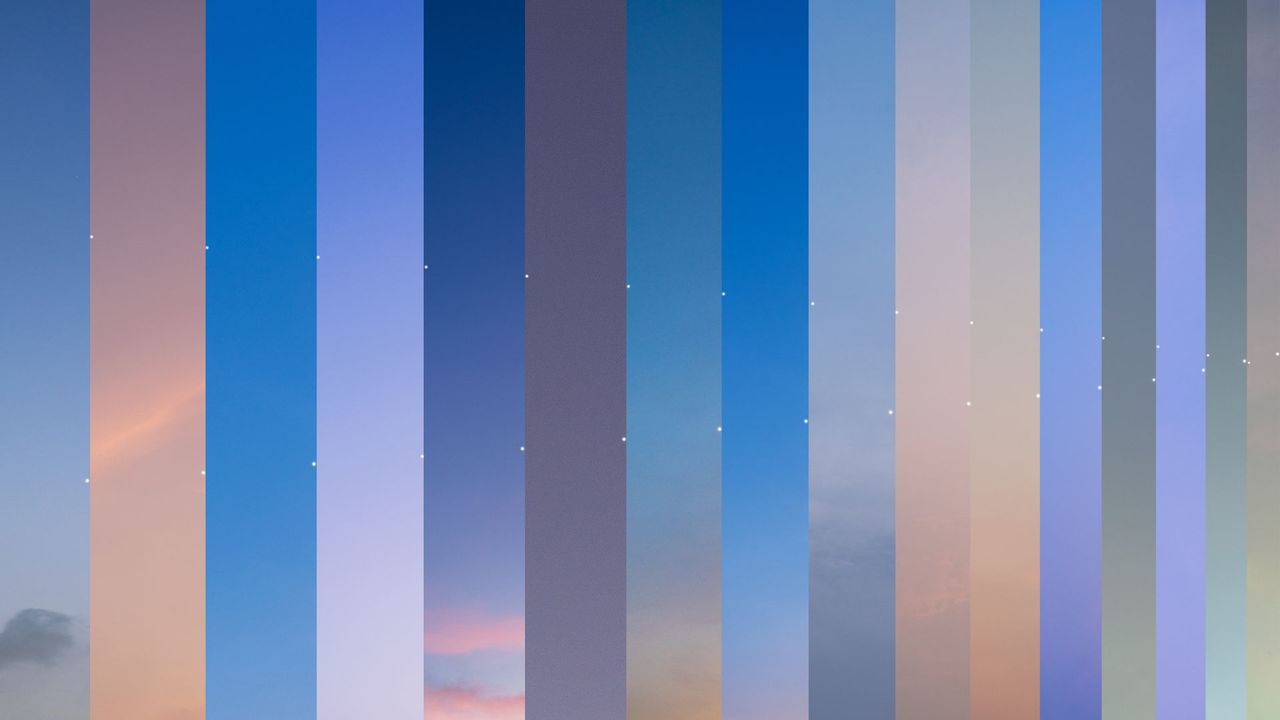
A striking celestial alignment captured the attention of astronomers and skywatchers worldwide as Venus and Jupiter appeared to converge in Earth's sky over a 30-day period. The visual phenomenon, documented in a dramatic photographic collage, illustrates a classic example of perspective in astronomy.
From our vantage point on Earth, Venus appeared to drift progressively closer to Jupiter throughout the observation window. This illusion occurs because the two planets orbit the sun at different distances and speeds. Venus orbits much closer to the sun and moves faster through space than Jupiter, creating the appearance of convergence when viewed from Earth, even as the planets actually traveled farther apart in three-dimensional space.
Conjunctions like this one provide valuable opportunities for amateur astronomers and casual observers to witness celestial mechanics in action. Both planets remained visible to the naked eye during the alignment, making the event accessible without telescopes or specialized equipment. Venus, the brightest planet in our sky, would have been particularly prominent, while Jupiter's distinctive brightness made it easy to track both objects' apparent movement night after night.
The 30-day documentation showcases how Earth's orbital position fundamentally shapes our perception of the cosmos. What appears as two planets drawing together is actually a dance of orbital mechanics playing out across millions of miles of space. Photography captures this perspective shift elegantly, with each successive image showing the pair in slightly different positions relative to background stars.
Such conjunctions occur regularly enough to become anticipated events among astronomy enthusiasts, yet each occurrence offers fresh opportunities for observation and documentation. The alignment serves as a practical reminder that celestial appearances often deceive. Understanding the actual distances and trajectories of planets enriches appreciation for these visual spectacles, transforming a beautiful photo opportunity into a window onto the mechanics governing our solar system.