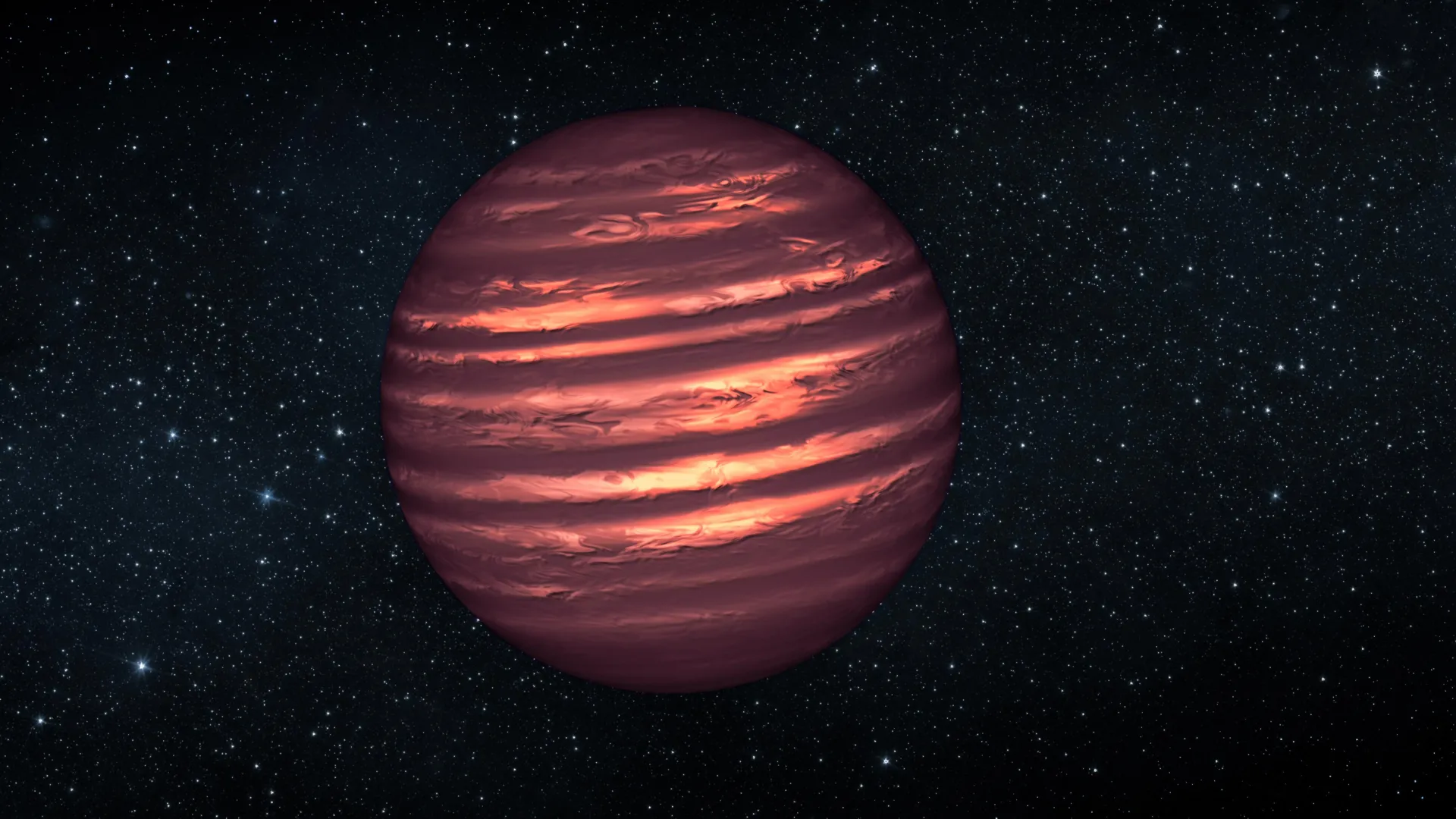
Astronomers using the Keck Observatory have measured the rotation rates of dozens of giant planets and brown dwarfs in other star systems, uncovering unexpected patterns that challenge conventional understanding of how worlds spin.
The research team found that giant planets can rotate faster than significantly more massive brown dwarfs. This discovery contradicts the intuitive assumption that rotation speed correlates directly with mass. A more massive object, under basic physics principles, should retain angular momentum more readily than a lighter one. Yet the data revealed a more complex reality.
The findings point to magnetic fields and planetary formation mechanisms as the primary drivers of rotation rates rather than mass alone. Magnetic fields can extract rotational energy from developing worlds, slowing their spin. The specific formation process each object undergoes also shapes its final rotation speed. Giant planets likely form through different pathways than brown dwarfs, potentially explaining their divergent spin rates.
This work has direct implications for exoplanet science and stellar formation theory. Understanding rotation rates helps astronomers characterize distant worlds and refine models of how planetary systems assemble. The research also informs studies of our own solar system, offering context for why Jupiter, Saturn, and other planets in our neighborhood spin at their observed rates.
The Keck Observatory's capabilities proved essential for this work. Located on Mauna Kea in Hawaii, the facility's powerful spectroscopy tools can detect the subtle shifts in light caused by rotating celestial bodies, measuring spin rates with precision previously unavailable to researchers.
Brown dwarfs sit at the boundary between planets and stars, massive enough to form through core accretion like planets but potentially massive enough to initiate hydrogen fusion like stars. By comparing their rotation rates with those of giant planets, astronomers gained insight into the physical processes that separate these distinct classes of objects.
The research opens new questions about the universality of formation mechanisms. If rotation rates vary so widely despite